Learn how Buy Limit orders work in forex trading, why random pending orders often lead to losses, and how to manage support levels, stop loss, order expiry, and major data risk.
Starting with a 30-Pip Unrealized Loss
In forex trading, the pending order function offered by mainstream trading software such asMT5is often seen by many traders as a convenient tool. Traders do not need to watch the market for long periods; once the price reaches the preset level, the order is executed automatically, which appears to improve execution efficiency. However, actual trading records show that a considerable proportion of Buy Limit pending orders eventually end up with unrealized losses.
A typical scenario is as follows: EUR/USD rises from 1.0850 to 1.0900. The trader did not enter during the initial move and is unwilling to chase the price at the current level, so they place a Buy Limit long order at 1.0820 and then close the trading platform. When they open the account the next day, the order has already been executed, with an unrealized loss of about 30 pips.
The problem does not lie in the Buy Limit order type itself, but in the lack of a valid basis for placing the pending order. For many traders, the only reason for placing the order is the feeling that the price will be cheaper if it falls back. This type of subjective judgment is the root cause of repeated losses.
On the importance of waiting patiently, legendary trader Jesse Livermore left behind a classic observation:
“The trick to making big money is not frequent trading, but patient waiting.”
The Essential Difference Between Buy Limit and Buy Stop
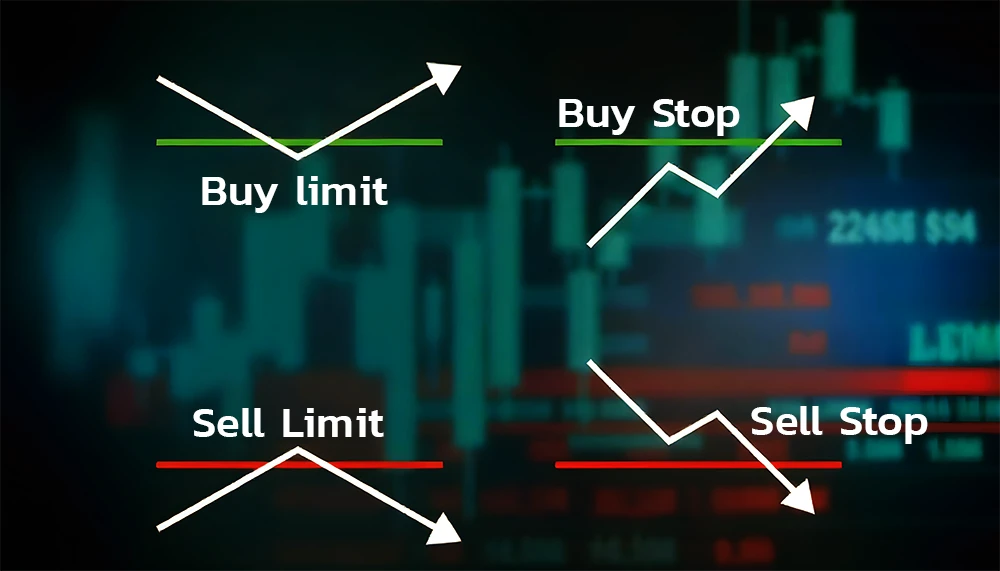
Many new traders easily confuse Limit orders with Stop orders. Although both belong to the category of pending orders, their trigger logic is completely opposite.
The logic of a Buy Limit can be compared to buying groceries at a market: pork is priced at 20 yuan per jin, but the buyer considers the price too high and wants to wait until it drops to 18 yuan near closing time before buying. Its core feature is that the current market price is above the pending order price, and the trader waits to buy at a lower price.
The logic of a Buy Stop is the opposite: a trader is interested in a property, and the agent says the owner will no longer negotiate if the price breaks above 3 million yuan. Worried that the price may continue rising, the trader sets an instruction in advance to buy immediately once the price breaks that level. Its core feature is that the current market price is below the pending order price, and the trader places an order at a higher price to chase the breakout.
Taking the current EUR/USD quote of 1.0850 as an example: placing a Buy Limit at 1.0805 means entering long only when the price pulls back to that level; placing a Buy Stop at 1.0880 means entering only after the price breaks above that level. The former waits for a pullback, while the latter waits for a breakout.
To make the distinction clearer, the following table compares the key attributes of four mainstream pending order types:
| Order Type | Pending Price Relative to Current Price | Trigger Direction | Typical Use Case |
|---|---|---|---|
| Buy Limit | Below the current price | Triggered when price falls to the pending order price | Waiting to buy a pullback in an uptrend |
| Buy Stop | Above the current price | Triggered when price rises to the pending order price | Entering after a breakout above key resistance |
| Sell Limit | Above the current price | Triggered when price rises to the pending order price | Waiting to sell a rebound in a downtrend |
| Sell Stop | Below the current price | Triggered when price falls to the pending order price | Entering short after a break below key support |
The two types of pending orders correspond to pullback entry and breakout entry respectively. There is no absolute superiority between them, but once the direction is reversed, the strategy will fail directly. Using a Buy Limit in an obvious downtrend while waiting for a rebound does not bring cheap entries; it brings the risk of catching a falling knife. Conversely, insisting on using a Buy Limit to wait for a pullback during a breakout move after originally considering a Buy Stop may cause the trader to miss the entire trend.
Three Types of Random Buy Limit Levels Common Among Beginners
When new traders set Buy Limit orders, the three most common arbitrary levels are as follows:
Round numbers: such as 1.0800 and 1.0900, which look neat and orderly. Round numbers usually attract a large number of stop-loss orders and pending orders. Their liquidity structure is complex, and they do not naturally constitute valid support.
Previous lows that were touched before: because price rebounded after falling to that level last time, the trader assumes it will rebound again this time. This judgment ignores the specific market context and liquidity structure behind the previous rebound.
Subjectively judged oversold levels: entirely based on the trader’s personal feeling about the size of the decline, without objective historical verification or statistical support.
The common feature of these three types of levels is the lack of historical buying interest verification. A level truly worth using for a Buy Limit must meet one core condition: there must be evidence that funds are willing to step in and absorb selling pressure in that area.
How to Identify an Effective Support Zone
The method is straightforward: verify it through historical price action. Taking the EUR/USD four-hour chart as an example, if price has tested the 1.0800 to 1.0810 area three times over the past two weeks, formed long lower shadows each time, and then rebounded, this indicates clear buying support in that range. If the current price rises again to 1.0880 and the trader is waiting to buy the pullback, setting a Buy Limit near 1.0808 has historical support.
Conversely, if the price only touched 1.0800 once on the previous trading day and then broke below it without any sign of a rebound, setting a Buy Limit at 1.0805 lacks any historical support and is purely based on subjective judgment. Both operations are Buy Limit orders in form, but the logic behind them is completely different.
A simple self-check method is to answer one question before placing the pending order: if this were not a pending order but a manual trade, would you be willing to enter at this level? If the answer is not sufficiently certain, changing a manual trade into a pending order will not improve trade quality; it will only allow the loss to occur automatically sooner.
Complete Execution Process Before Placing a Pending Order
Setting a Buy Limit pending order should follow the sequence below step by step. No step should be omitted:
Confirm the major direction: open the daily chart and determine whether the current market is in an uptrend, downtrend, or range-bound structure. Buy Limit orders can be used for pullbacks in an uptrend or near the lower boundary of a range. In a clear one-sided downtrend, the trade should be abandoned directly. A price drop is not an opportunity to get on board, but a risk of becoming exit liquidity.
Locate a historically supported zone: switch to the four-hour chart and review the past month of price action to find areas where price has stopped falling and rebounded at least twice. For example, if the 1.0800 to 1.0810 area is identified and price has formed long lower shadows three times, the support is valid.
Decide the pending order price: avoid placing the order at the very edge of the zone. Round numbers attract many pending orders, and price may not touch the level precisely before reversing. Sometimes it misses the level by only a fraction of a pip and never returns. A more prudent approach is to set the pending order price inside the support zone, such as 1.0808 or 1.0805.
Calculate the stop-loss level: the stop loss should be placed below the support zone, reflecting the judgment that if this area is decisively broken, the entry logic is invalid. For example, if the support level is 1.0808, the stop loss can be set at 1.0778, 30 pips away, slightly wider than recent average volatility to avoid being stopped out by normal fluctuations.
Calculate the target price: look upward for the nearest resistance level. If the previous high on the four-hour chart is around 1.0868, the first target can be set at 1.0868, offering 60 pips of upside potential.
Check the risk-reward ratio: 60 pips of upside divided by a 30-pip stop loss gives a ratio of 2:1. This ratio can still keep the account from losing money at a 50% win rate.
Set the order parameters: choose the Buy Limit type, set the pending order price at 1.0808, stop loss at 1.0778, take profit at 1.0868, and set the expiry to valid for the day or valid for the week. This avoids residual pending orders after the weekend close, which may be triggered at a severely deviated price due to a Monday opening gap.
The risk-reward ratio can be expressed in Chinese formula form as follows:
The risk-reward ratio formula is written as
Risk-reward ratio = target profit in pips ÷ stop-loss loss in pips
At this point, all preparation work for the pending order is complete. If any part is missing, the pending order degenerates from planned trading into gambling-style betting.
Three Execution Details Often Overlooked
Managing Order Expiry
Many traders do not review their pending orders after placing them. Two or three trading days later, they open the account and find that the order has been executed with a clear loss. The reason is that the market environment may have completely changed after several trading days. A support zone that was originally valid may have been directly broken due to newly released data or events. Continuing to trade based on logic from several days earlier is equivalent to taking real-time risk based on an outdated judgment.
When placing a pending order, traders should clearly set it as valid for the day or valid for the week. If it expires without execution, it should be actively cancelled, and the market structure and support validity should be reassessed.
Handling Major Data Releases
During the monthly release windows for U.S.CPIdata andNFPdata, related currency pairs may experience sharp moves of 50 to 80 pips within minutes. A 30-pip stop loss that works under normal conditions may be gapped through directly due to slippage in such a market, resulting in an actual execution price far worse than the stop-loss setting.
From a professional perspective, there are two recommended approaches: cancel pending orders directly two hours before the data release and reassess after the data has been fully absorbed; or keep the pending order but widen the stop loss enough to cover the expected volatility range while reducing position size accordingly, keeping the risk exposure per trade unchanged.
Do Not Rush to Move the Stop Loss After Order Execution
Some beginners have a habit: after a Buy Limit is executed and price moves slightly upward, they immediately move the stop loss from 1.0778 up to the breakeven price of 1.0808 in an attempt to secure breakeven first. As a result, price briefly pulls back, hits the breakeven stop, and then continues upward. The trader is shaken out of the position and misses the entire trend.
The correct approach is to keep the stop loss at the originally planned level after the pending order is executed. Before the trend has truly started, premature protection does not protect profit; it protects the trader’s lack of confidence in the position. The initial settings for the risk-reward ratio and stop-loss level should be completed before placing the pending order, not adjusted frequently after execution.
Real Market Event Review: Data Releases and Gap Risk
The U.S. nonfarm payrolls release for May 2026 provides a typical example for understanding the risks of pending orders during major data windows. The event unfolded in chronological order as follows:
Event background: On June 5, 2026, the U.S. Department of Labor reported that nonfarm payrolls increased by 172,000 in May, far above the market expectation of 85,000, while the previous reading was revised upward from 115,000 to 179,000. At the moment of release, the U.S. Dollar Index rose rapidly, EUR/USD fell by more than 50 pips within minutes, a large amount of liquidity was consumed instantly, and actual execution prices for pending orders showed significant slippage.
Trend development: EUR/USD continued to weaken afterward. By June 26, it had broken below key support and approached a multi-month low near 1.1320, with the technical picture showing a bearish breakdown signal. The widening of the U.S.-Germany yield spread by about 20 basis points strengthened downward pressure on the euro.
Industry impact: The data pushed the U.S. Dollar Index to a 13-month high. Several institutions adjusted their forecast range for EUR/USD in 2026 to 1.13 to 1.20 and warned that if the key support at 1.13 failed, further downside would open up. For pending order traders holding Buy Limit orders before the data release, the probability of stop losses being executed at significantly worse prices rose sharply.
(Source: U.S. Bureau of Labor Statistics, The Employment Situation — May 2026, published: 2026-06-05)
The lesson from this event is clear: around major data releases, slippage and gap risk for pending orders rise significantly. Even if the directional judgment is correct, the stop loss may still be executed at a much worse price due to thin liquidity. Professional traders generally recommend avoiding open positions or pending orders within 30 minutes before a data release, or at least placing the stop loss beyond key support and resistance levels to reduce the probability of being stopped out by temporary volatility.
Buy Limit Is a Tool, Not a Strategy
As an order type, Buy Limit is neutral. It saves the effort of watching the market, but it can also make traders mistakenly believe that placing the order means the trade is complete. Most losses related to pending orders do not come from wrong directional judgment, but from arbitrary entry levels, overly tight stop losses, excessively long expiry periods, or insisting on using Buy Limit orders to catch falling knives in a downtrend.
Before setting the next Buy Limit order, it is advisable to answer the following four questions first:
What is the support basis for the pending order level, and has it been historically verified?
After the order is triggered, which signal would prove the judgment wrong, and where should the stop loss be placed?
What is the maximum acceptable loss for this trade, and what percentage of the account does it represent?
If the order is not executed today, will it be placed again, and how should the expiry be set?
Only proceed after all four questions have clear answers. If the answers are vague, the setup should first be used as a review exercise rather than rushed into live trading. A pending order is a tool, not a strategy. No matter how useful the tool is, it cannot reach the destination if the direction is wrong.
Questions About Buy Limit Pending Orders
What is the fundamental difference between Buy Limit and Buy Stop as order types?
A Buy Limit is an order with a pending buy price below the current market price, waiting for price to pull back to that level before buying automatically. A Buy Stop is an order with a pending buy price above the current market price, waiting for price to break above that level before chasing the move. The trigger directions are opposite, corresponding to pullback entry and breakout entry respectively. Before using either, traders must first confirm which one suits the current market structure.
Why should round numbers not be used as Buy Limit order levels?
Round numbers usually attract a large number of stop-loss orders and pending orders, creating a complex liquidity structure. Price may not touch the round number precisely before turning back. Sometimes it misses the level by only a fraction of a pip and never returns, leaving the pending order unfilled. A safer approach is to place the pending order inside the support zone rather than at the round-number boundary at the very edge of the range, improving execution probability and reducing the risk of being swept out by sudden order flow.
How should the validity of a support level be verified?
The validity of a support level should be verified through historical price action. On the four-hour chart, if a price zone has been touched at least twice over the past month and followed by clear rebounds, such as long lower shadows, it indicates sustained buying support in that area. A level that has only been touched once and did not produce a rebound does not constitute valid support and should not be used as the basis for a Buy Limit pending order.
Should an existing Buy Limit be cancelled before major data releases?
It is usually advisable to cancel it or manage it two hours before the data release. During key releases such as CPI and NFP, related currency pairs may move more than 50 pips within minutes, and stop losses set under normal conditions may be executed at far worse prices due to slippage. If the pending order must be kept, the stop loss should be widened accordingly and position size reduced to prevent the risk exposure per trade from increasing.
How should the stop-loss level be managed after a pending order is executed?
After the pending order is executed, the stop loss should remain at the originally planned level and should not be moved up to the breakeven price simply because of a small unrealized gain. Moving the stop loss too early before the trend has truly started can easily cause the position to be stopped out by normal volatility, causing the trader to miss the entire trend. The initial settings for the risk-reward ratio and stop-loss level should be completed before placing the pending order. After execution, adjustments should only be made when the trend structure has materially changed.