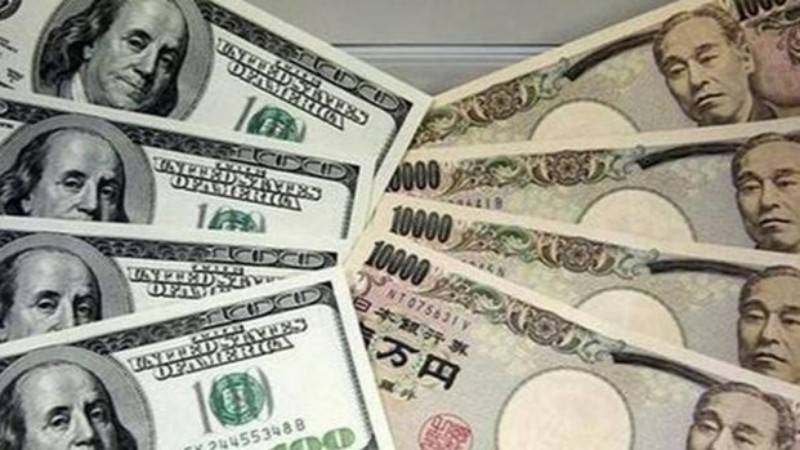
Explore how interest-rate differentials, capital flows and structural deficits drive currency depreciation, using the Japanese yen as a case study, and examine intervention limits, economic effects and practical foreign exchange risk management tools.
Conditions Behind a Sustained Currency Decline
Currency depreciation refers to a decline in the exchange value of a country’s currency relative to other currencies, reducing the quantity of goods and services that an equivalent amount of domestic currency can purchase in international markets. Under a floating exchange-rate regime, this phenomenon is determined by supply and demand in cross-border capital flows rather than by administrative pricing.
The Japanese yen provides one of the most complete recent case studies. Between 28 September 2012 and 15:32 on 13 July 2026, the exchange rate moved from 77.57 yen per US dollar to 162.17 yen per US dollar, representing a depreciation of more than 109%. Since late June 2026, the exchange rate has repeatedly moved beyond the 162 level.
(Source: 21st Century Business Herald, The Yen Has Depreciated by More Than 109% in 14 Years: Is There an End in Sight?, published: 2026-07-14)
Distinguishing Related Concepts
Terms such as depreciation, inflation and external debt default are sometimes used interchangeably in public reporting, but they refer to clearly different economic phenomena and transmission mechanisms.
| Concept | Basis of Value Comparison | Main Driving Factors | Direct Impact on Households |
|---|---|---|---|
| Currency depreciation | The domestic currency relative to foreign currencies | Interest-rate differentials, cross-border capital flows, and trade and services balances | Higher costs for imported goods and overseas spending |
| Inflation | The domestic currency relative to domestic goods and services | Domestic supply and demand, money supply and imported costs | A broad increase in domestic price levels |
| Official devaluation | The domestic currency relative to an officially determined exchange-rate benchmark | Administrative adjustment under a fixed or managed exchange-rate regime | An abrupt change in the exchange rate at a specific point in time |
| Decline in the real effective exchange rate | The domestic currency relative to a basket of trading-partner currencies, adjusted for price differences | Multilateral trade weights and relative changes in national price levels | Combined changes in export competitiveness and overall purchasing power |
Factors Driving Exchange-Rate Depreciation
The Dominant Role of Interest-Rate Differentials
Capital flowing towards markets offering higher returns is one of the most direct drivers of exchange-rate movements. With the Bank of Japan maintaining low domestic interest rates for an extended period, capital has moved into higher-yielding overseas markets, contributing to yen depreciation. At its January monetary policy meeting, the Bank of Japan voted eight to one to keep its policy rate unchanged at 0.75%, while continuing to emphasise that real interest rates remained significantly negative. The policy-rate differential between Japan and the United States, which once exceeded five percentage points, has narrowed to approximately three percentage points following Bank of Japan rate increases and Federal Reserve rate cuts. However, the remaining gap is still sufficient to sustain continuing outflows of carry-trade capital.
Structural Balance-of-Payments Deficits
In addition to interest-rate differentials, changes in the composition of the current account also create long-term pressure:
Trade balance: Japan recorded a trade deficit of JPY567.7 billion in 2025, narrower than the JPY2.7145 trillion deficit recorded in 2024. However, the continued deficit means that pressure to sell the domestic currency still exceeds demand to buy it.
Digital services balance: The deficit exceeded JPY6 trillion in 2025 and is expected to persist in 2026. Against a background of labour shortages, businesses have increasingly outsourced activities such as data processing and system monitoring to overseas cloud platforms. Rising expenditure on cloud services and advertising placed through foreign platforms has become an important source of capital outflows.
Competitiveness assessment: In the International Institute for Management Development’s 2025 World Digital Competitiveness Ranking, Japan placed only 30th among 69 countries and regions, receiving relatively weak assessments in areas such as big data and analytics applications.
(Source: Sina Finance, The Limits Behind Japan’s Currency Intervention: Is 160 Becoming the New Normal?, published: 2026-05-03)
Comparing the Scale of Depreciation
The yen has weakened independently among major currencies. Over the five years to April 2026, it depreciated by approximately 30% against both the US dollar and the euro and by approximately 40% against the Swiss franc. This pattern indicates that the depreciation was not simply a uniform consequence of broad US dollar strength, but was also related to the interest-rate paths and balance-of-payments structures of individual economies.
The Practical Limits of Official Intervention
Japan’s yen intervention measures in 2026 provide a comprehensive case study for evaluating the effectiveness of this policy instrument.
Trigger: After the exchange rate moved beyond JPY160 per US dollar, the Japanese government and the Bank of Japan intervened in the foreign exchange market on 30 April 2026 by buying yen and selling US dollars. This was Japan’s first currency-market intervention since 2024.
Scale: Since intervention began on 30 April, Japan has deployed nearly JPY10 trillion, equivalent to approximately US$63 billion. The operation was conducted in two stages, with approximately JPY5 trillion used on 30 April and a further JPY5 trillion added during the first week of May. By comparison, the previous intervention in July 2024 lasted two days and totalled approximately JPY5.53 trillion, while intervention between April and May 2024 totalled approximately JPY9.79 trillion.
Short-term effect: The operation on 30 April caused the yen to appreciate by 3% against the US dollar within 30 minutes, moving from 160.7 to approximately 155. Following renewed intervention on 6 May, the yen rose by 1.8% within 30 minutes.
Reversal: By early Asian trading on 19 May, the US dollar had reached the JPY159.00 level, reversing more than half of the yen’s post-intervention gains. By 13 July, the exchange rate had reached 162.17, moving fully beyond its pre-intervention level.
Subsequent adjustment: Data released by Japan’s Ministry of Finance on 30 June 2026 showed that no intervention took place between 28 May and 26 June. Reports suggested that Japan might stop signalling its intervention intentions in advance and instead conduct operations without prior warning.
(Source: CNFOL, Japan’s Finance Minister Signals at the G7 That Intervention Could Occur at Any Time as the Nearly JPY10 Trillion Defence Fails to Prevent the Yen Approaching 160, published: 2026-05-18)
Technical Constraints on Intervention
The amount of funding available for intervention is subject to strict constraints. Japan holds approximately US$1.4 trillion in foreign exchange reserves, but around 80% is invested in US Treasury securities, leaving only approximately US$160 billion in readily available cash deposits. According to the US Department of the Treasury, Japan held approximately US$1.19 trillion in US Treasury securities at the end of March, down by around US$48 billion from the previous month, while remaining the largest foreign holder of US government debt. A senior official at Japan’s Ministry of Finance stated that selling US Treasury securities could push US yields higher, which could strengthen the US dollar further and intensify depreciation pressure on the yen.
Foreign exchange intervention is a policy for buying time. Apart from waiting for the oil market to stabilise, there is almost nothing else that can be done.
How Depreciation Transmits to the Real Economy
Higher Imported Costs
Currency depreciation directly increases the domestic-currency cost of imported goods priced in foreign currencies. Bank of Japan data showed that, in May 2026, the year-on-year increase in the yen-denominated import price index reached its highest level since November 2022. This creates a cycle in which depreciation raises import costs and keeps imported inflation elevated, while pressure in the government bond market prevents the central bank from raising interest rates substantially, limiting its ability to narrow the interest-rate differential effectively.
Two-Way Effects on Businesses
Export-oriented companies: Sales revenue denominated in foreign currencies increases when converted into the domestic currency, while overseas pricing becomes more competitive.
Import-dependent companies: Procurement costs rise at the same time. Where final selling prices are constrained by market competition or price controls, profit margins are compressed.
Companies with overseas liabilities: The domestic-currency cost of repaying principal and interest on foreign-currency debt increases as the exchange rate declines.
Domestic service companies: Direct foreign exchange exposure may be limited, but these companies remain subject to indirect effects as imported costs pass through energy and raw-material prices.
Changes in Household Spending
The actual domestic-currency cost of cross-border expenditure can be expressed as follows:
Actual domestic-currency expenditure = Foreign-currency price × Exchange rate × (1 + Currency conversion cost rate)
Overseas travel, international tuition fees, cross-border e-commerce purchases and imported consumer goods are the four categories in which households experience the most direct impact. If the domestic currency depreciates by 10%, the domestic-currency cost of the same foreign-currency amount increases by approximately 11%, creating a significant cumulative difference for long-term expenditure commitments.
Scope of Risk Management Instruments
Contract-Based Instruments Available to Businesses
Forward foreign exchange contracts: Settlement takes place on an agreed future date at a predetermined exchange rate. These contracts are suitable for trade transactions where both the payment date and amount are relatively certain.
Foreign exchange swaps: A spot transaction and an offsetting forward transaction are combined to adjust the maturity structure of foreign-currency funds, primarily for liquidity management.
Foreign exchange options: The buyer pays a premium for the right, but not the obligation, to trade at an agreed exchange rate. The option may be left unexercised if the exchange rate moves favourably. Options cost more than forwards but preserve potential upside.
Natural hedging: The currency composition of receipts and payments is adjusted so that foreign-currency income and expenditure are matched by currency and maturity, reducing net exposure at source.
Adjustments to Personal Asset Allocation
Currency diversification: Allocate part of the portfolio to deposits or bonds denominated in different currencies to reduce concentration in a single currency.
Assets negatively correlated with the domestic currency: Foreign-currency securities, precious metals or commodities may provide partial compensation when the domestic currency weakens, although their own price volatility creates an additional source of risk.
Managing the timing of expenditure: Foreign currency required for confirmed overseas expenses may be purchased in stages to smooth exchange-rate fluctuations and avoid concentrated exposure at a single point in time.
These instruments are intended to reduce the uncertainty created by exchange-rate fluctuations rather than to guarantee returns. Every hedging strategy carries a cost and may limit potential gains when the exchange rate moves favourably. The selected instrument should therefore match the scale and maturity structure of the exposure and the user’s capacity to bear risk.
Questions About Currency Depreciation
Why does central bank intervention often have only a short-term effect?
Intervention changes short-term supply and demand but cannot eliminate the fundamental factors driving depreciation. The yen intervention on 30 April 2026 caused the currency to appreciate by 3% within 30 minutes, but more than half of the gain had been reversed by 19 May. With the US–Japan interest-rate differential remaining at approximately three percentage points and persistent deficits in trade and digital services, the momentum behind carry-trade outflows remained unchanged, causing the exchange rate to return to its previous direction.
Are currency depreciation and inflation the same thing?
The two concepts measure different relationships. Depreciation refers to a decline in the exchange value of the domestic currency relative to other currencies, while inflation refers to a decline in its purchasing power relative to domestic goods and services. However, there is a transmission relationship between them: depreciation raises import costs, which can then increase domestic prices and create imported inflation. Bank of Japan data showing that the year-on-year increase in the yen-denominated import price index reached its highest level since November 2022 in May 2026 provide a direct example of this transmission.
Can a country with large foreign exchange reserves always defend its currency?
There can be a substantial difference between total reserves and readily deployable funds. Japan holds approximately US$1.4 trillion in foreign exchange reserves, but around 80% is invested in US Treasury securities, leaving only approximately US$160 billion in readily available cash deposits. Selling US Treasury securities to raise funds could increase US Treasury yields and strengthen the US dollar, thereby intensifying pressure on the domestic currency. This limits the practical use of that approach.
Is domestic-currency depreciation always beneficial for exporters?
The effect depends on the company’s cost structure. Foreign-currency sales revenue increases when translated into the domestic currency, but companies dependent on imported raw materials and energy also face higher procurement costs. The net effect must therefore be calculated item by item. Japan recorded a trade deficit of JPY567.7 billion in 2025, indicating that the overall balance had not returned to surplus despite continuing depreciation. Exchange-rate advantages alone were therefore insufficient to offset higher import costs.
How can investors determine whether depreciation is a short-term fluctuation or a long-term trend?
The key is to distinguish between different types of driving factors. Movements caused by geopolitical events or market sentiment usually reverse after the relevant event subsides. Depreciation driven by structural interest-rate differentials and persistent trade and services deficits is more likely to continue. The yen depreciated by more than 109% between September 2012 and July 2026, while repeated interventions provided support for only a few weeks. This demonstrates that the direction of the exchange rate is difficult to reverse when the underlying structural factors remain unchanged.