Review FOREX.com’s global regulation, Cayman entity for China clients, market maker model, spreads, withdrawal fees, platforms, education and trading restrictions.
FOREX.com: Overall Positioning and Core Assessment
FOREX.com is a forex and contract for difference broker with more than 25 years of operating history. It was founded in and initially operated under the GAIN Capital brand. It was once listed on the New York Stock Exchange under the former NYSE ticker GCAP. , GAIN Capital was acquired by INTL FCStone, now renamed StoneX Group, Nasdaq ticker SNEX, in an all-cash transaction, and FOREX.com became the retail trading brand under StoneX Group. According to publicly available financial report data, StoneX Group recorded record revenue of USD 4.13 billion in fiscal year, indicating relatively solid financial strength.
FOREX.com’s key strength lies in its global multi-jurisdiction regulatory structure. It has regulated subsidiaries in seven major financial jurisdictions worldwide, and its education and research capabilities have repeatedly received high scores in third-party reviews. However, its operating model is Market Maker, scalping is not allowed, and accounts for Chinese clients are actually regulated offshore by the Cayman Islands Monetary Authority (CIMA). These factors can significantly affect its suitability for different types of users.
Based on the submitted materials and publicly verified information, FOREX.com’s main features can be summarized as follows:
Regulated in seven financial jurisdictions worldwide: United States (CFTC/NFA), United Kingdom (FCA), Australia (ASIC), Cayman Islands (CIMA), Canada (IIROC), Japan (FSA), Singapore (MAS)
Parent company StoneX Group is a Nasdaq-listed company with relatively high financial transparency and revenue of more than USD 4 billion in fiscal 2025
Strong education and research capabilities — according to ForexBrokers.com, its Trading Academy is among the industry’s top tier
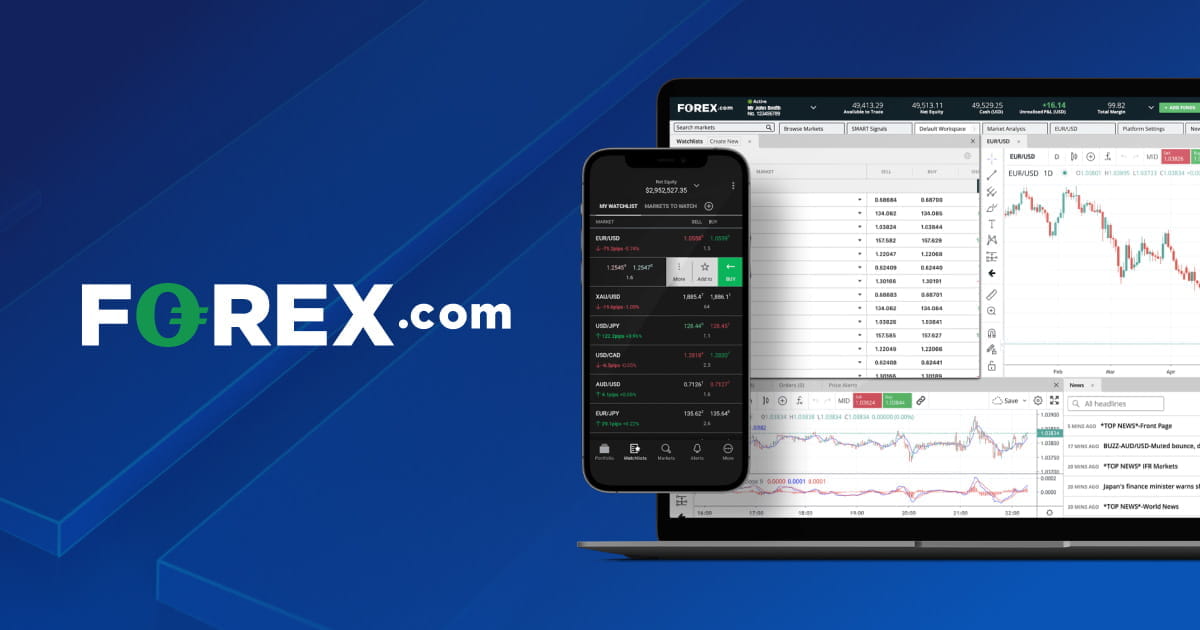
Provides multiple platform choices: proprietary FOREXTrader platform, MT4, MT5, web platform and mobile app
Client funds are held in segregated accounts at JPMorgan Chase, with daily reconciliation of segregated funds
At the same time, the following issues and limitations require particular attention:
Accounts for Chinese clients are actually operated by the Cayman Islands entity (CIMA-regulated), not directly regulated by the FCA or ASIC, resulting in a gap in investor protection
The Market Maker model involves potential conflicts of interest, as the broker may act as the counterparty to trades
Scalping is not allowed, creating restrictions for short-term strategy users
Withdrawal fees of USD 25–40 per transaction are relatively high by industry standards
Inactivity fee: USD 15 per month after 12 months of no trading activity
Spreads on major instruments, such as EUR/USD at around 1.6, do not offer a clear competitive advantage in the industry
Tradable instruments are mainly concentrated in forex, precious metals and index CFDs, without individual stocks, ETFs or cryptocurrencies
From the perspective of suitable users, FOREX.com is more suitable for medium- to long-term forex traders who value regulatory qualifications and historical brand credibility, especially users who need direct access to the US and UK markets. Its education system also has certain value for beginners who are willing to learn. However, for users pursuing ultra-short-term trading, or scalping, FOREX.com’s trading rule restrictions make it unable to meet such needs. For Chinese investors, special attention should be paid to the fact that the account is actually assigned to the Cayman Islands entity. Although FOREX.com is regulated by multiple top-tier institutions globally, Chinese clients are not directly under the protection framework of the FCA or ASIC.
Core Information Overview
| Item | Information |
|---|---|
| Brand Name | FOREX.com |
| Parent Company | StoneX Group Inc. (Nasdaq: SNEX), with former GAIN Capital acquired in 2020 |
| Establishment Date | 1999 |
| Operating Model | Market Maker |
| Main Regulation | US CFTC/NFA, UK FCA (113942), Australia ASIC (345646), Cayman Islands CIMA, Canada IIROC, Japan FSA, Singapore MAS |
| Regulatory Entity for Chinese Clients | Cayman Islands Monetary Authority (CIMA) |
| Tradable Instruments | Forex currency pairs, precious metals, index CFDs |
| Main Platforms | FOREXTrader, MT4, MT5, web platform, mobile app |
| Account Types | Standard account (Spread-Only), Raw Pricing account, MetaTrader account |
| Minimum Deposit | USD 250 |
| Maximum Leverage | Default 200x for forex/precious metals, up to 400x upon application; 100x for CFDs |
| Main Spreads | EUR/USD around 1.6, gold around 3.5 (Standard account) |
| Spread Type | Floating spreads |
| Minimum Position Size | 0.01 lots |
| Is Scalping Allowed | Not allowed |
| Is Hedging Allowed | Supported, with no additional margin required |
| Stop-Out Level | Close to 100% |
| Server Time Zone | FOREXTrader: Eastern Time (UTC-5); MT4: Beijing Time |
It should be noted that the account types, leverage limits and product range offered by FOREX.com may vary across regulatory jurisdictions. For example, the FCA and ASIC impose leverage limits on retail clients, with major currency pairs capped at 30x and 30x respectively, while leverage under Cayman Islands CIMA regulation may be higher, with forex leverage up to 400x. When Chinese users open accounts, they are usually assigned to the Cayman Islands entity. This means higher available leverage, but investor protection standards are lower than those under FCA or ASIC regulation.
Regulation and Trustworthiness
Global Multi-Jurisdiction Regulatory Structure
FOREX.com’s regulatory structure covers seven major financial jurisdictions worldwide, which is a significant feature that distinguishes it from many brokers holding only one or two licenses. The following table summarizes its main regulatory qualifications:
| Regulator | Country / Region | Regulatory Number | Applicable Scope |
|---|---|---|---|
| CFTC / NFA | United States | NFA 0339826 | US clients |
| FCA | United Kingdom | 113942 | UK and European clients |
| ASIC | Australia | 345646 | Australian clients |
| CIMA | Cayman Islands | — | China and most other regional clients |
| IIROC | Canada | — | Canadian clients |
| FSA | Japan | — | Japanese clients |
| MAS | Singapore | — | Singapore clients |
In terms of regulatory coverage, FOREX.com’s qualifications are among the first tier in the industry. The FCA, ASIC and CFTC/NFA are all globally recognized top-tier financial regulators, with authorization requirements covering multiple dimensions such as capital adequacy, client fund segregation, regular audits and risk management. This means that clients who open accounts in the corresponding jurisdictions can receive relatively comprehensive investor protection. For example, clients under FCA regulation may receive up to GBP 85,000 in compensation under the Financial Services Compensation Scheme (FSCS), while client funds under CFTC regulation are protected by the US Commodity Exchange Act.
Regulatory Entity Allocation That Chinese Clients Need to Note
However, having “many” regulatory qualifications does not mean every client receives the same level of protection. According to FOREX.com’s official disclosure, FOREX.com services for Chinese clients are provided by GAIN Global Markets, Inc. "GGMI", which is registered in the Cayman Islands and regulated by the Cayman Islands Monetary Authority (CIMA) under the Securities Investment Business Act. Although the Cayman Islands has a legitimate financial regulatory framework, its regulatory standards and enforcement intensity objectively differ from top-tier institutions such as the FCA and ASIC, and CIMA regulation does not provide a statutory investor compensation mechanism similar to the FSCS.
For Chinese users, this means that even though FOREX.com holds multiple top-tier regulatory licenses globally, if your account belongs to the Cayman Islands entity, actual investor protection is bounded by the Cayman Islands legal framework. This should be given full attention when assessing FOREX.com’s fund safety protection. Before opening an account, users are advised to proactively confirm with customer support which legal entity they will be assigned to and the specific protection measures corresponding to that entity.
Fund Safety Mechanisms
In terms of fund safety, FOREX.com states that all client funds are strictly segregated from company operating capital and held at JPMorgan Chase. Formal daily reconciliation is carried out to ensure that funds in segregated accounts are sufficient to cover liabilities to all clients. In addition, FOREX.com has a Deed of Trust mechanism to further ensure that client funds are separated from the bank’s own assets. Even if the broker becomes insolvent, segregated client funds legally remain the property of clients and have priority in the repayment order.
As a subsidiary of StoneX Group, FOREX.com’s parent company is a Nasdaq-listed company and must comply with strict requirements under US securities laws regarding corporate governance, financial reporting and information disclosure. StoneX’s quarterly and annual financial statements are publicly available on its investor relations page, providing additional transparency for assessing its financial health. According to public data, StoneX Group’s total revenue for the fiscal year reached USD 4.13 billion, net income was USD 305.9 million, and available liquidity exceeded USD 3.1 billion, indicating generally solid financial condition.
However, the specific implementation effect of the above fund safety measures still depends on the regulatory entity to which the account belongs. For clients under FCA or ASIC regulation, fund segregation and compensation mechanisms have stronger legal protection. For clients under CIMA regulation, although the commitment to segregated custody also exists, there may be differences in enforcement capability and dispute resolution efficiency. When weighing fund safety, users should treat regulatory entity allocation as one of the core considerations.
Fees and Real Usage Costs
Spreads and Commissions
FOREX.com provides several account types, and the fee structure varies by account type and region. According to the submitted original materials, the Standard account spread is around 1.6 on EUR/USD and around 3.5 on gold. According to third-party review information, FOREX.com currently mainly provides the following account types:
| Fee Item | Standard Account (Spread-Only) | Raw Pricing Account | MetaTrader Account |
|---|---|---|---|
| EUR/USD Spread | Around 1.2–1.6 | As low as 0.0 | Floating |
| Commission | None, with costs included in the spread | USD 7 round turn per standard lot | Depends on region |
| Suitable Users | Beginners and low-frequency traders | Active traders and high-frequency traders | Users accustomed to MT4/MT5 |
Compared horizontally across the industry, FOREX.com’s Standard account spread, with EUR/USD around 1.2–1.6, is at a mid-to-high level and is not the lowest in the industry. Some brokers known for low costs can reduce EUR/USD spreads to 0.8 or even lower. However, spreads are not the only dimension for measuring trading cost. Execution quality, slippage control and platform stability also affect actual trading costs. FOREX.com has a good data record in execution quality and officially claims to provide high-quality trade execution. For traders who pursue overall service quality rather than a single low-cost metric, FOREX.com’s fee level is in the “acceptable but not optimal” range.
The Raw Pricing account provides raw spreads closer to the interbank market, as low as 0.0, but users need to pay a round-turn commission of USD 7 per standard lot. If users trade in larger volumes and at higher frequency, the total cost of the Raw account may be lower than that of the Standard account. However, if monthly trading volume is limited, the commission-free advantage of the Standard account may be more practical. Users should make simulated calculations based on their own trading frequency when choosing.
Overnight Financing and Holding Costs
Holding positions overnight will generate overnight financing fees, or swap fees, with the specific amount varying by instrument and position direction. FOREX.com displays swap values for each instrument on the platform, and users can check them before trading. Consistent with industry practice, swap fees on forex instruments held overnight on Wednesday are usually charged at triple rates to cover weekend settlement. For traders who prefer swing trading or medium- to long-term holding, the accumulated impact of overnight fees needs to be considered in the strategy.
Hidden Cost Warning
In terms of inactivity fees, according to FOREX.com’s official disclosure, if an account has no trading activity and no open positions for 12 consecutive months, an inactivity fee of USD 15, or equivalent base currency, will be charged every month. If the account balance is less than USD 15, the full balance will be deducted. This is a hidden cost that users who do not plan to trade frequently need to note. If an account has no trading activity for a full year, it may be charged USD 180 in accumulated inactivity fees. Users who use multiple brokers at the same time or only keep a small amount of funds at FOREX.com are advised to check account status regularly to avoid unnecessary fee consumption due to forgetting the account.
In terms of withdrawal fees, the original materials clearly state that each withdrawal requires a fee of USD 25 to USD 40, which is relatively high in the industry. Many brokers now provide free withdrawals, and FOREX.com’s fee standard can accumulate into a significant cost for users who withdraw frequently. In addition, according to FOREX.com Australia’s official website, the minimum withdrawal amount is USD 150, meaning small withdrawals are less favorable in terms of fee ratio.
In terms of currency conversion costs, if the account base currency differs from the deposit currency, currency conversion fees may arise. FOREX.com provides domestic RMB withdrawal channels, but the specific exchange rate and whether there is any additional markup are not described in detail in the submitted materials. Chinese users are advised to pay attention to the actual amount received during real operations.
Platform and Trading Experience
Platform Diversity
FOREX.com provides multiple trading platform options, covering both proprietary and mainstream third-party platforms:
FOREXTrader: FOREX.com’s proprietary desktop trading platform, integrating advanced charting tools, real-time quotes and trade execution functions
MetaTrader 4 (MT4): the world’s most widely used third-party trading platform, supporting automated trading (EA) and rich technical indicators
MetaTrader 5 (MT5): an upgraded version of MT4, supporting more order types and timeframes
WebTrader: web-based trading platform requiring no download or installation, suitable for temporary device use
Mobile app: supports iOS and Android, integrating trading, account management and market analysis functions
Advanced Trading platform: according to third-party review information, this platform integrates advanced chart analysis and research report functions
From the perspective of platform coverage, FOREX.com provides a complete matrix from proprietary platforms to industry-standard platforms. FOREXTrader, as a proprietary platform, has accumulated certain technical depth in execution speed and functional richness. MT4/MT5 coverage ensures that users accustomed to third-party platforms can switch smoothly. However, FOREX.com does not support scalping strategies on third-party platforms. This is a clear restriction for active traders who rely on ultra-short-term trading. Before opening an account, users should carefully read the trading rules regarding the specific definition and enforcement standards of “scalping not allowed” to avoid conflict between strategy and rules.
Mobile Experience
FOREX.com’s mobile trading app is available on both the Apple App Store and Google Play, supporting iOS and Android systems. According to information from third-party review site BrokerChooser, FOREX.com’s mobile experience is above average in the industry, with a relatively intuitive interface and core trading functions available on mobile. However, some users in App Store reviews have expressed dissatisfaction with the withdrawal process and fees. These comments do not directly represent the functional quality of the app, but they do reflect room for improvement in certain parts of the user experience, especially withdrawal operations.
Trading Experience Impact of the Market Maker Model
FOREX.com operates under a Market Maker model, which means that in some cases, the broker may act as the counterparty to client trades. The market maker model is widespread in the global forex industry and operates within legal and compliant frameworks. It can provide clients with instant liquidity and continuous quotes, but it also has a potential conflict of interest: when clients lose money, the broker acting as counterparty theoretically profits.
However, it should be pointed out that for a broker regulated by multiple top-tier institutions and whose parent company is a Nasdaq-listed enterprise, the compliance risk of openly manipulating prices or maliciously hedging client positions is extremely high. FOREX.com states that client funds are held in segregated accounts, that it does not engage in proprietary trading, and that it maintains transparency in execution data. Nevertheless, the potential conflict of interest in the market maker model objectively exists. For traders who are especially sensitive to this issue, STP/ECN brokers may be more persuasive in terms of interest neutrality.
Demo Account
FOREX.com provides a free demo account service, allowing users to become familiar with platform operation and trading processes in an environment without real capital risk. Because FOREX.com provides multiple platform choices and does not allow scalping, the demo account is valuable for assessing platform suitability and testing whether a trading strategy is restricted by the rules. Users are advised to fully understand FOREX.com’s trading rules and execution characteristics through a demo account before making a real deposit.
Product Range and Market Coverage
FOREX.com’s tradable instruments are mainly concentrated in three major categories: forex currency pairs, precious metals and indexCFDs. In terms of product coverage, FOREX.com’s product range is mid-level in the industry. Its forex currency pair coverage is relatively comprehensive, precious metals include gold and silver trading, and index CFDs cover major global stock indices.
However, FOREX.com’s product line has clear limitations in breadth. Compared with competitors offering hundreds or even thousands of tradable instruments, FOREX.com does not provide individual stock CFDs,ETFs or cryptocurrency CFDs. For investors seeking multi-asset allocation and hoping to trade forex, stocks and cryptocurrencies on the same platform, FOREX.com’s product coverage may not be sufficient.
The practical meaning of different instruments needs to be assessed separately. Forex currency pairs are FOREX.com’s core strength, with good support in execution quality and liquidity depth. The precious metals market also has a mature price discovery mechanism. Index CFDs provide users with a way to participate in the overall trends of major global stock markets, but users should note that CFDs are not equivalent to holding index component stocks, and holding costs, such as overnight fees, will accumulate with holding time. If a user’s trading strategy focuses only on forex and precious metals, FOREX.com’s product coverage is basically sufficient. But if the user wants to expand into commodities, individual stocks or crypto markets, they may need to consider finding supplementary platforms outside FOREX.com.
Supporting Resources
Educational Resources
FOREX.com’s educational resources are one of its widely recognized strengths in the industry. According to ForexBrokers.com’s review, FOREX.com’s Trading Academy is rated among the industry’s top tier, offering systematic learning content across multiple levels from basic concepts to advanced trading strategies. Educational content includes online courses, video tutorials, interactive learning modules and trading guides.
FOREX.com has provided Chinese-language services since, making it one of the earliest brokers to enter the Chinese market. Its Chinese education resources are relatively well developed. For Chinese users, FOREX.com’s investment in education means they can access systematic learning support from beginner to advanced levels on the same platform, without relying entirely on external information sources. This has practical value especially for trading beginners, as the completeness of educational resources directly affects the learning curve and efficiency of building a knowledge framework.
From the perspective of different user profiles, beginner investors can obtain a systematic knowledge framework from FOREX.com’s Trading Academy, reducing the fragmentation risk of self-study. Advanced traders can gain further inspiration through FOREX.com’s advanced courses and strategy analysis. However, regardless of the quality of educational resources, they remain auxiliary. Trading profitability ultimately depends on the user’s own risk management and market understanding, and education cannot replace the accumulation of real trading experience.
Research Content
FOREX.com’s research tools have also received relatively high ratings from third-party reviews. According to reviews from BrokerChooser and InvestingReviews, FOREX.com’s Advanced Trading platform integrates rich chart analysis, technical analysis tools and market research reports, giving users the ability to complete the full loop of “information acquisition—analysis and decision-making—trade execution” within the platform. Research content covers market commentary, technical analysis, economic calendars and trading alerts.
FOREX.com’s research strengths are most helpful to two types of users: first, users who want to obtain trading information on the same platform, reducing the inconvenience of switching between multiple platforms; second, users who rely on technical analysis for trading decisions, as the professional charting tools on the Advanced Trading platform can provide relatively sufficient analytical support. However, for users who rely on fundamental analysis or need macro research reports, FOREX.com’s research content focuses more on the technical side and may not be as strong in deep macro analysis as some competitors focused on research.
Deposits and Withdrawals
FOREX.com supports multiple deposit and withdrawal methods, but available methods may vary by region:
| Method | Deposit | Withdrawal | Fees | Estimated Arrival Time |
|---|---|---|---|---|
| Credit/Debit Card | Supported | Returned to the original card | FOREX.com does not charge deposit fees; withdrawals cost USD 25–40 each | 1–3 business days |
| Bank Wire Transfer | Supported | Supported | FOREX.com does not charge deposit fees; withdrawals cost USD 25–40 each; intermediary banks may charge additional fees | 1–5 business days |
| E-wallets (Skrill/Neteller, etc.) | Supported, depending on region | Supported, depending on region | FOREX.com does not charge deposit fees | Relatively fast |
| Domestic RMB Withdrawal | — | Supported | Withdrawal fees apply | FOREX.com claims the process is automated and relatively fast |
For Chinese users, FOREX.com’s domestic RMB withdrawal channel, including both principal and profits, is a convenience feature. The original materials also mention that FOREX.com has dedicated staff to follow up the withdrawal process and assist users in completing withdrawal applications through email, phone and SMS. However, it must be recognized that the withdrawal fee of USD 25 to USD 40 per transaction is relatively high in the industry. Many competitors already offer free withdrawals or charge only very low fees. For users who withdraw frequently, this fee can accumulate into a notable additional cost.
FOREX.com follows anti-money laundering principles, so withdrawals must be returned through the original deposit channel. If users have used multiple deposit methods, withdrawals will be processed in the order of credit cards first, followed by other methods. The minimum withdrawal amount is USD 150, according to information from the Australian official website, making small withdrawals less favorable in terms of fee ratio.
Overall, FOREX.com’s deposit and withdrawal system has relatively strong safeguards in terms of security and compliance, but it is not competitive in fee cost. Users are advised to include withdrawal fees in their overall trading cost calculation when planning fund management, especially traders who withdraw frequently.
Questions About FOREX.com
What is the background of FOREX.com’s parent company StoneX? Is FOREX.com still an independently listed company?
FOREX.com’s former parent company GAIN Capital was once listed on the New York Stock Exchange under the ticker GCAP. In July 2020, INTL FCStone, later renamed StoneX Group and listed on Nasdaq under the ticker SNEX, completed an all-cash acquisition of GAIN Capital for approximately USD 236 million. Since then, FOREX.com has become the retail trading brand under StoneX Group, and GAIN Capital no longer exists as an independent listed company. StoneX Group is a financial services group with a century-long history and is listed on Nasdaq, with revenue of more than USD 4.1 billion in fiscal 2025 and generally solid financial condition. This acquisition means FOREX.com has transformed from an independent retail broker into a sub-brand under a larger financial group, potentially gaining stronger resource support and financial stability, while its operating decisions also need to follow the group’s overall strategy.
Which regulator actually oversees Chinese clients who open accounts with FOREX.com?
According to FOREX.com’s official disclosure, FOREX.com services for Chinese clients are provided by GAIN Global Markets, Inc. "GGMI", which is registered in the Cayman Islands and regulated by the Cayman Islands Monetary Authority (CIMA) under the Securities Investment Business Act. This means Chinese clients’ accounts are not directly protected by the UK FCA, Australia’s ASIC or the US CFTC/NFA, even though FOREX.com holds multiple top-tier regulatory licenses globally. These licenses apply only to clients in the corresponding jurisdictions. CIMA is a legitimate financial regulator, but its regulatory standards and investor protection intensity objectively differ from top-tier institutions such as the FCA and ASIC. Before opening an account, Chinese users are advised to proactively confirm the legal entity their account belongs to and assess whether the protection level provided by that entity matches their own risk tolerance.
Why does FOREX.com not allow scalping?
FOREX.com clearly states in its trading rules that scalping strategies are not allowed. Scalping usually refers to a trading method involving frequent opening and closing of positions within a very short time, relying on small price movements for profit. Brokers operating under the market maker model usually take a cautious approach to scalping because ultra-short-term trading can create challenges for the broker’s risk management and liquidity management. For active traders who rely on scalping strategies, this rule means FOREX.com cannot meet their trading needs. Users should carefully read FOREX.com’s specific definition and judgment standards for “scalping not allowed” before opening an account to avoid strategy-rule conflicts that may lead to trading restrictions or account adjustments. If scalping is your core trading method, consider STP/ECN brokers that clearly support this strategy.
What is the difference between FOREX.com’s Standard account and Raw Pricing account, and how should users choose?
FOREX.com mainly provides two account types: Standard account (Spread-Only) and Raw Pricing account. The Standard account does not charge commissions, with all trading costs reflected in the spread, such as EUR/USD around 1.2–1.6. It is suitable for users with lower trading frequency or those who prefer a simple fee structure. The Raw Pricing account offers raw spreads as low as 0.0, but charges a round-turn commission of USD 7 per standard lot, or USD 3.5 per side. It is suitable for active traders with larger trading volume who seek the tightest possible spreads. Which account to choose depends on trading frequency. If monthly trading volume is small, the Standard account may have lower total cost. If average daily trading volume is large, the spread savings of the Raw account may exceed the commission cost. There is also a MetaTrader account for users accustomed to MT4/MT5. Users are advised to test actual trading costs across account types in a demo account before deciding.
What are FOREX.com’s withdrawal fees and inactivity fees?
According to the original materials and official information, FOREX.com’s main hidden fees include two items. First, withdrawal fees: each withdrawal is charged USD 25 to USD 40, which is relatively high in the industry and has a cumulative impact on users who withdraw frequently. Second, inactivity fees: if an account has no trading activity and no open positions for 12 consecutive months, a monthly fee of USD 15, or equivalent base currency, will be charged from the 13th month onward. If the account balance is less than USD 15, the full balance will be deducted. In addition, bank wire withdrawals may also incur intermediary bank charges. Users are advised to include these hidden costs in their overall trading cost calculation when opening an account, and low-frequency traders should pay special attention to inactivity fees.
What level of trader are FOREX.com’s education and research resources suitable for?
According to ForexBrokers.com, FOREX.com’s Trading Academy is among the industry’s top tier, providing systematic learning content from beginner to advanced levels, including online courses, video tutorials and interactive learning modules. For beginners, FOREX.com’s educational resources can provide a relatively complete introductory knowledge framework and reduce the fragmentation risk of self-study. For traders with some experience, FOREX.com’s Advanced Trading platform integrates professional chart analysis and market research reports, supporting trading decisions mainly based on technical analysis. However, for users who need in-depth macro research or fundamental analysis, FOREX.com’s research content focuses more on technical aspects and may require additional third-party information sources. Overall, FOREX.com’s supporting resources are most directly helpful to beginner and intermediate traders.
What practical impact does FOREX.com’s market maker model have on ordinary traders?
FOREX.com operates under a Market Maker model, meaning that in some cases the broker may act as the counterparty to client trades. The core feature of the market maker model is that it can provide clients with instant liquidity and continuous quotes, but it also involves potential conflicts of interest. When clients lose money, the broker theoretically profits. However, for a broker regulated by multiple top-tier regulators, the compliance risk of openly manipulating prices or maliciously hedging is extremely high. FOREX.com states that its execution data remains transparent and that it does not engage in proprietary trading. From the practical experience of ordinary traders, the impact of the market maker model is more reflected in trading rules, such as scalping not being allowed, rather than daily execution quality. If users are uncomfortable with this model, they can consider STP/ECN brokers as alternatives.