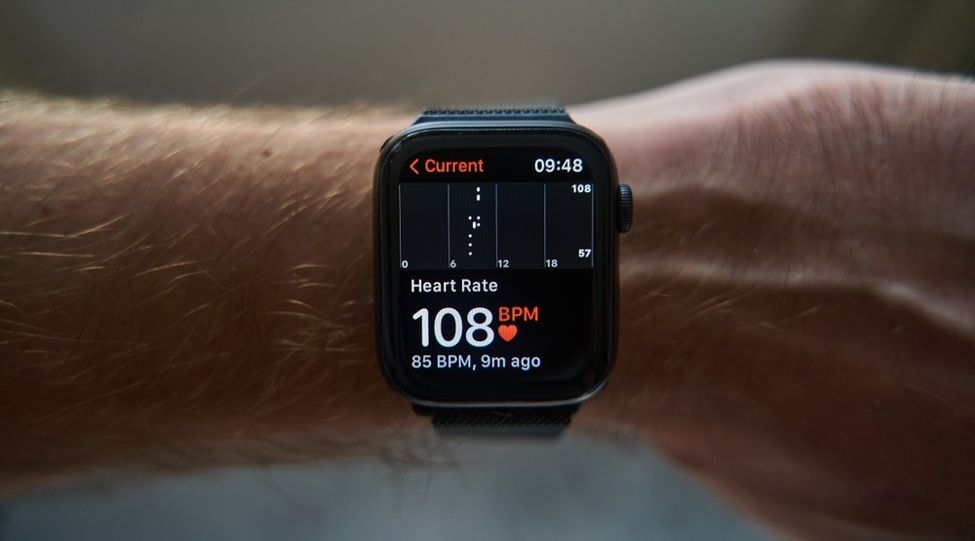
Wearable devices are reducing the friction between market alerts and order execution. This article examines smartwatch trading tools, AI agent access, FCA evidence on push notifications and practical controls for limiting overtrading risk.
What Technological Link Is Emerging Between Wearable Devices and Retail Trading?
In June 2026, a post appeared on Reddit’s r/wallstreetbets forum in which the author claimed that a smartwatch, while maintaining a near-field communication connection with a mobile phone, had triggered an unintended position closure, resulting in an unrealised loss of approximately US$4,200. The post received nearly 400 upvotes and accumulated hundreds of comments. Views in the comments were sharply divided: some respondents questioned the technical mechanism described, noting that anNFCconnection does not itself have the ability to place orders; others argued that the accidental closure may instead have prevented a larger potential loss because the relevant options contracts could ultimately have expired worthless.
The reason this individual case generated widespread discussion lies less in whether the event was genuine than in the structural issue it raised—one that regulators have continued to document. As the endpoint for trading information moves from desktop computers to mobile phones and then to devices worn on the wrist, the physical friction between traders and their orders is progressively reduced. Within a behavioural finance framework, the removal of such friction often corresponds with higher trading frequency and lower decision quality.
Differences in Functional Permissions Across Three Types of Trading Terminal
Understanding this controversy first requires several concepts that are frequently conflated in public discussion to be distinguished. Market monitoring, order execution and automated trading differ materially in their technical permissions, regulatory treatment and risk exposure.
| Concept | Core Function | Order-Placement Permission | Principal Source of Risk |
|---|---|---|---|
| Market-monitoring application | Displays quotes, watchlists and price alerts | No | Notification frequency affects traders’ emotions and trading rhythm |
| Mobile execution terminal | Full order placement, amendment and position-closing functions | Yes | Accidental input, gesture-based interface design and absence of confirmation steps |
| Wearable companion application | Notifications, position overviews and quick links | Usually no | Information becomes difficult to ignore, reducing the cooling-off period |
| Agent interfaces and automation | Programs or artificial intelligence agents call trading interfaces | Depends on the scope of authorisation | Permission boundaries and separation of access to funds |
This distinction has practical significance. Most smartwatch applications currently offered by brokers fall into the third category: companion monitoring tools designed to deliver information to the wrist while retaining the order-confirmation stage within the mobile application. This architecture creates a clear discrepancy between the scenario described in the Reddit post and the actual permissions of mainstream products.
Brokers’ Record of Deploying and Withdrawing Wrist-Based Trading Terminals
Connecting wearable devices to trading systems is not a recent experiment. Its development has followed a distinctly uneven path.
In 2015, UK broker IG launched trading functionality for the Apple Watch, becoming one of the earlier firms to extend order capabilities to a wrist-based terminal. The service was withdrawn around 2017, with low actual usage publicly cited as the reason.
MetaQuotes, the developer of the MetaTrader platform, has never released a watchOS application, instead concentrating its mobile strategy on smartphones and tablets.
On 8 July 2026, ThinkMarkets launched a ThinkTrader smartwatch companion application for Apple Watch and Wear OS. The product is positioned as a monitoring tool, with orders still required to be submitted through the mobile application.
During the same period, the broker opened its platform interface to artificial intelligence agents through aMCPserver, allowing agents to execute trades without providing access to client funds.
This timeline reveals a recurring conclusion: the screen size, interaction precision and risk of accidental input associated with wrist-based terminals make them unreliable for order execution. For information delivery, however, they offer a level of immediacy that mobile phones cannot match. Broker product strategies have therefore gradually converged on “notification rather than execution”.
New Variables Introduced by Artificial Intelligence Agent Access
It is also important to note that opening agent interfaces is changing the distribution of risk. When trading permission is granted by a human to a program, the risk of accidental input is replaced by the risk of incorrectly defined authorisation boundaries. Separating access to funds from order-execution permission becomes the most critical design constraint in this type of architecture. Although this issue may appear different from the discussion of accidental smartwatch activity, both share the same underlying question: how many human confirmation steps should remain between a trading decision and its execution?
How Regulatory Data Quantifies the Effect of Notifications on Trading Behaviour
Compared with an isolated case, empirical research conducted by regulators provides more statistically meaningful evidence. The Financial Conduct Authority has expressly classified push notifications and prize draws as gamification techniques, concluding that such designs may encourage consumers to engage in higher-risk trading behaviour.
A behavioural experiment conducted by the regulator involving more than 9,000 participants produced the following results:
Participants receiving push notifications made approximately 11% more trades than the control group.
The number of higher-risk trades increased by approximately 8%.
Users of highly engaging applications traded at approximately seven times the frequency of other users.
Among the most actively used applications, 3.75% of users exhibited characteristics associated with problem gambling, broadly comparable with the 3.5% rate recorded in online gambling.
(Source: Financial Conduct Authority, Trading Apps Review)
These findings indicate that the principal source of risk is the notification mechanism itself rather than the hardware used to deliver it. The distinctive feature of a smartwatch is that it places the same notification in a location that is especially difficult to ignore. A mobile phone can be turned face down, silenced or left in another room, whereas a device worn on the wrist can bypass these avoidance measures through haptic feedback.
Structural Link Between User Activity and Broker Revenue
From a business-model perspective, increased trading activity has a direct relationship with broker revenue. According to public filings submitted by Plus500, the company generated revenue of US$3,268 per active customer in the 2025 financial year.
The calculation can be expressed as follows:
Revenue per active customer = Total revenue for the period / Number of active customers during the period
Under this structure, higher revenue per customer may result from increased trading frequency, larger individual transactions or changes in product mix. This means that any product design capable of increasing the frequency of customer interactions creates a positive financial incentive. The tension between this incentive structure and regulators’ concerns about excessive trading has long existed within the industry.
Why Trading-Discipline Tools Fail on Always-Connected Devices
FM Intelligence made an observation in its research: the original purpose of preset price alerts was to help traders step away from their screens while still identifying important price levels without continuously monitoring the market. The effectiveness of this function depends on one condition—that there is a gap in time and space between the alert being triggered and the trader responding.
Always-worn, always-connected devices remove this gap. When an alert reaches the wrist directly through vibration and a broker application requires only two taps to reach the order screen, the alert changes from a discipline tool into a trigger. This transformation does not involve any technical malfunction; it is a natural consequence of product convenience.
Based on this mechanism, practical adjustments may include:
Disabling wrist-based notifications for trading applications at the device-system level while retaining alerts on the mobile phone.
Setting price-alert thresholds at significant levels requiring active decision-making rather than at small, frequently occurring price movements.
Enabling a secondary confirmation step in the mobile trading application instead of relying on swipe gestures to submit orders directly.
Separating monitoring periods from execution periods and actively reducing the frequency of information delivery outside designated trading times.
Regularly reviewing changes in account trading frequency and using them as one indicator of trading discipline.
Questions About Wearable Trading Devices
Can a smartwatch genuinely execute trading orders independently?
Most smartwatch applications currently offered by mainstream brokers are monitoring tools that provide quotes, position overviews and price alerts only. Orders must still be submitted through the mobile application. A near-field communication connection is used for data transfer and payment authentication and does not itself have the ability to submit orders to a trading platform.
How much do push notifications affect trading frequency?
An experiment conducted by the UK Financial Conduct Authority involving more than 9,000 participants found that push notifications increased the number of trades by approximately 11% and higher-risk trades by approximately 8%. Users of highly engaging applications traded at around seven times the frequency of other users.
Why have brokers previously withdrawn wrist-based trading functions?
IG launched an Apple Watch trading service in 2015 and withdrew it around 2017, publicly citing low user adoption. The screen size and interaction-precision limitations of wrist-based terminals make them less reliable than mobile phones for order execution, leading the industry to shift towards notification rather than execution.
How is gamification defined within the regulatory framework?
Regulators classify push notifications, prize draws, consecutive login rewards and similar engagement-enhancing design elements as gamification techniques. The focus is on whether these features encourage consumers to make trading decisions beyond their risk tolerance, rather than on the technical method used to implement the design.
How should permission boundaries be set when artificial intelligence agents access trading platforms?
Permissions for agents connected through Model Context Protocol servers are generally divided by function. In publicly disclosed deployments, agents may execute trading instructions but do not have permission to access or transfer funds, with the two capabilities remaining separated at system level.