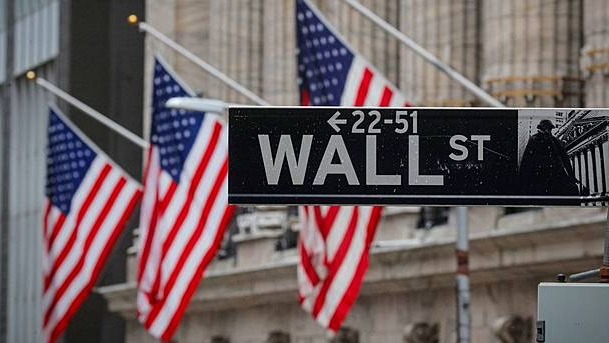
Understand the New York forex session, London overlap, USD liquidity, economic data volatility, and practical strategies for breakout, trend-following, news trading and risk control.
The Role of the New York Session in the Global Forex System
The global forex market operates in a 24-hour continuous rotation during trading days, moving sequentially from Wellington, New Zealand, to Sydney, Tokyo, Singapore, London, New York, and then back to Wellington. In this chain, New York sits at the center of the Americas trading window.
According to the Bank for International Settlements’ 2022 triennial central bank survey, average daily turnover in the global forex market was approximately USD 7.5 trillion. Among this total:
London market: accounts for approximately 40%–43% of global trading volume, making it the largest trading center;
New York market: accounts for approximately 17%–25% of global trading volume, making it the second-largest trading center;
Asian markets such as Tokyo: together account for approximately 15%–20%.
The special position of the New York market comes not only from its trading volume, but also from the central role of theUSDin global foreign exchange reserves, international trade settlement and financial asset pricing. According to International Monetary Fund data, the US dollar accounts for approximately 58%–60% of allocated global foreign exchange reserves. As a result, price movements during the New York session often transmit their influence to other global trading sessions.
“Forex market activity shifts from one financial center to the next as the Earth rotates. Understanding this pattern is far more important than trying to predict exchange rates themselves, because what you trade is never just ‘price,’ but ‘when, in which market, and against which counterparty the execution takes place.’”
The Dual Effect of Session Overlap: Balancing Liquidity and Volatility
The overlap between the New York and London sessions is the most important trading window in forex. From a market mechanism perspective, this overlap window has two characteristics that appear contradictory but in fact complement each other.
Basic Data of the Overlap Window
Overlap period: 08:00–12:00 New York local time, GMT 13:00–17:00, corresponding to Beijing time 21:30–23:30 during daylight saving time and 22:00–00:30 during winter time;
Overlap duration: approximately 4 hours;
Share of trading volume during the overlap window: can exceed 70% of daily trading volume;
Volatility comparison during the overlap window: the average EUR/USD range is 50–90 basis points, and may exceed 150 basis points during peak periods.
Effect One: Abundant Liquidity Reduces Trading Costs
During the overlap period, banks, hedge funds, corporations and retail traders from both Europe and the Americas are active at the same time, creating dense order flow. Ample liquidity encourages market makers to provide narrower bid-ask spreads. For example, the EUR/USD spread may be 1.5–2.5 pips during non-overlap periods, but may narrow to 0.5–1.0 pip during the overlap window. For short-term traders, this means the friction cost of every entry and exit is significantly reduced.
Effect Two: Higher Volatility Creates Spread Opportunities
The overlap window is also a period of intensified volatility. The combined effect of multiple order flows, the concentrated release of major economic data and institutional position adjustments jointly creates an environment of rapid price movement. Compared with the Asian session, the average volatility range during the overlap window can be 2–3 times larger.
| Sub-Period | Liquidity Level | Volatility Level | Suitable Strategy Direction |
|---|---|---|---|
| Before the open, before 21:00 | Medium-low | Low | Observation and pending-order setup |
| New York-London overlap, 21:30–23:30 | Extremely high, daily peak | Extremely high, daily peak | Breakout trading, trend following and data trading |
| After the overlap until before the close | Medium | Medium to declining | Range trading and intraday position management |
| Final hour before the close, around 03:00–04:00 | Low to sharply declining | Declining, possibly accompanied by abnormal gaps | Reduce positions and avoid opening new trades |
Volatility Transmission Mechanism of Economic Data
The reason economic data releases during the New York session can trigger sharp market volatility lies in the following chain:
Expectation pricing: before the data is released, market prices have already absorbed the general market expectation, or consensus forecast;
Expectation-gap shock: when the actual data deviates significantly from expectations, the market must reprice rapidly;
Interest-rate expectation adjustment: employment, inflation and similar data directly affect market expectations for the Federal Reserve’s interest-rate path;
Chain transmission: as the world’s core currency, movements in the US dollar are transmitted through USD majors and crosses to nearly all currency pairs, as well as precious metals, commodities and other markets.
Taking EUR/USD as an example, the price movement within 15 minutes after the release of Non-Farm Payrolls data can usually reach 50–150 basis points, with volatility increasing by approximately 400%–600% compared with non-data periods. During this process, liquidity providers temporarily withdraw part of their quotes, causing spreads to instantly widen to 3–5 times normal levels. This is the main source of slippage risk in data trading.
In-Depth Breakdown of Three Mainstream Strategies During the New York Session
Strategy One: Applicable Conditions for Breakout Trading and False Breakout Filtering
The core of a breakout strategy is to capture continuation moves after price breaks through key technical levels, such as the previous day’s high or low, trendlines or round-number levels. However, this strategy has a significant weakness: when liquidity is insufficient or the news backdrop is unclear, the market is prone to “false breakouts.” Based on market practice, the probability of false breakouts may rise to 40%–60% in low-liquidity environments.
To filter false breakouts, the following conditions are recommended:
Close confirmation method: do not chase an instant break. Instead, wait for price to close above or below the breakout level for a period of time, such as 15 minutes or one complete candlestick;
Magnitude validation method: the move through the key level should reach a certain threshold, such as at least 0.3%–0.5%, rather than merely touching it slightly;
Volume confirmation method: the breakout should be accompanied by a significant increase in trading volume, indicating that real capital is entering and driving the move.
Strategy Two: Effective Range and Failure Boundaries of Trend Following
The basic principle of trend following is that “once a trend forms, it tends to persist for a period of time.” Academic research suggests that the theoretical basis for trend formation includes gradual information diffusion, investor herding behavior and behavioral finance factors such as the Disposition Effect. However, trend following is not effective in all market environments:
Effective environments: one-sided markets, breakout news-driven moves and liquid periods such as the New York-London overlap;
Failure environments: sideways consolidation, two-way whipsaw around major data releases, and the directionless period from the London close to the New York close.
Practical suggestion: when using trend following during the New York session, the 20-period exponential moving average may be used as a trend-direction filter. When price remains above the moving average, only long opportunities are considered, and vice versa.
Strategy Three: Three Execution Models for Data Release Trading
Two-way pending-order model: 5–10 minutes before the data release, place one breakout order above and one below the current price. This applies to situations where the trader expects the data to trigger a clear directional breakout;
Delayed-entry model: wait 15–30 minutes after the data release and enter only after the initial high volatility subsides, sacrificing part of the potential profit in exchange for a higher win rate;
Cross-asset arbitrage model: monitor related instruments at the same time, such as gold and the US dollar, or US Treasury yields and the US dollar, and use opportunities created by convergence or divergence in cross-asset pricing.
Questions Related to the New York Trading Session
How can traders distinguish a “true breakout” from a “false breakout” during the New York session?
Common technical filtering methods include: 1) close confirmation — wait for the daily or hourly candlestick body to close completely beyond the key level; 2) the 3% penetration principle — the closing price should cross the trendline by at least 3% of the trendline price; 3) volume filtering — the breakout should be accompanied by clearly above-average trading volume. In addition, during the highly liquid overlap period, the probability of a true breakout is usually higher than in other sub-periods.
During which time window is volatility usually most intense around a Federal Reserve rate decision?
The impact of a Federal Reserve rate decision is usually concentrated in two stages: 1) the 30–60 minutes after the policy statement is released, when the market digests the rate decision and dot-plot signals; 2) the press conference, which begins around 30 minutes after the statement, where Chair Powell’s answers and wording may further guide the market. Together, these two windows last about 2 hours and form the core period for trading rate-decision events.