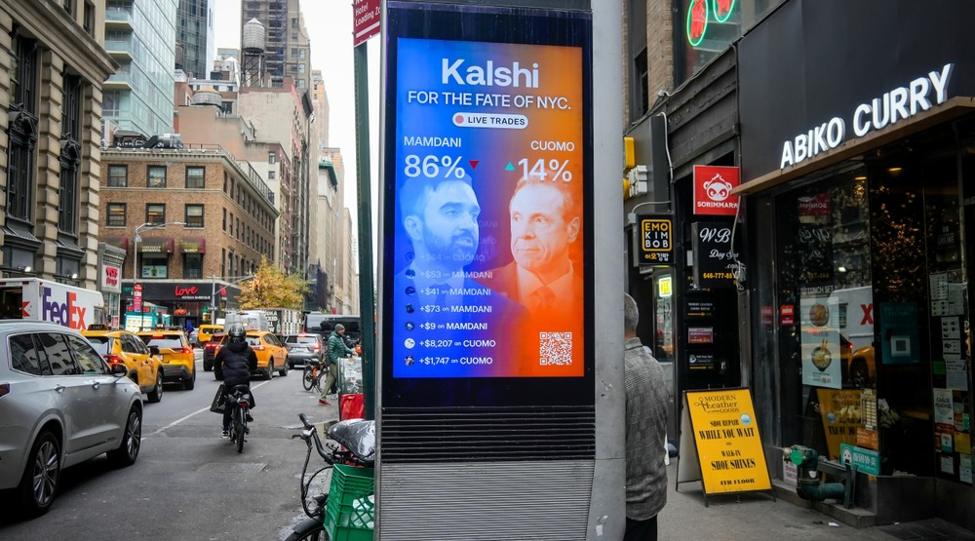
Talos has integrated Kalshi into its digital asset trading platform, enabling eligible market makers and hedge funds to access prediction markets and US-regulated crypto perpetuals without building a separate connection.
Talos Completes Kalshi Integration, Removing the Need for Separate Institutional Connectivity
Digital asset trading technology provider Talos announced on 2026-07-22 that it had completed a systems integration with Kalshi, a regulated US exchange. Market makers and hedge funds using the Talos trading platform can now access Kalshi’s prediction markets and US-regulated cryptocurrency perpetual contracts through their existing digital asset trading environment, without establishing a separate technical connection to the exchange.
Eligible institutional clients can route orders directly to Kalshi through their current trading setup, adding another execution venue without changing their existing execution and risk management processes.
(Source: Finance Magnates, report on the Talos and Kalshi integration announcement, published: 2026-07-22.)
Trading Capabilities Enabled by the Integration
The integration allows trading institutions to apply their existing execution methods to Kalshi markets without launching a dedicated technology development project. Clients can access the exchange through the same order management processes used for other digital asset trading venues. Available capabilities include:
Algorithmic execution: institutions can automate the execution of trading strategies in Kalshi markets.
Request-for-quote (RFQ) block-trading workflows: designed for negotiating larger orders.
Multi-leg strategy execution: clients can execute multi-leg portfolio trades through a single interface.
These capabilities allow market participants to use Kalshi alongside other trading venues without restructuring their trading operations for a separate system.
Kalshi’s 2026 Business Expansion Timeline
Kalshi originally focused on prediction markets as its core business. During 2026, the exchange expanded its product range in several areas, with the institutional integration forming part of its distribution-channel development.
| Date | Business Development | Product Category | Status |
|---|---|---|---|
| First half of 2026 | Launched US-regulated cryptocurrency perpetual futures | Crypto perpetual contracts | Launched |
| First half of 2026 | Cryptocurrency perpetual contract trading volume reached US$5.5 billion | Crypto perpetual contracts | Achieved |
| During 2026 | Launched the professional Pro Terminal trading interface | Professional derivatives trading | Launched |
| During 2026 | Expanded its trading model toGPUpricing contracts | Computing-power pricing contracts | Launched |
| 2026-07-22 | Opened access to market makers and hedge funds through Talos | Prediction markets and crypto perpetual contracts | Effective |
| Second half of 2026 | Broker distribution programme | Channel distribution | Planned |
| Later phase | Support for spread trading between prediction markets and perpetual futures | Cross-product spreads | Under development |
Next Steps
The two companies outlined the following plans for the next stage of their partnership:
A broker distribution programme is scheduled to launch later in 2026, expanding the range of institutional channels through which participants can access Kalshi markets.
Support for spread trading between prediction markets and perpetual futures will be introduced at a later stage, allowing participants to construct cross-product positions across the two contract categories.
How the Institutional Access Model Affects Trading Infrastructure
The principal change introduced by the integration concerns the cost structure of market access. Under the previous model, institutions entering a new trading venue had to establish a dedicated connection, adapt their order management systems and modify their risk control modules, creating a substantial technology investment threshold.
Access through an existing trading workflow removes this barrier. For market makers and hedge funds already operating digital asset strategies within the Talos environment, Kalshi becomes an additional option on their list of execution venues rather than a parallel system requiring separate maintenance.
Kalshi’s launch of US-regulated cryptocurrency perpetual futures in 2026 marked an expansion beyond its core prediction-market business. The institutional access channel, planned broker distribution programme and future support for cross-product spreads form a continuous path as the exchange extends from retail prediction markets into professional derivatives trading.
Frequently Asked Questions About the Talos–Kalshi Integration
What changes in practice as a result of the integration?
Market makers and hedge funds using Talos no longer need to establish a separate technical connection to Kalshi. Clients can route orders to the exchange through their existing digital asset trading environment while retaining their current execution and risk management processes.
Which trading capabilities are available to institutional clients?
Available capabilities include automated algorithmic execution, negotiated block trades through RFQ workflows and multi-leg strategy execution through a single interface. These functions are consistent with the order management processes clients use at other digital asset trading venues.
How do Kalshi’s prediction markets differ from its crypto perpetual contracts?
Prediction markets form the exchange’s core business and are based on the outcomes of specified events. Cryptocurrency perpetual futures are a new product line introduced in 2026 and constitute US-regulated derivatives contracts, marking an expansion beyond the exchange’s traditional prediction-market operations.
When will cross-product spread trading become available?
The two companies said support for spreads between prediction markets and perpetual futures would be introduced at a later stage, although no specific date has been announced. The broker distribution programme is scheduled to begin later in 2026.
Which institutions are eligible for access?
The announcement defines the target users as eligible institutional clients, specifically market makers and hedge funds already using the Talos trading platform. Retail clients are not covered by the current integration, while a broker distribution programme for broader channels is expected to be introduced later.