Analyze how Fed policy, inflation, Treasury yields, central bank gold demand and risk sentiment may shape the U.S. dollar and gold outlook in H2 2026.
Interest Rate Expectations Are Reshaping Asset Pricing Logic
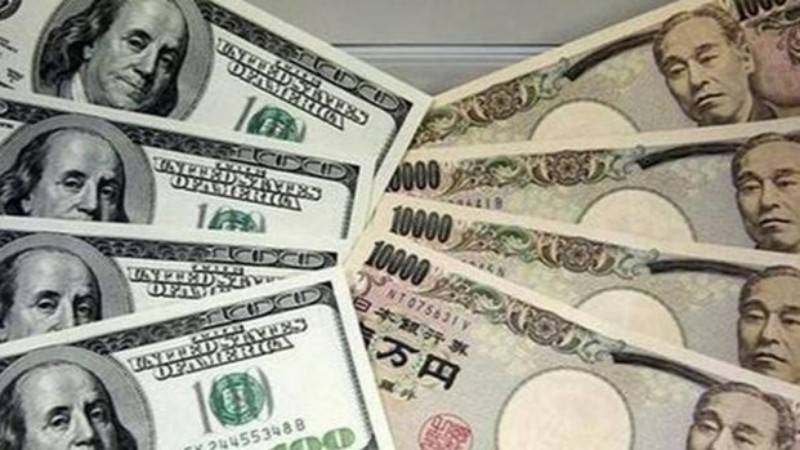
Entering the second half of 2026, global financial markets’ focus on the U.S. dollar and gold is centered on variables such as U.S. inflation stickiness, labor market resilience, the Federal Reserve’s policy path, U.S. Treasury yields and official-sector gold demand. As the world’s main reserve currency and cross-border pricing currency, movements in the U.S. dollar usually affect commodity quotations, valuations of non-U.S. currencies, financing costs for dollar-denominated debt and capital flows into emerging markets. Gold, meanwhile, has commodity, reserve asset and safe-haven asset characteristics, so its price is not determined by a single variable alone.
On June 17, 2026, the Federal Open Market Committee decided to maintain the target range for the federal funds rate at 3.50% to 3.75%. The statement showed that the Federal Reserve continued to set policy around its dual mandate of maximum employment and price stability, while maintaining an ample reserves framework. This means that when assessing the U.S. dollar and gold, markets should not focus only on one interest rate decision, but should analyze inflation, employment, the yield curve and risk appetite together.
(Source: Federal Reserve, OMC Statement, released on 2026-06-17, target rate range and policy statement)
The May 2026 employment report released by the U.S. Bureau of Labor Statistics showed that U.S. nonfarm payroll employment increased by 172,000, while the unemployment rate remained at 4.3%. When the labor market remains resilient, markets usually lower expectations for rapid rate cuts, and the U.S. dollar may therefore receive interest rate support. For gold, a higher interest rate environment increases the opportunity cost of holding a non-yielding asset, which may create periodic pressure on gold prices.
Core Drivers of the U.S. Dollar
The U.S. dollar is usually affected by interest rate differentials, growth differentials, risk appetite and international capital flows. If U.S. inflation remains elevated while the labor market does not weaken significantly, markets may extend their pricing of a high-rate environment. In this scenario, the U.S. dollar may benefit from higher nominal and real interest rates, but its gains would still be constrained by U.S. fiscal expectations, policy decisions by other major central banks and changes in global safe-haven demand.
Interest rate differentials: The difference between U.S. interest rates and those of major economies such as the eurozone, Japan and the United Kingdom affects cross-border capital allocation.
Inflation data: The closer inflation is to or the further it deviates from the Federal Reserve’s target, the more clearly markets adjust expectations for the future interest rate path.
Labor market: Indicators such as nonfarm payrolls, the unemployment rate and wage growth influence the Federal Reserve’s assessment of economic resilience.
Safe-haven demand: When volatility rises in global markets, the U.S. dollar may gain support from liquidity demand and its reserve currency status.
Core Drivers of Gold
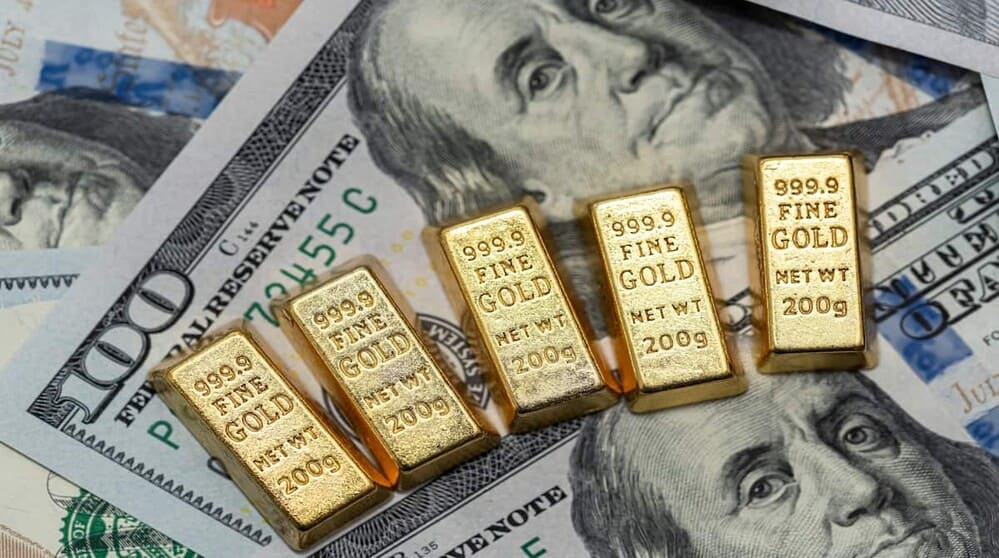
Gold prices are usually affected by real interest rates, the U.S. Dollar Index, central bank gold purchases, geopolitical risk and changes in investment demand. Unlike stocks and bonds, gold itself does not generate interest or dividends, so when real interest rates rise, its relative appeal may decline. However, when inflation uncertainty increases, geopolitical risks rise or demand for reserve asset diversification strengthens, gold may still attract allocation demand.
Real interest rates: Rising real interest rates usually increase the opportunity cost of holding gold.
U.S. Dollar Index: A stronger dollar increases the cost of buying gold for non-dollar investors.
Central bank gold purchases: Continued official-sector accumulation of gold strengthens gold’s medium- to long-term demand base.
Geopolitical risk: Regional conflicts, energy transportation risks and financial sanctions risks may increase safe-haven demand for gold.
Conceptual Comparison of the U.S. Dollar, Gold and Related Indicators
The U.S. dollar and gold are often discussed within the same framework, but their asset attributes, pricing logic and sources of risk are not the same. To avoid confusing “dollar strength or weakness,” “gold price movements,” “real interest rates” and “central bank gold purchases” as the same concept, investors should first clarify the meaning of each indicator.
| Concept | Main Meaning | Common Influencing Factors | Relationship With Market Judgment |
|---|---|---|---|
| DXY | Measures the strength of the U.S. dollar against a basket of major currencies | Federal Reserve policy, U.S. economic data, non-U.S. central bank policies, safe-haven demand | Usually used to observe the overall trend of the U.S. dollar, but it cannot independently explain all exchange rate movements |
| XAUUSD | Spot gold price quoted in U.S. dollars | Real interest rates, U.S. dollar trend, central bank gold purchases, geopolitical risks, investment demand | Commonly used to observe sentiment in the gold market, but it should be assessed together with yields and the U.S. dollar |
| U.S. Real Interest Rates | The level of interest rates after nominal rates are adjusted for inflation expectations | Treasury yields, inflation expectations, Federal Reserve policy communication | Rising real interest rates are usually unfavorable for gold and may support the U.S. dollar |
| Central Bank Gold Reserves | The size and changes of gold reserves held by central banks | Reserve diversification, geopolitical risks, foreign exchange reserve structure, long-term asset security needs | Reflects official-sector strategic allocation demand for gold, but is not equivalent to a short-term trading signal |
Real Events Markets Are Watching in the Second Half of 2026
The trading logic for the U.S. dollar and gold in the second half of 2026 does not come from a single data point or a single policy statement, but from multiple events working together. The following events are directly related to the market’s current core themes and help explain why both the U.S. dollar and gold are attracting investor attention.
On June 17, 2026, the Federal Reserve maintained the target range for the federal funds rate at 3.50% to 3.75%. The reason was that inflation remained above the 2% target and the labor market had not weakened significantly. In terms of development, markets continued to price whether high interest rates would be maintained going forward. For the industry, the impact was that forex, precious metals, bonds and stock markets all needed to reassess funding costs and valuation assumptions.
On June 5, 2026, the U.S. Bureau of Labor Statistics released the May 2026 employment report, showing that nonfarm payroll employment increased by 172,000 while the unemployment rate remained at 4.3%. The reason was that markets needed to judge whether the U.S. economy remained resilient through employment data. In terms of development, solid employment data reduced market expectations for rapid easing. For the industry, the impact was that the U.S. dollar’s interest rate advantage could continue in phases, while gold remained jointly affected by real interest rates and dollar volatility.
On June 25, 2026, the U.S. Bureau of Economic Analysis released the May 2026 Personal Income and Outlays report. In May, thePCEprice index rose 4.1% year over year, one of the key indicators the Federal Reserve uses to observe inflation pressure. The reason was that inflation remained the core variable in monetary policy judgment. In terms of development, inflation above target would strengthen market expectations for cautious rate cuts or the maintenance of high interest rates. For the industry, the impact was that the U.S. dollar, U.S. Treasury yields and gold prices could all be affected by changes in inflation expectations.
On April 29, 2026, the World Gold Council releasedGold Demand Trends: Q1 2026. The report showed that total gold demand including over-the-counter transactions rose 2% year over year to 1,231 tonnes in the first quarter of 2026, while central banks made net gold purchases of 244 tonnes during the quarter. The reason was the combined effect of rising gold prices, investment demand and official-sector demand. In terms of development, gold maintained a certain degree of demand resilience in a high-price environment. For the industry, the impact was that gold was no longer viewed only as a short-term safe-haven tool, but was also included in reserve asset and portfolio diversification frameworks.
In June 2026, the World Gold Council releasedCentral Bank Gold Reserves Survey 2026. The survey showed that 89% of responding central banks expected global central bank gold reserves to increase over the next 12 months, while 45% expected their own gold reserves to increase. The reason was that official institutions were focused on reserve diversification, geopolitical risks and long-term asset security. In terms of development, gold’s strategic role in central bank reserve allocation continued to strengthen. For the industry, the impact was that central bank demand provided medium- to long-term structural support for gold, but this did not mean gold prices would rise in a one-way trend at every stage.
(Source: BLS, The Employment Situation — May 2026, released on 2026-06-05; BEA, Personal Income and Outlays, released on 2026-06-25; World Gold Council, Gold Demand Trends: Q1 2026, released on 2026-04-29; World Gold Council, Central Bank Gold Reserves Survey 2026, released in 2026-06)
Why the U.S. Dollar and Gold Do Not Have a Fixed Inverse Relationship
A common market view is that when the U.S. dollar rises, gold falls, and when the U.S. dollar falls, gold rises. This judgment has explanatory power in many periods, but it does not cover all market conditions. The relationship between the U.S. dollar and gold depends on the reason behind dollar strength, the source of gold demand and how investors price future risks.
When the dollar rises because the U.S. interest rate advantage widens, gold may come under pressure, because higher rates increase the opportunity cost of holding gold. Conversely, when the dollar rises because global risk events trigger safe-haven demand, gold may also strengthen at the same time, because both assets may be viewed by investors as defensive assets. Therefore, the relationship between the U.S. dollar and gold is not a fixed formula, but a conditional relationship that changes with the market environment.
This relationship can be expressed with the following formula:
Gold price pressure = Impact of rising real interest rates + Impact of a stronger U.S. dollar - Safe-haven demand support - Central bank gold purchase support
This formula is not a mathematical pricing model, but is used to help readers understand the directional relationship between different variables. When real interest rates and the U.S. dollar rise at the same time, gold usually faces pressure; when safe-haven demand and central bank gold purchases strengthen, gold may receive support. If these factors appear at the same time, gold prices may fluctuate rather than rise or fall in a one-way trend.
Scenarios Where Gold May Still Rise When the U.S. Dollar Strengthens
Global risk appetite declines, and investors allocate to both U.S. dollar cash and gold as safe-haven assets.
Geopolitical uncertainty rises, and gold’s store-of-value attribute is repriced.
Central banks continue to increase gold reserves, and official-sector demand offsets part of the interest rate pressure.
Inflation remains elevated, markets worry about declining purchasing power of currencies, and demand for gold allocation rises.
Scenarios Where Gold Comes Under Pressure When the U.S. Dollar Strengthens
The Federal Reserve maintains high interest rates, real interest rates rise, and the cost of holding gold increases.
U.S. economic data is stronger than expected, and markets reduce bets on rate cuts.
The U.S. Dollar Index rises, increasing the cost of buying gold for non-dollar investors.
Risk assets perform strongly, and capital rotates from defensive assets into yield-generating assets.
Which Indicators Investors Should Watch
For investors watching the U.S. dollar and gold in the second half of 2026, the key is not to judge that a single asset must strengthen, but to build a sustainable observation framework. This framework should cover monetary policy, inflation, employment, yields, geopolitical risks and official-sector demand at the same time.
Monitor Federal Reserve policy statements and interest rate projections to determine whether the policy rate path has changed.
Monitor nonfarm payrolls, the unemployment rate and wage data to assess whether the U.S. economy remains resilient.
Monitor PCE and core PCE to determine whether inflation continues to deviate from the 2% target.
Monitor the 10-year U.S. Treasury yield and real interest rates to judge whether the opportunity cost of holding gold is rising.
Monitor the U.S. Dollar Index to determine whether the dollar is being driven by interest rate advantages, safe-haven demand or weakness in non-U.S. currencies.
Monitor World Gold Council reports on central bank gold purchases and gold demand to judge whether structural demand is continuing.
It should be noted that a single indicator is often insufficient to explain market direction. For example, strong nonfarm payrolls may support the dollar, but if geopolitical risks rise at the same time, gold may also receive support from safe-haven demand. Similarly, elevated inflation may increase rate hike expectations, but if markets become concerned about slowing economic growth, capital may also flow into gold and long-term bonds. Therefore, judgments on the U.S. dollar and gold need to be based on multi-variable analysis.
Possible Market Scenarios in the Second Half of 2026
Scenario One: Inflation Remains Elevated, and the U.S. Dollar Maintains Interest Rate Support
If U.S. inflation remains above target while the labor market does not weaken significantly, the Federal Reserve may continue to emphasize data dependence and policy caution. In this scenario, market expectations for high interest rates to last longer may continue, and the U.S. dollar may keep receiving support from interest rate differentials. Gold may fluctuate repeatedly between real interest rate pressure and central bank gold demand.
Scenario Two: The Economy Cools, and Gold’s Allocation Value Rises
If future job growth slows significantly and consumption and business investment weaken, markets may reassess the U.S. economic growth outlook. In this environment, rate cut expectations may heat up again, the U.S. dollar’s interest rate advantage may weaken, and gold may attract attention due to falling real interest rates and rising defensive allocation demand.
Scenario Three: Geopolitical Risks Rise, and Both the U.S. Dollar and Gold Draw Attention
If risks related to energy transportation, regional conflicts or financial sanctions rise, markets may buy both the U.S. dollar and gold at the same time. The dollar benefits from global liquidity demand, while gold benefits from its store-of-value and reserve asset attributes. This scenario helps explain why the U.S. dollar and gold do not always show a stable inverse relationship.
Scenario Four: Central Bank Gold Purchases Slow, and Short-Term Gold Volatility Increases
If a rapid rise in gold prices suppresses part of physical demand, or if some central banks temporarily slow their gold purchases, gold may experience more visible price volatility. However, according to the World Gold Council’s 2026 survey results, most surveyed central banks still expect global official gold reserves to continue increasing, suggesting that central bank gold purchases are more related to long-term asset allocation than short-term price trading.
Questions About the U.S. Dollar and Gold
Does a rising U.S. dollar always cause gold to fall?
Not necessarily. If the U.S. dollar rises because the U.S. interest rate advantage widens, gold usually comes under pressure. But if the dollar rises due to global safe-haven demand, gold may also receive buying support at the same time. Therefore, when judging their relationship, investors need to analyze the reason behind the dollar’s rise.
Why do Federal Reserve interest rates affect gold?
Gold itself does not generate interest. When the Federal Reserve maintains relatively high interest rates, the yield appeal of U.S. Treasuries and dollar cash-like assets rises, increasing the opportunity cost of holding gold and potentially putting pressure on gold prices.
What does central bank gold buying mean for the gold market?
Central bank gold purchases usually reflect reserve asset diversification, long-term security and geopolitical risk management needs. They provide structural support for gold, but do not mean gold prices will necessarily rise in the short term.
Which data points are most important when monitoring the U.S. dollar and gold?
Key data points include Federal Reserve rate statements, nonfarm payrolls, the unemployment rate, PCE inflation, U.S. Treasury yields, the U.S. Dollar Index, central bank gold purchase data and changes in geopolitical risk. These indicators should be analyzed together and should not be used in isolation.
Gold is a safe-haven asset, so why can it also fall?
Although gold has safe-haven characteristics, it is still affected by real interest rates, the U.S. dollar, investment fund flows and changes in physical demand. When real interest rates rise or the dollar strengthens significantly, safe-haven demand may not be enough to fully offset price pressure.