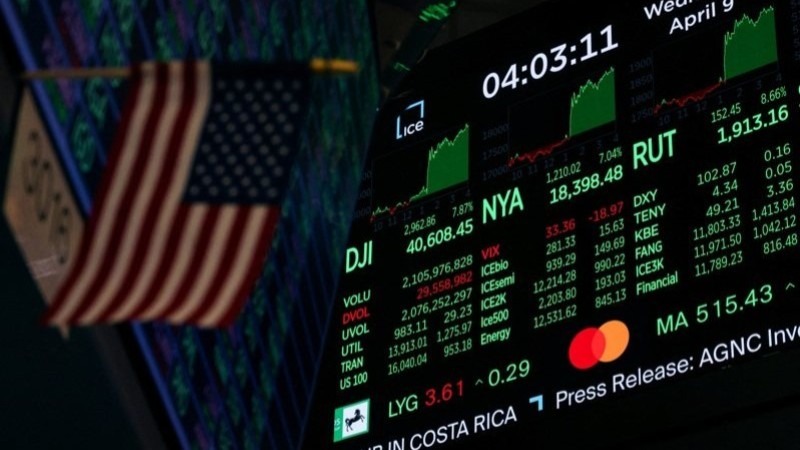
Learn how U.S. stock short-term trading works, covering trading hours, PDT rules, core strategies, risk management, and tool comparisons for stocks, options, and leveraged ETFs.
What Is U.S. Stock Short-Term Trading?
U.S. stock short-term trading refers to buying and selling stocks within a relatively short time frame—usually from a few minutes to several trading days—to capture price differences generated by market fluctuations. This trading approach is fundamentally different from the traditional buy-and-hold strategy: short-term traders do not base their decisions on a company’s long-term profitability or industry development trends. Instead, they focus on short-term market price movements and aim to accumulate small gains from each trade into overall returns through higher-frequency trading activity.
The U.S. stock market, with its large trading volume, wide range of tradable instruments, and broad trading-hour coverage, provides an active market environment for short-term traders. At the same time, short-term trading places higher demands on a trader’s professional knowledge, risk control ability, and psychological resilience. Before entering this field, it is necessary for every trader to systematically understand its basic concepts, trading rules, core strategies, and risk management framework.
Definition and Core Features of Short-Term Trading
From an operational perspective, U.S. stock short-term trading has the following core features:
Short holding period: The holding period of a single trade usually ranges from a few minutes to several days. Most day traders do not hold positions overnight in order to avoid uncertainty caused by overnight news events.
High trading frequency: Short-term traders may execute multiple buy and sell orders within a single trading day, relying on frequent market entries and exits to accumulate returns.
Reliance on technical analysis: Trading decisions are mainly based on price trends, technical indicators, and the relationship between volume and price, rather than company fundamentals.
High market sensitivity requirement: Traders need to closely monitor real-time quotes, news developments, and order book changes. The speed of receiving and responding to information can directly affect trading outcomes.
Strict risk management requirement: Because trading frequency is high, even if the loss ratio of a single trade is not large, the cumulative effect may cause significant damage to the account if it is not controlled.
U.S. Stock Trading Hours and Day Trading Rules
Understanding U.S. stock trading hours and regulatory rules is a prerequisite for short-term trading. The regular trading session for U.S. stocks runs from 9:30 a.m. to 4:00 p.m. Eastern Time (ET). This corresponds to 9:30 p.m. to 4:00 a.m. the next day in Beijing Time during daylight saving time, which usually runs from mid-March to early November each year, and 10:30 p.m. to 5:00 a.m. the next day during standard time, which usually runs from early November to mid-March of the following year.
Under the U.S. regulatory framework, day trading refers to buying and selling, or selling and buying, the same security within the same trading day. The U.S. Financial Industry Regulatory Authority (FINRA) has established specific regulatory rules for accounts that frequently conduct day trades, known as the Pattern Day Trader (PDT) rule.
The core requirement of the PDT rule is as follows: if a margin account executes four or more day trades within five consecutive trading days, and those day trades account for more than 6% of the total number of trades during the same period, the account will be marked as a pattern day trader. Once marked, the account must maintain net equity of at least USD 25,000, including cash and securities, in order to continue day trading. If the account’s net equity falls below USD 25,000, day trading privileges will be restricted until the funds are replenished. Accounts that fail to meet the requirement within the specified period may face a trading freeze of up to 90 days.
In addition to regular trading hours, many brokers also provide pre-market and after-hours trading services. Pre-market trading usually begins at 4:00 a.m. ET, although some brokers start at 7:00 a.m. After-hours trading usually continues until 8:00 p.m. ET. Liquidity during extended trading hours is significantly lower than during regular sessions, bid-ask spreads may widen, and price volatility may become more intense. Less experienced traders should exercise extra caution.
Key Differences Between Short-Term Trading and Long-Term Investing
Short-term trading and long-term investing represent two very different ways of participating in the market. They differ fundamentally in holding period, analysis framework, risk profile, and profit logic.
Long-term investors use company fundamentals as the core basis of analysis. Their holding periods are usually measured in months or years, and they expect to achieve capital appreciation through the company’s sustained growth. They tend to use value or growth stock selection strategies, diversify entry timing through staggered position building, and set relatively moderate return targets—for example, an expected annual return of 10%. If the planned investment period is three years, the target return would be around 30%.
Short-term traders, by contrast, focus on capturing short-term price fluctuations. Their holding periods are very short, and they require a high response speed to technical indicators, volume changes, and market news. They need to devote significant time and energy to monitoring market dynamics while bearing relatively higher trading frequency and short-term volatility risk. There is no absolute superiority between the two approaches. The key is whether the trader’s knowledge base, time commitment, and risk tolerance match the chosen method.
| Comparison Dimension | U.S. Stock Short-Term Trading | Long-Term Investing | Applicable Scenario |
|---|---|---|---|
| Holding Period | Minutes to days | Months to years | Short-term trading suits active and volatile markets, while long-term investing suits markets with clear trends |
| Analysis Basis | Technical indicators, volume-price relationship, market sentiment | Corporate earnings reports, industry trends, macroeconomics | Short-term trading relies on price action, while long-term investing relies on fundamental value |
| Risk Profile | Single-trade risk can be controlled, but trading frequency is high | Single-trade volatility is relatively smaller, but the holding period is longer | Short-term trading requires strict stop losses, while long-term investing requires tolerance for interim drawdowns |
| Profit Model | Frequent trading and accumulation of small gains | Compounding effect and long-term capital appreciation | Short-term trading focuses on win rate and risk-reward ratio, while long-term investing focuses on long-term growth |
| Time Commitment | Requires full-time monitoring during trading hours | Periodic monitoring is usually sufficient | Short-term trading suits those with sufficient time, while long-term investing suits working investors |
Five Core Strategies for U.S. Stock Short-Term Trading
An effective trading strategy is the foundation for short-term traders to survive in the market. The following five strategies each have their own applicable scenarios, operating logic, and risk characteristics. Traders should choose suitable strategies for practice based on their own experience level and market environment.
Trend-Following Strategy
The core logic of a trend-following strategy is straightforward. When a stock forms a clear upward or downward trend, traders use technical indicators to confirm the strength and continuation of the trend, entering positions in the direction of the trend rather than attempting to predict where the trend will end.
Common technical tools include Moving Averages and the Moving Average Convergence Divergence (MACD). In practice, trend followers usually look for entry opportunities when the stock price pulls back near a moving average and exit when a clear trend reversal signal appears. Volume confirmation is an important reference for judging trend validity: rising volume during an uptrend and shrinking volume during pullbacks are usually viewed as signs of a healthy trend. If volume decreases while prices rise, it may indicate insufficient trend momentum.
The trend-following strategy is suitable when the market has a clear directional move. In a sideways or range-bound market environment, trend signals may fail frequently, potentially leading to repeated stop-loss exits.
Reversal Strategy
A reversal strategy aims to capture opportunities when prices revert to the mean after becoming excessively extended. Traders use oscillator-type technical indicators to judge whether the market has entered an overbought or oversold condition, thereby estimating the possibility of a short-term reversal.
Common tools include the Relative Strength Index (RSI) and the Stochastic Oscillator (KD). When the RSI reading falls below 30, it is usually regarded as an oversold zone. If the price makes a new low while the indicator does not, forming a bullish divergence, it may indicate a short-term rebound opportunity. Conversely, when RSI rises above 70, the market enters an overbought zone. If a bearish divergence appears, the stock may face pullback pressure.
It should be noted that overbought or oversold conditions do not necessarily mean prices will reverse immediately. In a strong trending market, indicators may remain in extreme zones for an extended period. If traders enter against the trend based only on a single indicator signal, they face higher risk. A reversal strategy requires comprehensive confirmation using price patterns, volume changes, and the broader market context.
Breakout Strategy
A breakout strategy focuses on capturing momentum moves when prices break through key technical levels. After a stock price consolidates within a range for a period of time, an upside breakout above resistance or a downside breakout below support is often accompanied by expanded volatility.
Traders quickly enter the market when price breaks through a key level with increased volume and set tight stop-loss levels to control losses caused by false breakouts. Key factors for judging breakout validity include whether volume expands significantly during the breakout, whether the price can remain firmly above the breakout level, meaning a pullback confirmation, and the time period in which the breakout occurs—breakouts during regular trading hours are usually more meaningful than those during pre-market or after-hours sessions.
False breakouts are the main risk faced by breakout strategies. This occurs when price briefly crosses a key level and then quickly falls back. If a reasonable stop loss is not set, it may lead to larger losses. In a low-volatility market environment, the probability of false breakouts is relatively higher.
Grid Trading Method
Grid trading is a systematic trading method suitable for range-bound markets. Its basic principle is to divide capital into several equal portions within a preset price range and at fixed price intervals. A unit is bought each time the price falls by one interval, and a unit is sold each time the price rises by one interval, forming an automated buying and selling grid.
For example, suppose a stock is currently priced at USD 100 and the trader sets a grid interval of USD 2. Buy limit orders are placed at USD 98, USD 96, and USD 94, while sell limit orders are placed at USD 102, USD 104, and USD 106. The profit from each trade is the price difference of one grid interval. The advantage of this method is that it does not require judging market direction. As long as the price fluctuates back and forth within the preset range, trading opportunities can continue to arise.
Its limitation is that when price breaks above the upper boundary of the range in a one-sided move, the positions already sold will no longer continue to benefit. When price breaks below the lower boundary of the range in a one-sided decline, existing positions will face ongoing unrealized losses. Therefore, the success of grid trading depends on a reasonable judgment of the market’s range-bound zone.
VIX Fear Index and Short-Term Trading
TheVIXFear Index is a market volatility indicator compiled by the Chicago Board Options Exchange. It reflects the market’s expectation of volatility in the S&P 500 Index over the next 30 days. VIX readings usually fluctuate between 15 and 35, but may break above 80 in extreme market conditions. For example, during the 2008 financial crisis, the VIX once approached 90; in March 2020, when the COVID-19 pandemic triggered severe market volatility, the VIX reached a high of around 83.
For short-term traders, the VIX can serve as a reference tool for market sentiment. When the VIX is at a historically high level, such as above 40, it usually indicates strong market fear and that stock prices may have been excessively sold off. From a statistical perspective, the probability of a technical rebound after extreme fear is relatively higher. When the VIX is at a low level, such as below 12, market sentiment may be overly optimistic, and potential volatility risk deserves attention.
However, the VIX is not a directional indicator. It reflects the market’s expectation of future volatility, not the direction of price movement. A high VIX does not necessarily mean the market is about to rebound, nor does it constitute an independent buy signal. It must be used together with other technical analysis tools.
Risk Management in U.S. Stock Short-Term Trading
The high-frequency nature of short-term trading means that risk events also occur more frequently. Without a complete risk management system, even a strategy with a high win rate may have all profits offset by a few large losses. The goal of risk management is not to eliminate losses—this is unrealistic in trading—but to keep losses within a tolerable range and ensure the long-term survival of the account.
Setting Stop Loss and Take Profit
A stop loss is a price level preset by the trader before entering a trade. When the market price reaches that level, the position is automatically closed to limit the maximum loss on a single trade. A take profit is a preset profit target. When the price reaches it, the trader exits automatically to lock in profits.
In short-term trading, stop loss and take profit levels need to be set more precisely. Common methods include the following:
Key price level reference method: Use support or resistance levels in technical analysis as stop-loss references. When price breaks through these key levels, it may indicate that the original trading logic is no longer valid.
Fixed percentage method: Use a fixed percentage of total account capital, usually 1% to 2%, as the maximum allowable loss for a single trade, and then calculate the stop-loss level and position size accordingly.
Volatility reference method: Use a multiple of the Average True Range (ATR) as the stop-loss range to adapt to price characteristics under different volatility environments.
Take-profit targets are usually set with reference to resistance levels, previous highs and lows, or the risk/reward ratio. Experienced traders often aim for a risk/reward ratio of at least 1:2, meaning potential profit is at least twice the potential loss. This standard means that even with a win rate of only 40%, the account may still remain profitable over the long term.
Capital Management and Position Sizing
The core principle of capital management is to control the risk exposure of each trade and ensure that multiple consecutive judgment errors do not cause unrecoverable losses to the account. In short-term trading, the loss amount of a single trade is usually recommended to be controlled within 1% to 2% of total capital.
Position size can be calculated using the following formula: Position size = allowable loss amount ÷ (entry price - stop-loss price). For example, suppose the account has total capital of USD 50,000, the maximum allowable loss per trade is 1%, or USD 500, the entry price is USD 50, and the stop-loss price is USD 49, meaning a loss of USD 1 per share. In this case, the trader can buy up to 500 shares.
"The first rule of risk management is to admit that you do not know what the future will bring."
Reasonable position allocation not only helps control risk but also preserves sufficient capital for subsequent trades, maintaining the ability to continue trading. For beginners, it is advisable to first practice capital management skills in a demo account, test the effectiveness of strategies and position control in a zero-risk environment, and only consider moving to live trading after establishing stable operating habits.
Trading Discipline and Emotional Management
Emotional fluctuations in trading—especially greed and fear—are the main reasons traders deviate from their established plans. When a position is profitable, a trader may refuse to exit at the preset take-profit level out of greed, hoping to capture more profit, but may ultimately give back gains due to a price reversal. When a position is losing money, a trader may refuse to execute the stop loss because they are unwilling to admit a mistaken judgment, causing a small loss to turn into a large loss.
The key to developing trading discipline lies in the following aspects:
Create a clear trading plan and set stop-loss, take-profit, and position size parameters before entering the market.
Execute strictly according to the plan and avoid being affected by intraday emotional fluctuations.
Review trading records regularly to identify and correct behavioral biases.
Accept that losses are a normal part of trading and do not allow a single loss to affect subsequent judgment.
Comparison of U.S. Stock Short-Term Trading Instruments
When conducting short-term trading in the U.S. stock market, traders can choose from a variety of trading instruments, including individual stocks, options, and exchange-traded funds (ETF). Different instruments have different risk-return characteristics, operating methods, and applicable scenarios. Understanding these differences helps traders make reasonable choices based on their own circumstances.
| Comparison Dimension | U.S. Individual Stocks | U.S. Stock Options | Leveraged ETFs |
|---|---|---|---|
| Leverage Level | 1x, or up to 2x to 4x in a margin account | Depends on strike price and premium, with significant leverage effect | Usually 2x or 3x |
| Time Decay | None | Time value decay exists, known as Theta | Long-term holding may result in net asset value deviation |
| Applicable Scenario | Intraday volatility capture, news-driven trading | Directional trading, volatility trading | Short-term trend following, index-based trading |
| Main Risks | Individual stock event risk, stop-loss slippage | Total loss of premium, insufficient liquidity | Volatility drag, long-term net asset value deviation |
U.S. individual stocks are the most direct and flexible short-term trading instrument. Popular stocks usually have large trading volume, narrow bid-ask spreads, and high information transparency, making it easier to enter and exit quickly. However, individual stock prices are more affected by company-specific factors, such as earnings misses, executive changes, and regulatory investigations. Traders need to understand potential catalyst events before trading.
Options are leveraged derivatives that allow traders to control a larger market value of the underlying stock with a smaller amount of capital. Buying a call option can generate profit when the stock price rises, while buying a put option can generate profit when the stock price falls. However, options have the characteristic of time value decay. If the underlying price does not move in a favorable direction within the expected time frame, the value of the option will continue to decline, and in extreme cases the entire premium may be lost. Options trading requires a high level of strategy understanding, risk awareness, and timing judgment.
Leveraged ETFs are designed to provide multiple times the daily return of a specific index, such as products that track twice the daily movement of the S&P 500 Index. These instruments are suitable when the short-term trend is clear. However, due to their built-in daily rebalancing mechanism, long-term holding may cause performance to deviate from the multiple of the underlying index. This phenomenon is known as "volatility drag". Therefore, leveraged ETFs are suitable only for short-term trading and are not appropriate as long-term holding instruments.
Frequently Asked Questions About U.S. Stock Short-Term Trading
What is the PDT rule? What specific impact does it have on short-term traders?
The PDT, or Pattern Day Trader, rule is established by FINRA. It requires margin accounts that execute four or more day trades within five consecutive trading days, and where those trades account for more than 6% of total trades, to maintain net equity of at least USD 25,000. Once marked as a PDT, if the account balance falls below this threshold, day trading privileges will be restricted. This rule creates a substantial entry barrier for traders with smaller account sizes. Some traders choose to use cash accounts, which are subject to T+1 settlement rules, or turn to the futures and forex markets to avoid this restriction.
What is the difference between pre-market, after-hours, and regular trading sessions?
The most significant difference in pre-market and after-hours trading is the sharp decline in liquidity. Because fewer traders participate, bid-ask spreads are usually wider, and a small number of orders may cause larger price fluctuations. In addition, some brokers only support limit orders rather than market orders during extended hours, which restricts available order types. For short-term traders, price movements during pre-market and after-hours sessions can serve as a reference for the regular session after the market opens, but extra attention should be paid to slippage risk when directly participating in these sessions.
Where should beginners start when learning short-term trading?
Beginners are advised to proceed step by step in the following areas: first, systematically learn basic technical analysis, including candlestick patterns, support and resistance levels, and the principles and uses of common indicators; second, practice strategy execution in a demo account and become familiar with the trading platform’s operating process; third, start with a single strategy and repeatedly test and optimize it instead of rushing to try multiple strategies at the same time; finally, when moving to live trading, start with small positions, strictly follow stop-loss discipline, and gradually accumulate practical trading experience.
What is a stop-loss point? How is it different from a trailing stop?
A stop-loss point is a fixed price level set in advance. When the market price reaches that level, the position is automatically closed to limit the maximum loss on a single trade. A trailing stop is a dynamic stop-loss mechanism. It automatically adjusts the stop-loss level as the price moves in a favorable direction, but remains unchanged when the price moves in the opposite direction. For example, after setting a 5% trailing stop, if the stock price rises from USD 100 to USD 120, the stop-loss level will automatically move up from USD 95 to USD 114. The advantage of a trailing stop is that it can lock in floating profits, but it is not suitable for highly volatile markets because small pullbacks may frequently trigger the stop loss.