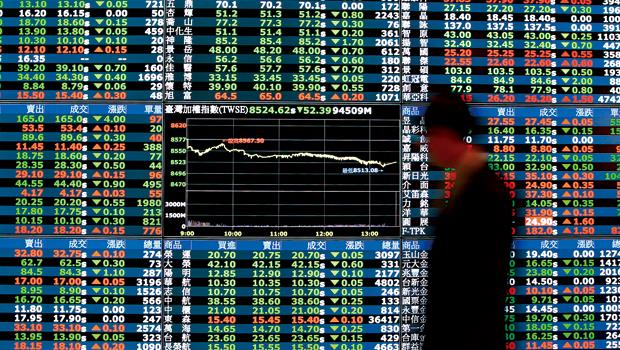
A stock is a basic unit of corporate ownership. This article explains stock definitions, issuance mechanisms, supply and demand, volatility, earnings, and market sentiment to help readers understand the fundamentals of stock trading.
Definition and Basic Unit of Stocks
A stock is the basic unit of corporate ownership, representing the holder’s proportional claim on a company’s assets and earnings. When a company divides its equity into multiple equal units and sells them to investors, each unit is called a share. Stockholders usually have voting rights, dividend rights, and residual asset distribution rights, although the specific rights vary depending on the class of stock.
The value per share can be calculated using the following formula:
Value per share = Total market capitalization of the company ÷ Total number of shares outstanding
For example, if a company has a total market capitalization of £10,000 and has issued 2,000 shares, the value per share is £5 (£10,000 ÷ 2,000 = £5). It should be noted that in actual trading, stock prices are determined by market supply and demand and may be higher or lower than this theoretical value. When the market price is higher than the book value per share, the premium reflects investors’ expectations for the company’s future growth.
Common Types of Stocks
Based on the rights held by shareholders, stocks are usually divided into the following two categories:
Common Stock: Holders have voting rights and dividend rights, but in the event of company liquidation, their claim ranks after creditors and preferred shareholders, meaning they generally bear relatively higher risk.
Preferred Stock: Holders usually do not have voting rights, but they have priority in dividend payments and liquidation distributions. Dividend rates are generally between 4% and 8%, giving preferred stock relatively fixed income characteristics.
Core Purpose of Issuing Stocks
The primary purpose of issuing stocks is to raise capital. By selling part of the company’s ownership to investors, management can obtain operating funds for business expansion, product research and development, or market development without taking on the interest burden associated with debt financing.
Primary Market and Secondary Market
The circulation of stocks involves two core market levels:
Primary Market: The market where a company issues shares to the public for the first time. The most typical form is an initial public offering, orIPO. In this process, the company sells shares to investors at a determined offering price through investment bank underwriting, and the funds raised flow directly into the company’s account.
Secondary Market: The market where issued shares are bought and sold among investors, such as the New York Stock Exchange, London Stock Exchange, and Shanghai Stock Exchange. In the secondary market, transaction funds circulate between investors and are no longer directly connected to the issuing company.
There is a high degree of interdependence between a company and its shareholders: the company relies on capital provided by shareholders to support business development, while shareholders expect the company to use the funds effectively to achieve profit growth, which may in turn support a rise in share price. If a company operates well and its profits continue to grow, its market valuation may theoretically increase accordingly.
Causes and Mechanisms of Stock Price Fluctuations
Stock price movements are fundamentally driven by supply and demand. When buying interest exceeds selling interest, the stock price tends to rise; conversely, when selling pressure exceeds buying demand, the stock price tends to fall. The magnitude and frequency of price changes over a given period are referred to in finance as volatility.
Volatility is a quantitative measure of uncertainty in asset prices. It is usually expressed as the standard deviation of returns and calculated on an annualized basis. Daily volatility can be converted into annualized volatility by multiplying it by √252, assuming there are 252 trading days in a year. For example, if a stock has a daily return standard deviation of 1.5%, its annualized volatility is approximately 23.8% (1.5% × √252 ≈ 23.8%). The higher the volatility, the greater the magnitude of price movement and the stronger the uncertainty.
Main Factors Affecting Supply and Demand
Many factors affect the supply-demand relationship of stocks, among which the following two are especially important:
Corporate Earnings
Corporate earnings refer to a company’s profit performance during a specific reporting period. Listed companies usually release financial reports quarterly, every three months, although some markets also use semiannual or annual reporting frequencies. In the U.S. stock market, all listed companies are required to file quarterly 10-Q reports with the U.S. Securities and Exchange Commission (SEC) and annual 10-K reports for the full fiscal year.
Earnings season usually occurs between the 2nd and 6th week after the end of each fiscal quarter, typically in January to February, April to May, July to August, and October to November each year. Around earnings releases, stock price volatility often becomes more pronounced for the following reasons:
When actual earnings data exceed analysts’ consensus expectations, the stock price usually shows a positive reaction.
When actual earnings data fall below consensus expectations, the stock price usually shows a negative reaction.
Forward-looking guidance issued by company management can sometimes affect the stock price even more than current-quarter results, because the market pays closer attention to future growth expectations.
In certain cases, even if earnings exceed expectations, the stock price may still fall — for example, when the market has already priced in optimistic expectations in advance, or when guidance is below expectations.
One of the key metrics for measuring corporate profitability is earnings per share, orEPS. Its formula is: EPS = Net income ÷ Total number of common shares outstanding. The year-over-year change in EPS and its deviation from market expectations are key variables affecting stock price performance after earnings releases.
Market Sentiment
Market sentiment is another key factor affecting stock price fluctuations. Unlike earnings data, which belongs to the category of fundamentals, market sentiment more often reflects the collective subjective expectations and psychological state of investors regarding the future direction of a company and the broader market. These expectations are based on multiple factors:
Macroeconomic environment: Changes in macroeconomic indicators such as interest rates, inflation, andGDPgrowth affect investors’ risk appetite toward the overall market.
Industry regulation and policy: Upcoming or changing industry regulations may alter companies’ operating costs and market entry conditions, thereby affecting valuation expectations for related companies.
Corporate governance and confidence in management: Management’s strategic decision-making ability, transparency of information disclosure, and historical performance record directly affect investors’ confidence in the company.
Geopolitical and unexpected events: Trade disputes, military conflicts, natural disasters, and other unpredictable events may trigger sharp market fluctuations in the short term.
"In the short run, the market is a voting machine, but in the long run, it is a weighing machine."
Graham’s statement explains that short-term stock prices are often driven by sentiment and market voting, while long-term stock prices more often reflect a company’s intrinsic value. Understanding how sentiment affects prices helps traders distinguish short-term noise from long-term trends in their analysis.
Comparison of Key Participation Dimensions in Stock Trading
| Comparison Dimension | Key Parameters | Applicable Scenarios | Main Risks |
|---|---|---|---|
| Primary Market (IPOSubscription) | The offering price is determined through negotiation between the company and underwriters; the lock-up period is usually 90 to 180 days | Long-term investors who want to participate in a company’s early listed stage and obtain potential issuance discounts | Risk of the stock trading below its offering price after listing; inability to sell during the lock-up period; relatively high degree of information asymmetry |
| Secondary Market Spot Trading | Trading hours follow exchange opening sessions, such as 9:30–16:00 Eastern Time for U.S. stocks; settlement cycle is T+1 or T+2 | Individual or institutional investors with independent analytical capability who buy and sell listed stocks at their own pace | Market volatility risk; liquidity risk, with bid-ask spreads for small-cap stocks potentially reaching 1%–3% |
| Equity Funds, includingETFs | Management fees are usually 0.03%–1.5% per year; passive ETFs track indices, while active funds select stocks through fund managers | Investors who seek diversification without selecting individual stocks; long-term allocators using regular investment plans | Tracking error; fund liquidation risk; losses may still occur during broad market declines |
| Equity Derivatives, including Options and Futures | Options contracts include a strike price and expiration date; leverage depends on the contract and margin requirements, usually ranging from 5 to 20 times | Institutional investors hedging existing positions; professional traders who understand derivatives pricing mechanisms | Losses amplified by leverage; time value decay for option buyers; margin call risk |
Important Considerations Before Participating in Stock Trading
Before participating in stock trading, understanding the following core concepts can help build a more complete knowledge framework:
Components of trading costs: These include broker commissions, with some platforms offering zero-commission trading, bid-ask spreads, stamp duty in certain markets, such as the 0.5% stamp duty on U.K. share transactions, and possible currency conversion fees.
Regulatory framework: Major market regulators include theSECin the United States, the Financial Conduct Authority (FCA) in the United Kingdom, and the China Securities Regulatory Commission (CSRC) in mainland China. Regulators are responsible for setting information disclosure rules, combating market manipulation, and protecting investor rights.
Information asymmetry risk: Retail investors and institutional investors differ significantly in access to information, analytical tools, and response speed, and this asymmetry may affect the quality of trading decisions.
Diversification principle: Modern Portfolio Theory, proposed by Harry Markowitz in 1952, suggests that allocating capital across different asset classes, industries, and regions can theoretically reduce unsystematic risk, but it cannot eliminate systematic risk.
Questions Related to Stock Trading
How do stocks and bonds differ in terms of rights structure?
Stocks represent ownership in a company, and holders are company shareholders whose returns depend on business performance and stock price changes. Bonds represent a creditor relationship, and holders are creditors of the company who usually receive fixed interest at an agreed rate. In the event of company liquidation, bondholders rank ahead of stockholders in the repayment order.
What is the relationship between volatility and risk?
Volatility is a statistical indicator that measures the magnitude of asset price changes, usually expressed as the annualized standard deviation of returns. Higher volatility means prices may deviate more sharply in the short term and is therefore usually regarded as a signal of higher risk. However, volatility itself does not predict price direction; it only quantifies the degree of uncertainty.
How do fund flows differ between the primary market and the secondary market?
In the primary market, investors’ funds used to purchase newly issued shares flow directly into the listed company and are used for operations and development. In the secondary market, transactions occur among investors, and funds circulate between buyers and sellers without entering the company’s account.
Why does stock price volatility intensify during earnings season?
During earnings season, companies release quarterly financial data in a concentrated period, including revenue, net income, EPS, and other key indicators. When actual data deviate from market expectations, also known as analysts’ consensus estimates, investors quickly adjust their positions, causing short-term imbalances between buying and selling forces and leading to sharp stock price movements. In addition, forward-looking guidance issued by management can significantly influence market expectations.
How is earnings per share, or EPS, calculated?
Basic earnings per share is calculated as: EPS = Net income ÷ Weighted average number of common shares outstanding. This metric reflects the profit generated by each share during a specific reporting period and is commonly used to assess corporate profitability and make cross-company comparisons. It should be noted that EPS can be artificially increased through share buybacks, so it should be analyzed together with indicators such as revenue growth and free cash flow.