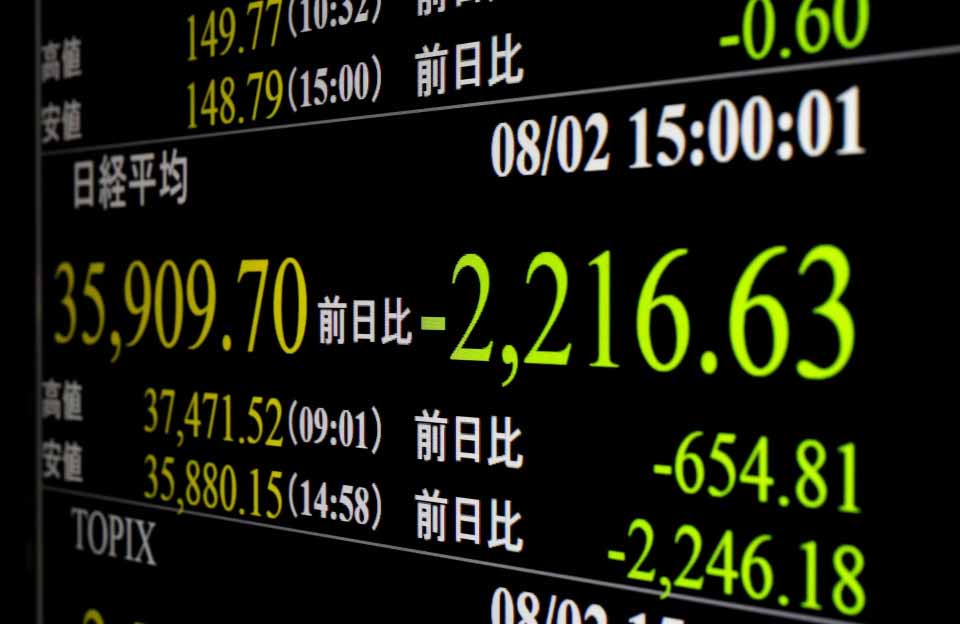
This article introduces the definition of stock indices, index construction logic, common weighting methods, and major market indices, helping readers understand index levels, constituents, sector coverage, and risk identification methods.
Basic Concept of Stock Indices
A stock index is a statistical indicator used to measure the price performance of a group of stocks. It is not a single stock, nor is it a company itself. Instead, it is a market indicator created by an index provider according to predefined rules, combining a number of stocks into an observable benchmark. When traders and investors read the FTSE 100 Index, Dow Jones Industrial Average, Nikkei 225 Index, Hang Seng Index, or ASX 200 Index, the index level they see usually represents the combined movement of that group of stocks under a specific calculation methodology.
By definition, a stock index is usually used to represent a segment of the stock market. This segment may be defined by trading venue, country or region, industry, market capitalization, or thematic characteristics. For example, the FTSE 100 Index is used to observe the overall performance of 100 large-cap blue-chip companies listed on the London Stock Exchange; the Nikkei 225 Index is used to observe 225 representative stocks in the Japanese stock market; and the Hang Seng Index is used to observe the performance of representative listed companies in the Hong Kong stock market.
What Market Segments Can an Index Cover?
The coverage of a stock index is not fixed. The index provider’s objective determines its sample universe, number of constituents, and industry distribution. Common classifications include the following:
Exchange-based dimension: using stocks listed on a specific exchange as the sample source, such as indices related to the Nasdaq market.
Country or regional dimension: using stocks from a specific country or region as the observation target, such as Germany’s DAX Index, France’s CAC 40 Index, and Australia’s ASX 200 Index.
Industry dimension: using stocks from sectors such as energy, financials, technology, healthcare, or real estate to observe price changes in a specific sector.
Market capitalization dimension: dividing companies into large-cap, mid-cap, or small-cap groups to observe differences in market performance across company sizes.
Thematic dimension: building a sample around themes such as artificial intelligence, clean energy, semiconductors, or infrastructure to observe the stock performance of specific economic themes.
Therefore, a rise in an index level usually indicates that the overall value of its constituents has increased according to the index rules; a decline in an index level indicates that the overall value of its constituents has decreased. It should be noted that an index rising does not mean all its constituents have risen, and an index falling does not mean all its constituents have fallen. An index reflects a weighted aggregate result, not the synchronized movement of every stock.
How Stock Indices Work
The core mechanism of a stock index includes constituent selection, weight allocation, index level calculation, and periodic rebalancing. Index providers usually publish index methodologies explaining which stocks are eligible for inclusion, how constituents are adjusted, how weights are calculated, and how corporate actions such as stock splits, dividends, mergers, and delistings are handled. The International Organization of Securities Commissions emphasized in its 2013Principles for Financial Benchmarksthat financial benchmarks should pay close attention to governance, methodological transparency, data quality, and management of conflicts of interest. This is also an important background for understanding index reliability.
How Constituents Enter an Index
Constituents are the group of stocks that make up an index. Different indices have different inclusion criteria, but they usually consider factors such as market capitalization, liquidity, listing venue, industry classification, availability of financial data, and trading status. For large-cap stock indices, common screening logic includes the following steps:
Define the sample universe, such as common stocks listed on a specific exchange, in a specific country, or within a specific region.
Screen liquidity indicators, such as average daily trading value, turnover ratio, and number of tradable days, to avoid including stocks that have lacked trading activity for long periods.
Rank stocks by market capitalization, free-float market capitalization, or industry representativeness, and select stocks that match the index’s positioning.
Set a periodic review mechanism, such as quarterly, semiannual, or annual reviews, to handle additions, removals, and weight changes.
When corporate events such as mergers and acquisitions, delistings, major trading suspensions, or stock splits occur, make temporary adjustments according to the methodology.
Constituent adjustments affect the structure of an index, but they are not equivalent to an evaluation of a specific stock. Index adjustments primarily serve representativeness, tradability, and rule consistency, rather than making judgments about future price direction.
How Index Levels Are Calculated
Common stock indices are not calculated simply by adding up all constituent stock prices. Most modern stock indices use market-cap weighting or free-float market-cap weighting. Free-float market capitalization refers to the market value of shares available for trading by public investors. It usually excludes shares that are less readily tradable, such as controlling shareholder holdings, government holdings, and long-term strategic investor holdings.
The simplified calculation logic of a free-float market-cap-weighted index can be understood as follows: the stock price is multiplied by the shares used for index calculation and then by the free-float adjustment factor to obtain each stock’s index market capitalization. The index market capitalizations of all constituents are then added together and divided by the index divisor to form the index level. The divisor is used to maintain index continuity before and after events such as stock splits, rights issues, and constituent changes.
Calculate the index market capitalization of each constituent: stock price × shares used for index calculation × free-float adjustment factor.
Add up the index market capitalization of all constituents to obtain the total index market capitalization.
Divide the total index market capitalization by the index divisor to obtain the index level.
When a stock split, merger, special dividend, or constituent adjustment occurs, the index provider adjusts the divisor to reduce the impact of non-market price changes on index continuity.
The Dow Jones Industrial Average uses a price-weighted method, which differs from market-cap weighting. In a price-weighted index, constituents with higher stock prices have a greater impact on the index level, even if their total market capitalization is not the largest. This mechanism has historical continuity, but when interpreting index movements, special attention should be paid to the impact of high-priced constituents.
Knowledge Framework for Major Stock Indices
Major global stock markets usually have one or more representative indices. Common examples include the FTSE 100 Index in the U.K. market, the DAX Index in the German market, the CAC 40 Index in the French market, the IBEX 35 Index in the Spanish market, the FTSE MIB Index in the Italian market, the Nikkei 225 Index in the Japanese market, the Hang Seng Index in the Hong Kong market, the ASX 200 Index in the Australian market, and the S&P/TSX 60 Index in the Canadian market.
The U.S. market has several major indices, commonly including the Dow Jones Industrial Average, the S&P 500 Index, and the Nasdaq-100 Index. They can all be used to observe the U.S. stock market, but their coverage, weighting methods, and industry distributions differ.
| Item Name | Key Parameters | Applicable Scenarios | Main Risks |
|---|---|---|---|
| Dow Jones Industrial Average | 30 U.S. blue-chip stocks; price-weighted; covers major industries excluding transportation and utilities | Observing price changes in large, mature U.S. companies and the market performance of traditional blue-chip stocks | Limited number of constituents, high-priced stocks have a larger impact on the index, and industry representativeness is limited |
| S&P 500 Index | Approximately 500 large U.S. companies; free-float market-cap weighted; covers about 80% of the investable U.S. equity market capitalization | Observing the overall performance of U.S. large-cap stocks and serving as a common benchmark for funds, futures, options, and asset allocation | Large-cap companies have higher weights, and rising concentration in certain sectors may amplify structural bias |
| Nasdaq-100 Index | 100 large non-financial companies listed on Nasdaq; launched in 1985; tilted toward technology and growth sectors | Observing the performance of large non-financial companies in the Nasdaq market, especially useful for studying technology, communications, and innovative growth sectors | High sector concentration, with greater sensitivity to interest rate changes, valuation levels, and technology cycles |
| FTSE 100 Index | 100 high-market-cap blue-chip companies listed on the London Stock Exchange; launched in 1984; centered on large U.K.-listed companies | Observing the overall performance of large U.K.-listed companies and the influence of internationally oriented companies on the U.K. market index | Some constituents have global revenue exposure, so index changes are not fully equivalent to changes in the domestic U.K. economy |
Why the U.S. Has Multiple Major Indices
The U.S. stock market is large in scale, has many listed companies, and features a complex industry structure, so different indices serve different observation functions. The Dow Jones Industrial Average has a long history and primarily reflects price changes among a small group of blue-chip companies. The S&P 500 Index has broader coverage and is often used as a benchmark for the U.S. large-cap equity market. The Nasdaq-100 Index excludes financial companies and has an industry structure more tilted toward technology, communications, biotechnology, and consumer growth companies.
The differences among these indices show that an index is not the only answer to the overall market. Rather, it is an observation tool built from a specific perspective. When analyzing an index, it is necessary to consider the number of constituents, industry distribution, weighting method, and sample universe at the same time.
The fewer the constituents, the more noticeable the impact of a single stock usually becomes.
Market-cap-weighted indices are more easily influenced by large companies.
Price-weighted indices are more easily influenced by high-priced companies.
Indices with high sector concentration may show more synchronized movement when a specific sector fluctuates.
Constituents with a high proportion of overseas revenue may cause index performance to diverge from domestic economic indicators.
Relationship Between Stock Indices and Trading Instruments
A stock index itself is usually a statistical indicator and cannot be held directly like an ordinary stock. Common trading instruments in the market include index funds, exchange-traded funds (ETFs), equity index futures, equity index options, and contracts for difference (CFDs). Different instruments have different trading mechanisms, margin requirements, cost structures, and risk exposures.
For example, ETFs usually track an index by holding a basket of stocks or using a sampling replication method, making them suitable for observing long-term index performance and constituent structure. Equity index futures are standardized derivatives and usually use margin trading; contract multipliers, expiration months, and daily settlement rules need to be understood separately. CFDs are over-the-counter derivatives commonly found in margin trading environments in certain jurisdictions. Traders need to pay attention to spreads, overnight financing, forced liquidation rules, and the regulatory status of the platform.
Common Parameters in Index Trading
When understanding index-related trading instruments, it is not enough to look only at the index level. It is also necessary to pay attention to parameters such as transaction costs, leverage ratio, contract size, and holding period. Regulatory rules differ across regions, and the leverage available to retail clients also varies. For example, in some regulated markets, retail leverage limits for major equity index CFDs may be lower than those for major foreign exchange currency pairs; for professional or institutional accounts, margin ratios may be subject to different rules.
Spread: the difference between the bid price and the ask price, often expressed in index points or minimum quotation units.
Contract multiplier: the monetary amount corresponding to a 1-point movement in the index, commonly used in equity index futures and options.
Margin ratio: the proportion of funds required to open a position; for example, a 5% margin corresponds to approximately 20x notional leverage.
Holding period: intraday trading may be measured in minutes to hours, swing observation may cover 1 to 20 trading days, and long-term allocation may cover several months or years.
Rollover cost: when futures contracts approach expiration, rollover, basis, and liquidity changes need attention.
Tracking error: the actual performance of an ETF or index fund may differ from the target index due to fees, replication methods, cash positions, and constituent adjustments.
Applications and Limitations of Stock Indices
Stock indices are commonly used for market observation, benchmark comparison, risk monitoring, and derivatives pricing. They can help traders understand the average performance of a market segment and help fund managers assess whether a portfolio has outperformed or underperformed its benchmark index. In macro research, major stock indices are also often used as auxiliary indicators of risk appetite, liquidity conditions, and corporate earnings expectations.
What Information Can an Index Provide?
Market direction: consecutive rises or declines in an index can reflect the overall direction of price changes among its constituents.
Sector structure: by observing the sector weights of index constituents, one can understand the index’s sensitivity to sectors such as financials, technology, energy, and consumer goods.
Market breadth: by combining the number of advancing and declining stocks and the difference between equal-weighted and market-cap-weighted indices, one can judge whether a rise is concentrated in a small number of large companies.
Risk environment: when index volatility rises, it usually indicates increased uncertainty in market prices.
Benchmark comparison: portfolio returns can be compared with the corresponding index to observe the degree of strategy deviation.
However, a stock index cannot fully represent the economic condition of a country. Listed companies are only part of the economic system, and index constituents may also include a large number of multinational companies. A rise in a certain index may be driven by a small number of large-cap companies rather than synchronized improvement across all industries. Therefore, an index is more suitable as a market price indicator than as a standalone macroeconomic conclusion.
Considerations When Using Stock Indices
An index level is not a valuation conclusion; it needs to be understood together with metrics such as price-to-earnings ratio, price-to-book ratio, dividend yield, and earnings growth rate.
An index’s percentage rise or fall is not equal to the percentage rise or fall of every constituent, especially in market-cap-weighted indices where large companies have a more significant impact.
Indices with high sector concentration may be more sensitive to specific policies, interest rate changes, or technology cycles.
Derivative instruments may involve leverage, and small price movements may cause relatively large changes in account equity.
Index levels across different indices should not be compared simply by their absolute point levels; percentage changes, valuation levels, constituent structures, and benchmark rules should be compared instead.
Historical backtests only describe statistical results during the sample period and cannot guarantee that future performance will repeat.
Questions Related to Stock Indices
Can a stock index be bought directly as an asset?
A stock index itself is a statistical indicator and usually cannot be bought directly. Market participants generally obtain index-related exposure through ETFs, index funds, equity index futures, equity index options, or CFDs. Different instruments involve different fees, leverage, margin requirements, and risks, which need to be understood separately.
Why can some constituents still fall when an index rises?
An index level is the aggregate result of constituents calculated according to certain weights. If stocks with higher weights rise significantly, the index may still rise even if some lower-weighted stocks fall. Therefore, the index direction reflects the weighted overall movement, not the synchronized movement of every stock.
What is the difference between a market-cap-weighted index and a price-weighted index?
A market-cap-weighted index usually assigns weights according to a company’s free-float market capitalization, meaning companies with larger market values have a greater impact. A price-weighted index assigns influence according to stock price, meaning higher-priced stocks have a more noticeable impact on the index level. The Dow Jones Industrial Average is a representative example of a price-weighted index.
Why is the S&P 500 Index often regarded as a benchmark for U.S. large-cap stocks?
The S&P 500 Index covers about 500 large U.S.-listed companies, has relatively broad sector distribution, and uses a free-float market-cap-weighted methodology. Because it covers a large proportion of the investable U.S. equity market capitalization, it is often used as a benchmark for observing the performance of U.S. large-cap stocks.
What parameters should be observed when analyzing a stock index?
In addition to the index level and percentage change, it is important to observe the number of constituents, sector weights, weighting method, valuation level, trading volume, volatility, benchmark methodology, and cost structure of related trading instruments. Only by combining these parameters can the sources of index changes be understood more completely.