Learn what drives the British pound, how Bank of England policy, inflation, growth, energy prices and global capital flows affect GBP, and what traders should watch in the 2026 outlook and risk-management framework.
The Definition and Status of the British Pound: A Long-Established International Reserve Currency
The British pound (code:GBP), also known as pound sterling, is the official currency of the United Kingdom and certain British overseas territories. It is also one of the oldest currencies still in circulation worldwide. Its commonly used symbol is £, and its basic monetary units are the pound and the penny, with one pound equal to 100 pence. In the international foreign exchange market, sterling has consistently ranked among the most actively traded currencies. It is one of the world’s principal currencies after the US dollar, euro and Japanese yen, combining high liquidity with reserve-currency status.
The British pound is issued and regulated by the Bank of England. As the United Kingdom’s central bank, its monetary policy objectives primarily cover the following three areas:
Controlling inflation: Maintaining an annual Consumer Price Index (CPI) inflation target of 2%.
Maintaining financial stability: Safeguarding the sound operation of the banking system and payment infrastructure.
Supporting growth and employment: Contributing to broader macroeconomic objectives, subject to maintaining price stability.
British Pound Banknotes and Coins
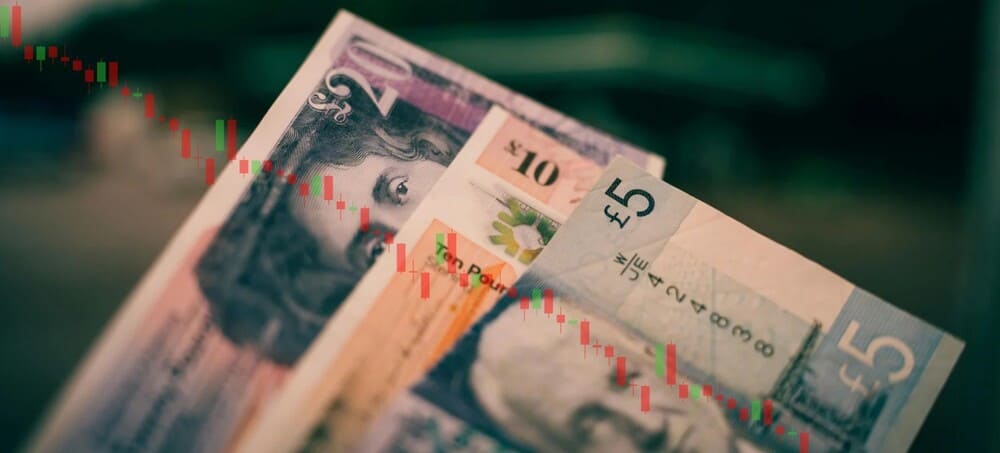
Physical sterling currency consists of banknotes and coins. Banknotes are issued by the Bank of England, with current denominations including £5, £10, £20 and £50. They incorporate security features such as transparent windows, holograms and metallic elements, while the individuals featured on the notes include prominent historical politicians, writers, artists and scientists. Coins are produced by the Royal Mint in denominations ranging from one penny to £2 and are commonly used for everyday low-value payments and change.
What Factors Affect the British Pound? Key Drivers Explained
The exchange rate of the British pound is not determined by a single factor, but by the combined influence of multiple domestic and international forces. Understanding these drivers is essential when assessing its medium- and long-term direction. Traders should closely monitor the following principal factors:
Monetary policy and interest rate expectations: The Bank of England adjusts the Bank Rate to influence inflation and economic activity. Higher interest rates generally make sterling more attractive and may draw capital seeking higher returns, while expectations of rate cuts tend to weaken the currency.
Inflation and real interest rates: The inflation path directly affects real interest rates. When inflation remains elevated but nominal interest rates fail to rise accordingly, declining real rates may weaken investor confidence in sterling-denominated assets.
Economic growth: Gross domestic product (GDP) growth, employment data and consumer spending collectively indicate the strength of the economy’s fundamentals and influence how the market values sterling.
US dollar movements and global capital flows: When global risk aversion intensifies or the US dollar strengthens, capital tends to move towards dollar-denominated assets, placing pressure on sterling. Conversely, a weaker dollar may support the pound.
Political and fiscal uncertainty: Changes in government, fiscal budgets and trade policies can all affect market confidence. Investors are generally sensitive to policy uncertainty and may adjust their positions in advance.
How Did the British Pound Perform in 2025 and 2026? Latest Market Trends
Over the past year, sterling has experienced a significant shift in market expectations, driven by the combined effects of UK monetary policy and external shocks.
Monetary Policy: From a Rate-Cutting Cycle to a Cautious Holding Position
During 2025, the Bank of England followed a gradual interest rate-cutting cycle. It reduced the Bank Rate three times during the year, in May, August and December, lowering it from 4.50% at the beginning of the year to 3.75% by year-end. However, the policy direction changed noticeably in 2026.
During the first half of 2026, the Bank of England repeatedly kept the Bank Rate unchanged at 3.75%. At its June meeting, the Monetary Policy Committee (MPC) voted by seven to two to maintain the rate, with two members instead supporting a 0.25 percentage-point increase to 4%. This voting pattern indicated that the policy stance had shifted from its previously dovish position towards a more cautious and hawkish approach.(Source: Bank of England, Monetary Policy Summary, published: 2026-06-18)
External Shock: Middle East Tensions Drive Energy Prices Higher
A key external factor behind this change was the volatility in energy prices caused by conflict in the Middle East. The conflict pushed international oil prices higher, which subsequently affected UK inflation through fuel and utility costs. The Bank of England was concerned that persistently elevated energy prices could generate second-round effects through wages and prices, making inflation more persistent. As of May 2026, annual UK CPI inflation stood at 2.8%. Although this was close to the target level, the Bank expected inflation to rise again during the second half of the year as higher energy costs passed through to consumer prices.(Source: Office for National Statistics, CPI inflation)
What Cycles Has the British Pound Experienced Over the Past Decade? Historical Performance
From a longer-term perspective, movements in the British pound against the US dollar (GBP/USD) over the past decade can be divided into several distinct phases. Reviewing these periods helps explain the long-term drivers of sterling volatility.
| Period | Approximate Range (GBP/USD) | Principal Driver | Market Characteristics |
|---|---|---|---|
| 2015–2016 | Fell to around 1.20 after the Brexit referendum | Brexit referendum | Shifted from stability to a sharp decline |
| 2017–2019 | 1.20–1.35 | Progress of Brexit negotiations | Repeated political-driven fluctuations |
| 2020–2021 | Recovered to around 1.35 | Pandemic and quantitative easing | Gradual recovery after an initial decline |
| 2022–2025 | 1.20–1.35 | Inflation and interest rate cycles | Range-bound trading with high volatility |
Over the decade as a whole, sterling displayed a broadly range-bound pattern and was heavily influenced by major events including Brexit, the pandemic, inflation and global capital flows. From a technical perspective, the 1.20 level was tested several times as long-term support without being decisively broken, while the 1.35 to 1.40 range remained a persistent area of resistance because of political and economic uncertainty. Despite substantial volatility, sterling’s position as a major global reserve currency remained firmly established.
What Is the Outlook for the British Pound in 2026? Short-, Medium- and Long-Term Prospects
For the remainder of 2026 and beyond, the direction of sterling will depend on the combined influence of monetary policy, inflation developments, the strength of the economic recovery and global capital flows. The following outlook is based on currently available information. Exchange rate movements are highly uncertain, and no forecast constitutes investment advice.
Short Term: Energy Prices and Policy Expectations Dominate
In the short term, sterling’s valuation is highly dependent on market expectations for Bank of England policy. By mid-July 2026, GBP/USD had risen to approximately 1.35, reaching its highest level in nearly a year. This appreciation was mainly driven by expectations that UK interest rates could remain elevated or potentially rise further, together with a temporary reduction in domestic political uncertainty.(Source: Trading Economics, British Pound)
Medium Term: Dependent on Falling Inflation and Economic Recovery
Over the medium term, approximately six to twelve months, sterling’s direction will depend more heavily on whether inflation continues to decline steadily and on the actual strength of the economic recovery. Forecasts from several international institutions indicate that UK GDP growth in 2026 may be approximately 0.9% to 1.0%. If inflation returns towards the 2% target, real interest rates improve and economic momentum strengthens, market confidence in sterling may increase. Conversely, if inflation remains elevated because of energy costs, the pound’s upside potential may be constrained.
Long Term: Reserve-Currency Status Provides Support
From a long-term perspective of more than 12 months, sterling’s position as a major global reserve currency continues to provide a structurally stable foundation. However, returning to its pre-Brexit level of around 1.50 may prove difficult. Its long-term direction will largely depend on whether the UK can reduce its fiscal deficit, maintain policy transparency and improve its external trading relationships. If these conditions are gradually achieved, sterling may trade within a higher central range.
What Methods and Strategies Are Available for Trading the British Pound?
There are several ways to participate in the sterling market, allowing market participants with different time horizons and risk preferences to select appropriate instruments and strategies. The following information provides only a general overview and does not constitute investment advice.
A Fundamental and Technical Analysis Framework
From a fundamental perspective, traders should closely monitor Bank of England interest rate decisions and the wording of its policy statements. They should also follow key economic indicators such as GDP, CPI, unemployment and retail sales, while assessing the potential effects of political developments, including fiscal budgets and trade policies. From a technical perspective, traders may examine key support and resistance areas together with tools such as moving averages and the Relative Strength Index (RSI) to identify short-term overbought or oversold conditions and inform potential entry and exit decisions.
Core Principles of Risk Management
Regardless of the strategy used, risk management is fundamental to long-term market participation. The following principles deserve particular attention:
Diversification: Avoid concentrating all capital in sterling. Holding multiple currencies, such as the US dollar and euro, may help reduce exchange rate volatility within a portfolio.
Setting stop-loss and take-profit levels: In volatile markets, establishing reasonable stop-loss and target levels in advance may help control the potential loss on an individual trade.
Monitoring the global macroeconomic environment: US dollar movements, international capital flows and geopolitical risks can all indirectly affect sterling and should be reviewed regularly.
Frequently Asked Questions About the British Pound
Which institution issues and manages the British pound?
The British pound is issued and regulated by the Bank of England. As the United Kingdom’s central bank, it sets the benchmark interest rate through the Monetary Policy Committee (MPC). Its principal objectives are to maintain CPI inflation at 2% and preserve the stability of the financial system.
What is the Bank of England’s current benchmark interest rate?
During the first half of 2026, the Bank of England’s benchmark interest rate, known as the Bank Rate, remained at 3.75%. At its June 2026 meeting, the Bank voted by seven to two to maintain this level, with two members supporting an increase. This reflected an increasingly cautious policy stance.
Why did market expectations for UK interest rates change in 2026?
The principal reason was that conflict in the Middle East pushed international energy prices higher, with the effects passing through to UK prices via fuel and utility costs. The Bank of England was concerned that higher energy prices could generate second-round effects through wages and prices. Expectations of further interest rate cuts consequently weakened, while some investors began to anticipate that rates could remain elevated or potentially increase.
What have been the key GBP/USD levels over the past decade?
Historically, the 1.20 level has been tested several times as long-term support without being decisively broken. The 1.35 to 1.40 range has remained a persistent area of resistance, as political and economic uncertainty has made sustained gains difficult. Before the Brexit referendum, GBP/USD traded near 1.50.
What is the British pound’s position in the global foreign exchange market?
The British pound is one of the world’s most actively traded major currencies and generally ranks behind the US dollar, euro and Japanese yen. It combines high liquidity with reserve-currency status, is widely used in international trade and financial markets, and forms an important part of central bank foreign exchange reserves.