Understand what determines the value of the Singapore dollar, how MAS manages the S$NEER policy band, the main drivers of USD/SGD, recent inflation trends, trading methods and key currency risks.
What Determines the Value of the Singapore Dollar? Understanding SGD Exchange Rate Dynamics
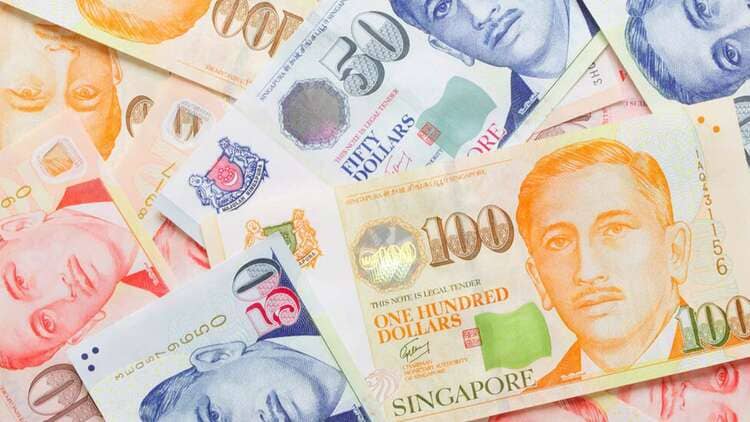
The Singapore dollar, also known as the Singdollar, is the official legal tender of Singapore and is issued and regulated by the Monetary Authority of Singapore (MAS). Its international currency code is SGD, while its commonly used symbol is S$. Unlike most economies worldwide, Singapore does not use policy interest rate adjustments as the principal instrument of monetary policy. Instead, it operates a distinctive framework in which the exchange rate serves as the intermediate policy target.
Under this framework, MAS seeks to maintain price stability and economic competitiveness by managing the slope, width and centre of the Singapore Dollar Nominal Effective Exchange Rate (S$NEER) policy band. Understanding this mechanism is essential to interpreting movements in the Singapore dollar. The following provides a basic overview of the currency:
Currency symbol: S$
International code: SGD
Managing authority: Monetary Authority of Singapore (MAS)
Policy framework: Exchange rate-based intermediate target (S$NEER)
Why Does Singapore Use the Exchange Rate Rather Than Interest Rates to Manage Its Economy?
Singapore is a small and highly open economy whose external trade substantially exceeds its domestic gross domestic product. Imported goods and services also account for a significant share of its consumer prices. Under this economic structure, exchange rate movements affect prices more directly than interest rate changes. For this reason, MAS uses the exchange rate as its primary monetary policy instrument.
The Three Adjustable Parameters of the S$NEER Policy Band
MAS manages the weighted exchange rate of the Singapore dollar against a basket of currencies belonging to its major trading partners, known as the S$NEER, within a policy band with defined boundaries. The policy band contains three principal parameters that may be adjusted during policy reviews:
Slope: Determines the intended appreciation or depreciation path of the Singapore dollar and is the main indicator of policy direction.
Width: Determines the permitted range of S$NEER fluctuations and reflects policymakers’ tolerance for exchange rate volatility.
Centre: Determines the central level of the policy band. Recentring the band can immediately change the targeted position of the Singapore dollar.
When imported inflationary pressures increase, MAS may raise the slope or recenter the policy band upwards, allowing the Singapore dollar to appreciate and contain import prices. When economic growth slows or inflation declines, MAS may reduce the slope or recenter the band downwards to ease pressure on the economy. If the S$NEER reaches the boundaries of the policy band, MAS may conduct foreign exchange operations to guide it back within the permitted range.
Comparison of Different Monetary Policy Instruments
To clarify the differences between Singapore’s framework and more conventional monetary policy models, the table below compares several commonly used intermediate monetary policy targets.
| Comparison Item | S$NEER Exchange Rate Framework | Policy Interest Rate Framework | Money Supply Framework |
|---|---|---|---|
| Core Instrument | Nominal effective exchange rate | Benchmark interest rate | Money supply growth |
| Typical Users | Monetary Authority of Singapore | Federal Reserve and European Central Bank | Certain emerging markets |
| Direct Policy Target | Exchange rate against a basket of currencies | Short-term funding costs | Total amount of money in circulation |
| Suitable Economic Structure | Small, highly open economy | Large, domestic demand-driven economy | Economy with a less-developed financial system |
As the table demonstrates, Singapore’s use of an exchange rate framework is directly related to its high dependence on international trade and its relatively limited domestic demand.
What Is the Latest Direction of Singapore Dollar Policy? Inflation Trends Explained
Since 2024, MAS has conducted four scheduled monetary policy reviews each year, issuing Monetary Policy Statements (MPS) in January, April, July and October. These reviews create event risk for the Singapore dollar. An increase in the slope or an upward recentering of the policy band is generally supportive of the currency, while easing measures are generally negative.
2025: A Shift to a Holding Position After Two Easing Moves
Looking back at 2025, MAS eased monetary policy twice at the beginning of the year. During its January review, MAS slightly reduced the slope of the S$NEER policy band in response to weaker external demand and slowing inflation. It maintained this easing stance in April. During the subsequent reviews in July and October, MAS left the slope, width and centre of the policy band unchanged, shifting to a holding position.(Source: MAS, Monetary Policy Statement, published: 2025-10-14)
This stable policy stance was supported by subdued inflation and resilient economic growth. According to MAS data, core inflation, which excludes accommodation and private transport costs, declined to 0.4% year on year in July and August 2025, below the 0.6% recorded in the second quarter. MAS expected core inflation to average approximately 0.5% for the full year. Meanwhile, Singapore’s economy grew by 3.9% year on year during the first three quarters of 2025, exceeding expectations.
2026: Policy Remains Unchanged as Inflation Forecasts Are Raised
In 2026, MAS’s policy position showed a noteworthy change. During its January 2026 review, MAS again left the slope, width and centre of the S$NEER policy band unchanged, while raising its inflation forecasts. It revised the forecast ranges for both core and headline inflation in 2026 from previously lower levels to between 1.0% and 2.0%. This adjustment indicated that inflation in Singapore was returning towards its underlying trend as temporary factors that had previously suppressed prices began to fade.(Source: MAS, Monetary Policy Statement, published: 2026-01-29)
MAS stated that continued investment associated with artificial intelligence was supporting economic activity among Singapore’s major trading partners and contributing to a recovery in the domestic electronics supply chain. With economic growth remaining resilient and inflation rising moderately, MAS considered its existing policy stance sufficient to address risks to medium-term price stability.
What Factors Affect the Singapore Dollar? Key Drivers Explained
The Singapore dollar is influenced by several interconnected factors. Traders should pay particular attention to the following core drivers:
MAS’s exchange rate-based policy: The slope, width and centre of the S$NEER policy band determine the medium-term direction and permitted fluctuation range of the Singapore dollar, making monetary policy its primary driver.
Inflation trends and imported price shocks: As a highly open economy, Singapore’s price levels are heavily influenced by energy, food and imported goods. Low inflation reduces the urgency for policy tightening, generally allowing the Singapore dollar to trade within a narrow and gradually appreciating range. A rebound in oil prices or food inflation could change the policy tone and trigger a repricing of the currency.
The US dollar and global yields: The US Dollar Index (DXY) and US Treasury yields have the most direct marginal effect on USD/SGD. When the US dollar strengthens or Treasury yields rise, the Singapore dollar often weakens, while the opposite conditions tend to support it.
Economic growth and the export cycle: Conditions in the electronics and semiconductor industries, regional export cycles and shipping costs influence the preferred S$NEER path through their effects on growth and inflation expectations. Improving external demand generally provides medium-term support for the Singapore dollar.
Current account and capital flows: Singapore has maintained a current account surplus and a strong net international investment position for many years. These fundamentals provide a buffer for the Singapore dollar and can make it more resilient than certain regional currencies during periods of market stress.
Secondary Channels Through Institutional Credibility and Market Interest Rates
In addition to the main drivers above, two secondary transmission channels deserve attention. The first is market interest rates. Although Singapore’s monetary policy is anchored to the exchange rate, market rates such as the Singapore Overnight Rate Average (SORA) still affect the real economy through bank funding costs and asset prices. The second is institutional credibility. Singapore’s strong regulatory and fiscal reputation, together with the Singapore–Brunei Currency Interchangeability Agreement, reinforces the currency’s convertibility and market confidence, contributing to its long-term credibility premium.
How Has the Singapore Dollar Recently Performed Against the US Dollar? USD/SGD Outlook
As of July 2026, USD/SGD was fluctuating at around 1.29. The Singapore dollar had shown periods of strength during the year. In late January 2026, it reached approximately 1.27 against the US dollar, its strongest level since October 2014, supported primarily by safe-haven capital inflows and market expectations that MAS would leave its policy settings unchanged.(Source: Trading Economics, Singapore Dollar)
General short-term exchange rate patterns can be summarised in two scenarios:
When the US dollar declines, USD/SGD tends to fall and the Singapore dollar strengthens.
When US yields rise or risk aversion intensifies, USD/SGD tends to increase and the Singapore dollar weakens.
From a medium- to long-term perspective, Singapore’s relatively moderate inflation, sound fiscal position and AAA sovereign credit rating provide structural support for the currency.
How Can You Trade the Singapore Dollar? Main Methods and Key Market Windows
Traders can participate in the Singapore dollar market through several principal methods, each with different characteristics:
Spot foreign exchange trading: The most commonly traded currency pairs include USD/SGD, EUR/SGD and SGD/JPY, which directly reflect movements in spot exchange rates.
Contracts for difference (CFDs): These allow traders to gain exposure to exchange rate movements with a relatively small amount of capital, but the risk of leverage magnifying losses must be treated with considerable caution.
Funds and multi-currency asset allocation: The SGD is frequently included in regional asset allocations to diversify portfolio risk.
Key Events Affecting Liquidity and Volatility
When trading the Singapore dollar, three key event cycles should be considered, as they often correspond with wider spreads and higher volatility:
Quarterly monetary policy statements in January, April, July and October: These provide the primary indication of policy direction. Any adjustment to the slope, centre or width of the S$NEER policy band, or even a change in the wording of the statement, may influence the medium-term direction of the currency.
Monthly inflation data: Consumer Price Index releases can act as short-term market triggers. When core inflation or imported inflation differs from expectations, USD/SGD may experience increased volatility.
Quarterly Macroeconomic Review: This provides a broader assessment of inflation and growth and can extend or reinforce existing market pricing outside the main monetary policy review periods.
In addition, major US economic releases, including non-farm payrolls, CPI and ISM data, as well as Federal Reserve meetings, can affect USD/SGD through movements in the DXY and US Treasury yields. These events should therefore also be included in a trader’s economic calendar.
Frequently Asked Questions About the Singapore Dollar
Why does MAS use the exchange rate rather than interest rates to manage monetary policy?
Singapore is a small and highly open economy in which imported goods and services account for a substantial share of consumer prices. Exchange rate movements therefore affect inflation more directly than interest rate changes. MAS consequently manages the Singapore Dollar Nominal Effective Exchange Rate (S$NEER), rather than setting a benchmark policy interest rate, to maintain medium-term price stability.
What do the slope, width and centre of the S$NEER policy band represent?
The slope represents the intended appreciation or depreciation path of the Singapore dollar and is the principal indicator of policy direction. The width represents the permitted fluctuation range, while the centre represents the midpoint of the policy band. MAS may adjust these three parameters during its quarterly reviews in response to changes in inflation and economic growth.
When does MAS publish its monetary policy statements each year?
Since 2024, MAS has published four Monetary Policy Statements (MPS) each year, in January, April, July and October. Each statement may include adjustments to the slope, width or centre of the S$NEER policy band, making it an important event for assessing the medium-term direction of the Singapore dollar.
What was MAS’s policy position in 2026?
During its January 2026 review, MAS left the slope, width and centre of the S$NEER policy band unchanged. At the same time, it raised its forecast ranges for both core and headline inflation in 2026 to between 1.0% and 2.0%, indicating that inflation was gradually returning towards its underlying trend.
When is intraday USD/SGD trading most active?
Liquidity is generally highest during the Asian trading session, from approximately 08:00 to 17:00 Singapore time. Volatility also tends to increase around MAS monetary policy announcements and inflation reports, as well as during the release of major US economic data.