ASIC has issued interim stop orders on two Stratfund products over defective target market determinations, highlighting regulatory scrutiny of private credit funds, product governance and retail investor protection in Australia.
ASIC Issues Interim Stop Orders on Two Stratfund Funds
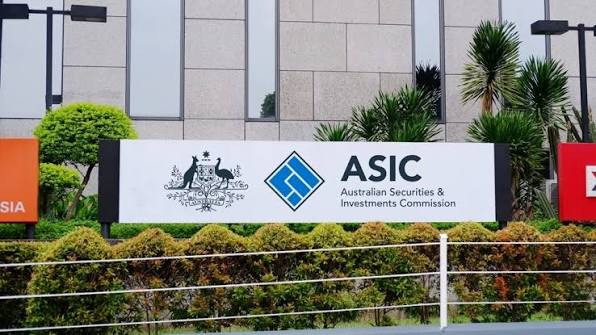
ASIChas issued interim stop orders on two products under the Australian Fixed Income Fund operated by Stratfund Limited (Stratfund), in order to protect consumers from products that may not be suitable for their financial objectives, situation or needs. The products subject to the stop orders are the Wealthon Vault Development Fund and The People's Equity Fund, because theirTMDs contain deficiencies.
These interim orders prohibit Stratfund from dealing in interests in the two funds, providing product disclosure statements, or giving general financial product advice to retail clients, including recommending investment in the two funds. Unless revoked earlier, the orders are effective from 30 June 2026 to 20 July 2026, a 21-day window.
(Source: ASIC official media release, publication window: 30 June 2026 to 2 July 2026.)
Specific Issues Identified in the Target Market Determinations
Wealthon Vault Development Fund
ASIC is concerned that the fund’s TMD inappropriately suggests that the target market includes the following types of retail investors:
Investors seeking capital preservation or income distribution as investment objectives, although the product is not actually designed to achieve those objectives;
Investors intending to hold the product as a core component of their investable assets, representing 25% to 75% of their portfolio;
Investors with an investment timeframe of more than three years, although the product’s actual minimum investment period is four years;
Investors who require annual withdrawals.
The People's Equity Fund
ASIC also considers that this fund’s TMD inappropriately suggests that the target market includes the following types of investors:
Investors seeking to achieve an income distribution objective, although the fund may currently be unable to pay distributions;
Investors intending to hold the product as a core component of their investable assets, representing 25% to 75% of their portfolio;
Investors who require annual or even quarterly withdrawals, while the product has a minimum investment period of three years and withdrawals are at the company’s discretion.
(Source: ASIC official media release, specific statements regarding the TMD deficiencies in Stratfund’s two funds.)
Comparison of the Two Restricted Funds
The following compares the core features of the two products subject to the stop orders:
| Feature | Wealthon Vault Development Fund | The People's Equity Fund | Notes |
|---|---|---|---|
| Product type | Private credit fund | Shared equity investment fund | They belong to different asset classes |
| Investment assets | Secured development loans to approvedSPVs | Shared equity in residential property and residential real estate | Both are related to real estate |
| Minimum investment period | Four years | Three years | Does not align with the timeframe suggested by the TMD |
| Withdrawal arrangements | Annual withdrawals | Annual or even quarterly withdrawals, at the company’s discretion | Liquidity uncertainty exists |
Regulatory Background and Industry Developments
These interim stop orders arise from ASIC’s risk-based supervision of managed investment schemes. The Australian Fixed Income Fund has 12 products, with different investment terms, returns and features. As at 30 June 2025, the fund had approximately US$15 million in assets under management. The Wealthon Vault Development Fund is one of its private credit funds.
ASIC has listed misconduct in private credit as one of its enforcement priorities for 2026, including retail private credit funds. Its focus areas include fund transparency, governance, valuation methods, conflicts of interest management and fair treatment of investors. This forms part of the regulator’s response to Australia’s changing capital markets.
Stratfund describes itself as anAFS-licensed entity specialising in authorised intermediary, trustee and AFS licence compliance services.
(Sources: ASIC official media release; Financial Standard related report, July 2026.)
Implementation of the Design and Distribution Obligations Regime
Under theDDOregime, financial product issuers and distributors must ensure that a product’s TMD is clearly defined, accurately reflects the product’s risks and features, and includes appropriate distribution conditions. Where firms fail to take the correct approach, ASIC can act quickly to stop misconduct and prevent potential consumer harm.
Since the regime came into effect, ASIC has issued 97 interim stop orders and two final stop orders. The action against Stratfund is the latest example in the regulator’s recent series of private credit supervision measures, following similar interim stop orders issued against several other private credit funds.
(Source: ASIC official media release, DDO implementation statistics, as at July 2026.)
Questions Related to Stratfund Stop Orders
What is a target market determination (TMD)?
A TMD is a document issued by a financial product issuer under the design and distribution obligations regime. It defines the type of investors to whom a product is suitable to be sold and sets out the relevant distribution conditions.
What exactly do the interim stop orders prohibit Stratfund from doing?
The orders prohibit Stratfund from dealing in interests in the Wealthon Vault Development Fund and The People's Equity Fund, providing product disclosure statements, or giving general financial product advice to retail clients and recommending investment in the two funds.
How long do the stop orders remain in effect?
Unless revoked earlier, the interim stop orders remain in effect for 21 days.
How is this action related to ASIC’s 2026 regulatory priorities?
ASIC has listed misconduct in private credit as one of its enforcement priorities for 2026, focusing on transparency, governance, valuation methods and conflicts of interest management in retail private credit funds. The Wealthon Vault Development Fund falls within this category.