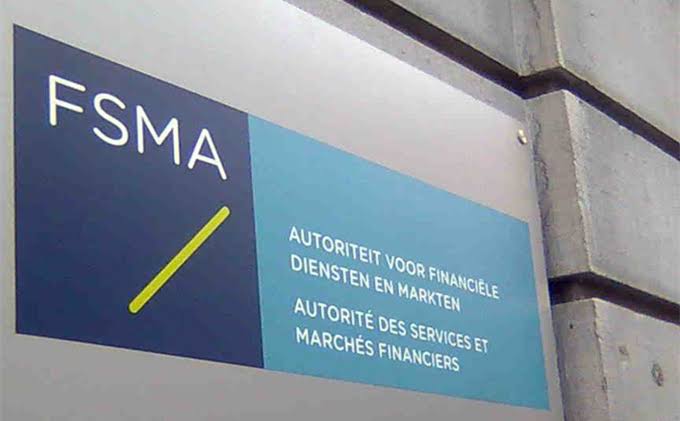
Belgium's FSMA has warned the public against six firms offering crypto-asset services without authorisation, adding them to its fraudulent CASP list days after the MiCA transition period ended on 1 July 2026.
FSMA Names Six Unauthorised Crypto Firms on 2026-07-06
Belgium's Financial Services and Markets Authority (FSMA) issued an announcement on 2026-07-06 (Monday), warning the public not to accept the services of six firms offering crypto-asset services within Belgium without authorisation. The authority has added these entities to its list of fraudulent crypto-asset service providers. (Source: FSMA official announcement; Cointelegraph, Belgium unauthorized crypto firms, published: 2026-07-06.)
The warning was issued a few days after the transition period under the EU Markets in Crypto-Assets Regulation (MiCA) expired on 2026-07-01, marking a shift by member state regulators from the framework-building phase into the phase of substantive enforcement.
The Six Entities Placed on the List
The FSMA strongly advises consumers not to accept crypto-asset services from the following firms:
Aurum Foundation
Bank Bit
Bithf Pro
Dxago
Global Dynamic Trade
ZeriaFunding
The FSMA notes that these entities have been added to its list of fraudulent CASPs, but that the list is not exhaustive and is updated regularly. (Source: Blockonomi, Belgian Regulator Identifies Six Unlicensed Crypto Operators, published: 2026-07-06.)
The MiCA Authorisation Regime and Transition Period Timeline
The MiCA Regulation came into force at the end of 2024, establishing a unified crypto-asset regulatory framework across the EU. Under the regulation, any firm wishing to provide crypto-asset services within the EU must obtain crypto-asset service provider (CASP) authorisation from the competent regulator in its member state. The scope of business covered by the authorisation includes the custody and administration of crypto-assets, the operation of trading platforms, the exchange of crypto-assets for fiat currency, the exchange of crypto-assets for other crypto-assets, order execution, transfer services, investment advice and portfolio management.
The key milestones are set out in the table below, presented in the context of the regulatory process:
| Date | Applies To | Regulatory Requirement | Status |
|---|---|---|---|
| 2024-12-30 | Newly established crypto-asset service providers | Must first obtain CASP authorisation before commencing business | In force |
| From 2024-12-30 | Existing crypto-asset service providers | Enter the transition period and may continue operating for the time being | Transition period begins |
| 2026-07-01 | Existing crypto-asset service providers | Must complete CASP authorisation, otherwise cease services | Transition period expires |
| 2026-07-06 | Six unauthorised entities | Added to the fraudulent CASP list | Named and warned |
No Firm Has Yet Been Authorised in Belgium
The FSMA states that, as of the date of the announcement, no CASP has obtained authorisation issued by the FSMA in Belgium. The authority had also not issued any registration under the national rules that preceded MiCA (the 2022 Royal Decree). Before using such services, consumers should be sure to verify whether a firm holds valid CASP authorisation, which can be checked via the official CASP register maintained by the European Securities and Markets Authority (ESMA). (Source: FSMA, Crypto-Asset Service Provider, official page.)
The Inherent Risks of Crypto-Assets and Consumer Guidance
The FSMA cautions that crypto-assets have a number of particular characteristics that carry considerable risks. Their value often fluctuates sharply; at the same time, the crypto-asset market may have limited liquidity, and investors may not necessarily be able to sell the assets they hold at the time and price they wish.
The authority also offers the following points for consumers to consider:
Be wary of the promotion of certain crypto-assets on social media, as the related information may be confusing, incomplete or even misleading.
Unlike some more traditional financial products, crypto-assets are typically not protected by any compensation scheme, so investors have limited protection should they incur a loss.
Crypto-assets and their derivative products can be extremely complex; you should not commit funds unless you understand the products in question.
On the matter of understanding complex products, the FSMA reiterates its long-standing guidance:
"Crypto-assets and products built on them can be extremely complex. If you do not understand the product being offered, do not invest."
In addition, the FSMA warns consumers to be wary of so-called "recovery rooms" — fraudsters of this kind make renewed false offers to those who have previously been defrauded, claiming to be able to help recover crypto-assets already lost. (Source: LeapRate, Belgium's FSMA Warns Against Six Unauthorized Crypto Firms, published: 2026-07-06.)
Frequently Asked Questions About the FSMA's Unauthorised Crypto Firm Warning
Which country's regulator is the FSMA?
The FSMA, formally the Financial Services and Markets Authority, is Belgium's financial regulator, responsible for supervising entities such as crypto-asset service providers within Belgium.
When did the MiCA transition period end?
The transition period for existing crypto-asset service providers expired on 2026-07-01. After that date, providers that have not obtained CASP authorisation must cease offering crypto-asset services within the EU.
Which six firms were named by the FSMA?
They are Aurum Foundation, Bank Bit, Bithf Pro, Dxago, Global Dynamic Trade and ZeriaFunding, all of which have been added to the FSMA's list of fraudulent CASPs.
How can I verify whether a crypto firm holds valid authorisation?
Consumers can check a firm's authorisation status via the official CASP register maintained by ESMA. The FSMA stresses that its list of fraudulent firms is not exhaustive, and that not being on the list does not mean a firm is authorised, so independent verification is still required.
What is a "recovery room" scam?
It refers to fraudsters proactively contacting those who have previously been defrauded, claiming to be able to help recover crypto-assets already lost, in order to carry out a second-round scam. The FSMA warns consumers to remain highly vigilant towards such offers.