A guide to Powerchip Semiconductor (PSMC, 6770): its mature-process foundry services, Q1 2026 return to profit, how it differs from TSMC, its structural exposure to AI and the memory super-cycle, and the key factors driving its share price.
What services does this Taiwanese foundry, focused on mature processes, actually offer?
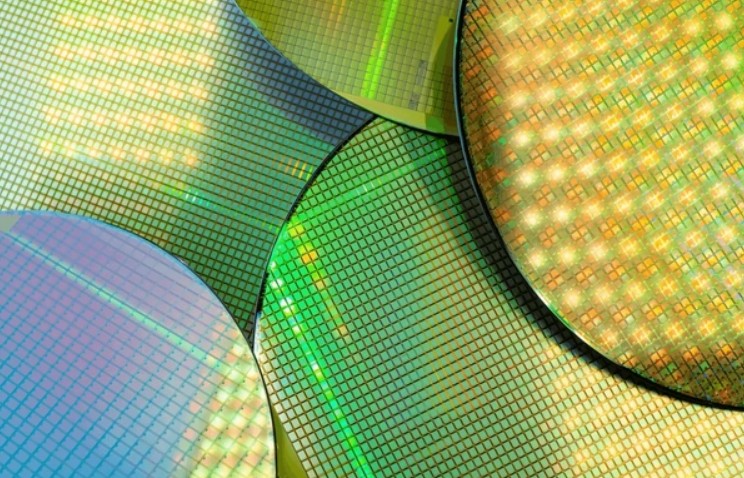
Powerchip Semiconductor Manufacturing Corporation (PSMC, ticker 6770) is an important dedicated wafer foundry in Taiwan. It concentrates on wafer foundry services, providing chip-manufacturing services for clients and not operating its own-brand products. Its core capabilities are concentrated in mature processes, covering nodes such as 28nm, 40nm, 55nm, 65nm, 90nm and 0.18 micron, used to produce the chips required for a wide range of electronic products. Its business scope spans custom logic ICs, display driver ICs, power management ICs, sensing components, automotive electronics and memory-related foundry work, covering end applications such as consumer electronics, industrial equipment, automotive systems and the Internet of Things.
Powerchip originally engaged in the manufacture of dynamic random-access memory (DRAM), and therefore retains deep memory-process experience, which it has extended to the logic and embedded-memory foundry field. The company uses its own Open Foundry model, allowing clients to collaborate more flexibly with the plant across design, development, capacity planning and the manufacturing process, and even to co-invest in equipment and production lines. This strategy has helped it build long-term client relationships in the mature-process market and improve manufacturing efficiency and cost competitiveness.
Power semiconductors and overseas licensing form a new growth line
In recent years, Powerchip has actively expanded into the power-semiconductor field, particularly collaborating with the US company Navitas Semiconductor on gallium nitride (GaN) foundry work, providing chip-manufacturing services for the fast-charging, laptop-power and server-power markets. In addition, the company has expanded its international footprint through technology licensing and overseas cooperation — for example, providing mature-process technology to India's Tata Electronics for the construction of the country's first national-level wafer fab. Overall, its positioning lies in providing stable, high-yield, widely applicable mature-process foundry services.
The financial inflection point, from ten consecutive quarters of losses to a single-quarter return to profit
Between 2025 and 2026, Powerchip went through a marked operational inflection point, with structural changes in both its financial and share-price data that already differ markedly from the market's perception of six months earlier.
Revenue and profit: the first quarter of 2026 ends the run of losses
Powerchip's full-year revenue for 2025 was around NT$46.73 billion, with a full-year loss per share of around NT$1.86, continuing its earlier loss-making state. The turning point came in the first quarter of 2026: single-quarter revenue was around NT$13.57 billion, up about 9% quarter on quarter and about 22% year on year; single-quarter net profit was around NT$14.23 billion, turning from loss to profit and ending ten consecutive quarters of losses, with earnings per share reaching NT$3.36. The company explained that, although the quarter's profit figure was substantially boosted by the transaction selling the Tongluo plant to Micron, even excluding this one-off transaction the core business had already turned profitable, with net profit slightly above NT$500 million, constituting an important turning signal. (Source: Powerchip Q1 2026 investor conference)
Share price and valuation: a substantial re-rating alongside the memory rally
The changes at the share-price level were more dramatic. In mid-November 2025, Powerchip's share price was at one point around NT$34, and market target prices were even below the then share price, reflecting cautious expectations. Entering 2026, driven by rising memory prices and the return to profit, the share price recovered to the NT$70 to NT$80 range. In June 2026, J.P. Morgan upgraded its rating from "Neutral" to "Overweight" and raised its June 2027 target price from NT$50 to NT$100; the institution forecast that the company's gross margin would rise from around 10% in the first quarter of 2026 to around 47% by the end of 2027. (Source: J.P. Morgan research report, as reported by Investing.com)
Recent share-price data
| Quarter | Earnings per share (NT$) | Quarterly average price (NT$) | Operating status |
|---|---|---|---|
| 2025 Q2 | -0.80 | approx. 16.02 | Loss |
| 2025 Q3 | -0.65 | approx. 16.34 | Loss |
| 2025 Q4 | -0.16 | approx. 20.60 | Narrowing loss |
| 2026 Q1 | 3.36 | approx. 62.01 | Return to profit |
Where do the client structure and end demand come from?
Powerchip's clients come mainly from fabless IC design companies and some integrated device manufacturers (IDM), with a customer base spanning consumer electronics, industrial equipment, automotive electronics and power management. Because it focuses mainly on mature processes, its clients are largely chip companies that need stable capacity, a friendly cost structure and a longer product life cycle — for example, clients producing display driver ICs (DDIC), power management ICs (PMIC), image sensing ICs, microcontrollers (MCU), embedded memory and power control chips.
As it enters the power-semiconductor market, Powerchip also attracts power-management and GaN-related companies. In terms of geographical expansion, the company serves overseas businesses through technology licensing and cooperation — for example, signing a technology-transfer agreement with India's Tata Electronics to help build local wafer-manufacturing capacity, extending its client structure from Taiwan to the world. Its products cover a wide range of end markets including televisions, mobile phones, laptops, industrial control, automotive systems, IoT devices, power supplies and fast-charging equipment.
The fundamental differences between Powerchip and TSMC in positioning and technology route
Powerchip and TSMC (TSMC) are both important wafer foundries in Taiwan, but the two differ entirely in positioning, scale and technology route. TSMC focuses on the world's most advanced process technology, producing cutting-edge chips such as 3nm and 5nm, and is a core supplier to technology giants such as Apple, NVIDIA and AMD; its main products include mobile-phone processors, high-performance computing (HPC) chips, AI GPUs and server processors, belonging to a highly capital-intensive route with an extremely high technology threshold.
By contrast, Powerchip focuses on mature processes and specialty processes, used to manufacture display driver ICs, power management ICs, sensing chips, automotive electronics, memory products and power semiconductors. These applications have longer life cycles, stable demand and broad coverage, so it places greater emphasis on manufacturing efficiency, cost structure and mass-production stability rather than competing at the performance limits of advanced processes. To facilitate a comparison of the differences between the two across several key dimensions, the table below sets out a conceptual overview.
| Dimension of comparison | Powerchip (PSMC) | TSMC | Meaning of the difference |
|---|---|---|---|
| Business model | Open Foundry plus some technology licensing | Pure wafer foundry, focused on the most advanced processes | The former is asset-light, the latter capital-heavy |
| Main processes | Mature processes (28nm and above) | Advanced processes (3nm, 5nm, 7nm) | Entirely different dimensions of technological competition |
| Product structure | PMIC, DDIC, DRAM, power chips | CPU, GPU, AI chips, mobile-phone SoCs | End markets sit in different segments of the industry chain |
| Capital expenditure | Relatively asset-light, with overseas expansion mainly via technology transfer | Building fabs worldwide, with huge capital expenditure | Different expansion-risk and return characteristics |
In terms of business model, TSMC adopts a global fab-building strategy, investing heavily in advanced wafer fabs in Taiwan, Japan, the United States and Europe, with capital expenditure often running to tens of billions of US dollars; Powerchip, by contrast, uses the Open Foundry model and technology-licensing cooperation — for example, in its technology transfer with India's Tata Electronics, the other party funds the fab construction while Powerchip provides the mature-process technology, expanding its influence in a relatively asset-light way. In terms of end clients, TSMC serves the world's top chip-design companies with extremely high technology requirements; Powerchip's clients are concentrated in power management, driver ICs, IoT, automotive and industrial chips, a broader and more resilient part of the industry chain. The two are not in direct competition, but sit in different segments of the semiconductor supply chain.
Powerchip's path to benefiting from the AI trend is of a structural, peripheral type
Powerchip is not an advanced-process player producing AI GPUs, so it will not benefit directly from the explosion in AI computing demand in the way TSMC does. But driven by AI servers, power management and peripheral applications, it is indirectly pulled along by the growth of the AI industry in several fields. Its paths to benefiting can be summarised as follows.
The continued expansion of AI servers raises demand for power management ICs, power semiconductors and fast-charging-related chips; these products largely use mature processes such as 40nm, 55nm, 90nm and BCD, and are manufactured by Powerchip.
Data-centre expansion raises the importance of power-conversion efficiency, making GaN a focus. Powerchip's GaN cooperation with Navitas Semiconductor provides it with an opportunity to participate in the AI-server power chain.
The proliferation of AI devices drives demand for display driver ICs, sensing components and industrial control chips; these products largely use mature processes, further raising capacity utilisation.
More structurally significant is the spillover effect of changes in memory supply and demand on foundries. When major players such as Samsung, Micron and SK Hynix prioritise capacity for AI-use high-bandwidth memory (HBM), a structural gap appears in traditional DDR4 and some NAND; as a memory wafer foundry and specialty-process manufacturer, Powerchip has taken on the dividend of order transfers and tight capacity, and its bargaining power has risen accordingly. Overall, its benefit from AI is of a structural, peripheral type, coming mainly from AI-driven demand for power, fast charging, industrial control, end-user electronics and niche memory, rather than from high-end GPUs themselves.
Five categories of core factor affecting Powerchip's share price
Powerchip's share price is mainly affected by the combined influence of the mature-process cyclical upturn, client demand, capacity utilisation, changes in capital expenditure and industry trends. As a mature-process foundry, the drivers of its share price are not entirely the same as those of advanced-process players.
Mature-process capacity utilisation
Capacity utilisation is central to determining revenue and gross margin. When demand from panels, mobile phones, PCs and automotive electronics recovers and orders for driver ICs and PMICs increase, capacity utilisation rises, earnings per share and gross margin improve, and the share price usually performs relatively well; conversely, if inventory adjustment occurs and related demand falls, a high proportion of mature-process lines is prone to idling, and the share price is relatively under pressure.
Changes in demand for display driver ICs, PMICs and consumer electronics
Most of Powerchip's capacity focuses on DDIC, PMIC, IoT and consumer-electronics-related ICs, with some used for automotive and industrial applications. Fluctuations in consumer-electronics demand highly influence its order visibility and pricing trends. For example, an improvement in television and laptop shipments drives up DDIC demand, growth in fast charging and power categories supports PMIC and GaN demand, and expansion in industrial control and IoT increases shipments of MCUs and sensing ICs.
Peripheral demand brought by AI
Although Powerchip does not manufacture advanced-process AI GPUs, it benefits from AI-server power demand, PMIC demand brought by data-centre expansion, and growth in demand for fast-charging and high-power GaN chips. If the GaN market continues to expand and related revenue rises, this will constitute an important positive for the share price.
Changes in pricing on focus production lines
Mature-process gross margins are not as good as those of advanced processes, so even a small rise in the average selling price (ASP) can significantly affect profit and the share price. Factors affecting ASP include whether end demand is recovering, whether peers have excess capacity, and whether panel driver ICs and PMICs are entering a price-rising cycle.
Growth momentum in power semiconductors and memory foundry
Powerchip is actively expanding into GaN, BCD power ICs and industrial and automotive high-voltage processes; these products have better gross margins, longer life cycles and stable demand. If the power business or memory foundry ramps up in volume, the market will raise its long-term price-to-earnings expectations. It is worth noting that in 2026 the company sold its Tongluo plant (the P5 fab) to Micron for around US$1.8 billion, and deepened its cooperation with Micron on the 1P DRAM process and HBM back-end packaging, while advancing its 3D AI Foundry strategy combining 3D wafer stacking; these all constitute new growth variables. (Source: Powerchip Q1 2026 investor conference)
A real industry event related to the article's theme and its impact
The memory super-cycle of 2025 to 2026 is the key backdrop for understanding Powerchip's recent turnaround.
Cause: AI data-centre construction pushed up demand for HBM, and HBM shares fabs and capacity with traditional DRAM. Because HBM commands higher selling prices and margins, major players such as Samsung, SK Hynix and Micron prioritised shifting capacity towards HBM and gradually exited the lower-margin DDR4 market.
Development: The capacity crowding-out made traditional DRAM and some NAND supply increasingly tight, and contract prices rose substantially. Memory manufacturers and foundries taking on the transferred orders benefited, and Powerchip ended ten consecutive quarters of losses in the first quarter of 2026; over the same period the company sold its Tongluo plant to Micron and deepened technical cooperation, formally moving closer to the AI memory supply chain. (Source: TechNews report on Powerchip's investor conference)
Impact on the industry: This cycle changed the pricing landscape for mature-process foundries, transforming originally low-margin niche products into a higher-profit source; at the same time it reminded the market that the memory industry has a marked cyclical character, and if the major players' capacity expansion exceeds demand growth or AI capital expenditure slows, there is a risk of price reversal.
A thinking framework for judging whether this company is suitable for inclusion in a portfolio
Whether Powerchip is suitable for inclusion in a portfolio depends on one's own view of mature-process wafer foundry and one's risk tolerance. Its strengths lie in deep cultivation of stable-demand fields such as display driver ICs, power management ICs and power semiconductors, and in positioning for future growth through GaN, overseas technology licensing and memory cooperation with Micron. The risks lie in the mature-process cycle, pricing pressure, and the possibility that the ramp-up periods of new businesses such as GaN, the India cooperation and 3D AI Foundry may cause a phase of profit compression.
From an industry-role perspective, it is not a high-growth stock chasing cutting-edge technology, but a foundry playing an important and relatively resilient role in the supply chain, better observed over a medium-to-long-term horizon in terms of its operating structure, capacity utilisation and the contribution of new businesses. In judging its potential value, one needs to combine one's own risk appetite, holding period and views on the trends in mature processes and the memory industry, and weigh it against one's own strategy once sufficient information has been obtained.
Questions related to Powerchip
Are Powerchip and TSMC in a competitive relationship?
The two are not in direct competition. TSMC focuses on advanced processes such as 3nm and 5nm, serving the world's top chip-design companies; Powerchip focuses on mature and specialty processes of 28nm and above, serving clients in power management, driver ICs, IoT, automotive and industrial chips. The two sit in different segments of the semiconductor supply chain and play different industry roles.
Why was Powerchip able to turn from loss to profit in the first quarter of 2026?
In the first quarter of 2026, single-quarter net profit was around NT$14.23 billion, with earnings per share of NT$3.36, ending ten consecutive quarters of losses. The substantial boost to profit came mainly from the one-off transaction selling the Tongluo plant to Micron, but the company explained that even excluding this transaction the core business had already turned profitable, with net profit slightly above NT$500 million, reflecting the dividend of rising memory prices and tight capacity.
How does Powerchip benefit from the current memory price-rising cycle?
When major players such as Samsung, Micron and SK Hynix prioritise shifting capacity towards AI-use HBM and exit the low-margin DDR4 market, a structural gap appears in traditional DRAM and some NAND. As a memory wafer foundry and specialty-process manufacturer, Powerchip takes on the transferred orders and tight capacity, its bargaining power rises, and its foundry pricing is raised.
What does Powerchip's cooperation with Micron include?
In 2026 the company sold its Tongluo plant (the P5 fab) to Micron for around US$1.8 billion, to accelerate HBM-related production; in exchange, Micron helps Powerchip upgrade the process technology at its Hsinchu site, including 1P DRAM process development, enabling it to move from small-capacity DRAM towards mainstream product foundry, and to advance its 3D AI Foundry strategy combining 3D wafer stacking.
What types of chip does Powerchip mainly produce?
Its products cover custom logic ICs, display driver ICs, power management ICs, image sensing ICs, microcontrollers, embedded memory, DRAM and flash-memory foundry, as well as power semiconductors such as GaN and BCD, widely used in televisions, mobile phones, laptops, industrial control, automotive systems, IoT devices and power equipment.