TradingView adds 3,000+ ICE Data Indices, expanding access to global benchmarks including MOVE, NYA, and GDM for market analysis.
TradingView Expands ICE Index Data Coverage
The financial market data services sector in New York and Chicago saw a new platform integration on May 13, 2026. TradingView announced through its official blog that it had integrated ICE Data Indices, operated by Intercontinental Exchange, into its charting and market analysis platform. Users can now access more than 3,000 market benchmarks within the existing charting environment. The platform stated that the newly added data is part of its ongoing effort to expand market data coverage, with the goal of helping users conduct more comprehensive global market analysis.
The source is TradingView’s official blog,“ICE Data Indices — now available on your charts”, published on May 13, 2026. According to the announcement, the newly integrated data covers multiple types of indices, including the MOVE Index, which measures volatility in the U.S. Treasury market; the NYA Index, which reflects the overall performance of common stocks listed on the New York Stock Exchange; and the GDM Index, which tracks global gold and silver mining companies.
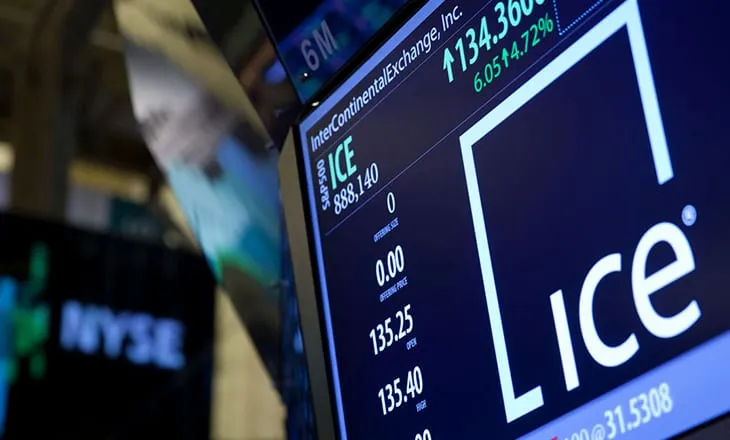
Intercontinental Exchange (ICE) was founded in 2000, initially as an electronic energy trading platform. Its business later expanded into exchanges, clearing houses, fixed income and data services, mortgage technology, and other areas. ICE owns the New York Stock Exchange (NYSE) and provides index, valuation, analytics, and market data solutions through its fixed income and data services division.
Newly Added Data Covers More Than 3,000 Market Benchmarks
The direct impact of this integration is that TradingView users can search for index data under the ICE prefix through the platform’s symbol search function. TradingView stated in the announcement that users can browse the newly integrated indices by entering the relevant ICE prefix. This arrangement enables platform users to monitor macro volatility, stock market performance, industry benchmarks, and commodity-related sectors within the same charting environment, without switching between multiple separate data interfaces.
ICE’s official materials show that ICE Data Indices provides more than 8,500 global indices in total, covering fixed income, equities, commodities, currencies, volatility, and U.S. residential mortgage rate locks. The more than 3,000 indices integrated into TradingView this time do not represent ICE’s entire index system, but rather a portion designed for platform display and analysis scenarios.
| Date | Source | Data or Index | News Significance |
|---|---|---|---|
| May 13, 2026 | TradingView official blog | More than 3,000 ICE Data Indices | The platform’s charting environment adds a large-scale set of global market benchmark data. |
| May 13, 2026 | TradingView official blog | MOVE Index | Users can monitor changes in options-implied volatility in the U.S. Treasury market. |
| May 13, 2026 | TradingView official blog | NYA Index | Users can track the overall performance of common stocks listed on the New York Stock Exchange. |
| 2026 public materials | ICE official data catalog | More than 8,500 ICE Data Indices | TradingView’s integration covers part of ICE’s global index system. |
MOVE, NYA, and GDM Highlighted as Key Examples
TradingView listed three representative indices in the announcement, corresponding respectively to bond market volatility, the broad equity market, and the precious metals mining sector. These examples show that the new data is not limited to a single asset class, but spans different areas of analysis, including macro risk, equity markets, and the resources sector.
The MOVE Index, short for Market Option Volatility Estimate, reflects options-related volatility in the U.S. Treasury market and is an important reference for monitoring fixed income market risk.
The NYA Index, or NYSE Composite Index, measures the overall performance of common stocks listed on the New York Stock Exchange and can serve as one reference indicator for observing U.S. stock market breadth.
The GDM Index, or NYSE Arca Gold Miners Index, is a market-capitalization-weighted benchmark of gold and silver mining companies and is commonly used to observe the performance of the precious metals mining sector.
In cross-asset analysis, these indices serve different purposes. The MOVE Index is usually associated with interest rate expectations, bond yield volatility, and macro risk appetite. The NYA Index can provide a broader view of the market than a single large-cap index. The GDM Index is linked to factors such as gold prices, mining company earnings expectations, real interest rates, and U.S. dollar trends. After these indices are integrated into TradingView, users can observe changes across different asset classes within the same analytical framework on charts.
Charting Platform Continues to Strengthen Its Role as a Market Data Gateway
TradingView emphasized in the announcement that reliable and complete data is the foundation of market analysis. In recent years, the platform has continued to expand its data sources, covering stocks, forex, futures, crypto assets, indices, economic data, corporate fundamentals, and more. The integration of ICE index data further strengthens its role as a market data gateway and chart analysis tool.
From a user scenario perspective, the newly added ICE Data Indices can serve the following analytical needs:
Traders can compare relevant market benchmarks while observing price trends in stocks, bonds, or commodities.
Macro analysts can track changes in U.S. Treasury volatility through indicators such as MOVE and compare them with yields, the U.S. dollar, and stock indices.
Sector researchers can use benchmarks such as GDM to observe the performance of precious metals mining companies and support industry trend analysis.
Portfolio managers can use multi-market indices to compare different asset classes and improve risk monitoring efficiency.
The update also shows that cooperation among financial data platforms is shifting from single-market quote display toward broader data ecosystem integration. For charting and trading analysis platforms, the value of index data lies not only in displaying the level of a benchmark, but also in helping users establish relationships across markets. After bond volatility, stock market breadth, sector indices, and commodity-related segments are brought into the same workspace, the threshold for cross-market analysis is further lowered.
ICE Index System Covers Multiple Asset Classes
ICE’s official data catalog shows that ICE Data Indices covers multiple categories, including fixed income, equities, commodities, currencies, volatility, sustainability, and U.S. mortgage rate locks. Its index system includes standard indices, custom indices, and real-time calculation services. For institutional users, such indices are commonly used for performance benchmarking, asset allocation, risk management, product design, and market research.
ICE materials also show that its index services have a long history, with some index families dating back to February 1970. Data frequencies include intraday and end-of-day, while data quality types include real-time, delayed, end-of-day, and historical data. This indicates that the ICE index data integrated into TradingView is backed by an index service system covering multiple asset classes and distribution mechanisms.
Fixed income indices cover global bond markets and are suitable for interest rate, credit, and portfolio benchmark analysis.
Equity indices include thematic, sector, and regional benchmarks and are suitable for comparing market performance.
Commodity indices usually track baskets of highly liquid commodity futures and can be used to observe changes in resource prices.
Currency indices are used to measure the performance of a basket of currencies, including familiar U.S. dollar-related indices.
Volatility indices can be used to observe market risk expectations and uncertainty in asset prices.
This Integration Does Not Change the Investment Nature of the Indices
It should be made clear that TradingView’s addition of ICE Data Indices means users can view and analyze the relevant benchmark data on the platform. It does not mean that the indices themselves have become directly tradable securities. Most indices are tools for measuring market performance. Users typically express market views indirectly through related funds, futures, options, or other financial instruments. Whether they can be traded depends on product structure, trading venue, broker support, and local regulatory requirements.
As of May 13, 2026, the key publicly confirmed facts include: TradingView has integrated more than 3,000 ICE Data Indices; the announcement examples include MOVE, NYA, and GDM; users can search for relevant data under the ICE prefix through TradingView’s symbol search function; and the overall ICE Data Indices system includes more than 8,500 indices. The announcement did not disclose the full list of integrated indices, data permission differences across account tiers, or the complete access scope for users in different regions.
From a market information services perspective, this integration helps deepen TradingView’s coverage in global index data display. For analysts, once index data enters the charting environment, it can be used together with price trends, technical indicators, and other market variables. For ICE, access to a frequently used charting platform also increases the visibility of its index system among individual and professional analysis users.
FAQs on TradingView’s Integration of ICE Indices
What does the newly added ICE data on TradingView mainly include?
The newly added content consists of more than 3,000 ICE Data Indices, covering multiple types of market benchmarks. Representative indices listed in TradingView’s announcement include MOVE, NYA, and GDM, corresponding respectively to U.S. Treasury volatility, overall NYSE-listed stock performance, and the precious metals mining sector.
Are ICE Data Indices the same as ICE’s full index system?
Not exactly. ICE’s official materials show that its overall ICE Data Indices system covers more than 8,500 global indices. TradingView’s integration covers more than 3,000 of those indices for platform charting and market analysis scenarios.
How can users find these indices on TradingView?
TradingView stated in its announcement that users can enter the ICE prefix through the symbol search function to find and view the newly integrated ICE Data Indices. The specific access scope may depend on platform permissions, data licensing, and account settings.
Can these indices be traded directly?
Indices are usually benchmarks that measure market performance and may not be directly tradable themselves. Investors or institutions that want to trade related market exposure usually need to do so through funds, futures, options, or other financial products, depending on product and regional rules.