Explore UnitedHealth Group’s business model, UNH’s 2025 share-price decline and recovery, Optum’s role, medical care ratio trends, Berkshire Hathaway’s investment, 2026 earnings outlook and key regulatory risks.
What Kind of Company Is UnitedHealth Group?
UnitedHealth Group (UnitedHealth Group, NYSE: UNH) is the largest health insurance and healthcare services company in the United States and holds a dominant position within the US healthcare ecosystem. Its operations comprise two principal divisions: UnitedHealthcare, which performs the insurance function, and Optum, which provides healthcare services and technology. The former forms the group’s core cash-flow base, while the latter serves as its long-term growth engine.
UnitedHealthcare covers Medicare, Medicaid, employer-sponsored plans and individual commercial insurance. It is the group’s largest business by revenue, supported by relatively inelastic demand and high customer retention. Optum comprises Optum Health, Optum Rx and Optum Insight, covering healthcare delivery, pharmacy benefit management (PBM), healthcare data analytics and technology services. Over the past several years, Optum has consistently grown faster than the traditional insurance business and represents the part of the group’s earnings structure with stronger pricing power and higher margins.
This combined structure of stable insurance cash flow and healthcare technology growth is the fundamental reason UNH has maintained resilient performance over long investment cycles. It is also the most important starting point when assessing the company’s investment value.
How Are UNH’s Two Main Business Divisions Structured?
UnitedHealthcare: Assumes insurance risk and focuses on underwriting profit. Its scale is measured by the number of enrolled members, and its performance is materially affected by Medicare and Medicaid policy.
Optum: Focuses on healthcare services, pharmacy management and data technology. Its revenue is partly insulated from insurance cycles, while its margins and growth rates are generally higher than those of the insurance division.
How Should Similar Concepts Be Distinguished?
When researching UNH, investors frequently confuse several important concepts. The following comparison distinguishes four commonly encountered terms, helping readers interpret their meaning accurately when reviewing financial statements and news reports.
| Core Concept | Essential Role | Impact on Earnings | Common Misinterpretation |
|---|---|---|---|
| UnitedHealthcare | Insurance division that assumes risk | Underwriting profit is directly affected by claims costs | Mistaken for the entire group |
| Optum | Healthcare services and technology division | Provides higher margins and stronger growth | Mistaken for an ancillary insurance operation |
| Medical care ratio (MCR) | Proportion of premium revenue spent on medical care | A higher ratio reduces underwriting profit | Assumed to be better whenever it is lower, without considering compliance obligations |
| Adjusted earnings per share | Earnings measure excluding specified items | Reflects the trend in underlying operating profitability | Incorrectly treated as equivalent to GAAP earnings per share |
Among these measures, the medical care ratio (MCR) is essential to understanding UNH’s volatility in 2025. It can be expressed as follows:
The medical care ratio is calculated as
Medical care ratio = Medical claims incurred / Premium revenue earned
What Stages Did UNH’s Share Price Pass Through in 2025?
UNH experienced exceptionally severe volatility in 2025. Its share price first underwent a deep decline before entering a period of bottoming and recovery. The movement was closely associated with rising medical costs, reductions to earnings guidance, regulatory pressure and a shift in market sentiment. The overall trend can be divided into four stages.
High-level consolidation phase, from the fourth quarter of 2024 to the first quarter of 2025: The shares traded within a range of approximately US$550 to US$600. At the time, the market expected medical costs to remain manageable and Optum to sustain its growth, allowing the valuation to remain at an elevated level.
Deep decline phase, from April through the first half of 2025: The company disclosed that healthcare utilisation, particularly within Medicare Advantage, had significantly exceeded expectations. It sharply reduced its earnings guidance, while the continuing effects of the earlier Change Healthcare cyberattack added further pressure. At one point during the first half of the year, the shares had fallen by more than half from their peak and reached a level not seen for approximately 15 years.
Low-level bottoming phase, around the middle of 2025: The shares repeatedly consolidated near their lows as the market waited for greater clarity on whether healthcare utilisation would stabilise, whether the company would reduce its financial guidance again, and whether regulatory scrutiny and investigations would expand.
Valuation recovery phase, beginning in the fourth quarter of 2025: As medical costs began to stabilise and quarterly results improved, market sentiment recovered and the share price gradually rebounded from its lows.
It should be noted that UNH displayed a U-shaped bottom rather than a rapid V-shaped recovery. This was because the healthcare industry’s principal challenges were not one-off disruptions. Persistently elevated healthcare utilisation, insurance costs affected by government policy and demographic trends, regulatory and judicial investigation risks, and systemic operational risks collectively required the market to assess over time whether earnings had genuinely returned to a stable upward trajectory.
(Source: UnitedHealth Group, Reports Third Quarter 2025 Results, published: 2025-10-28)
What Signals Did the Third-Quarter 2025 Results Provide?
On 28 October 2025, the company reported third-quarter revenue of US$113.2 billion, representing year-on-year growth of approximately 12%; adjusted earnings per share of US$2.92; and a medical care ratio of approximately 89.9%, in line with the guidance provided for the second quarter. The company also raised its full-year adjusted earnings-per-share guidance to at least US$16.25. These figures indicated that the period of acute medical cost pressure had begun to stabilise during the quarter and that the earnings structure had entered a recovery phase.
What Happened After Berkshire Hathaway Bought UnitedHealth?
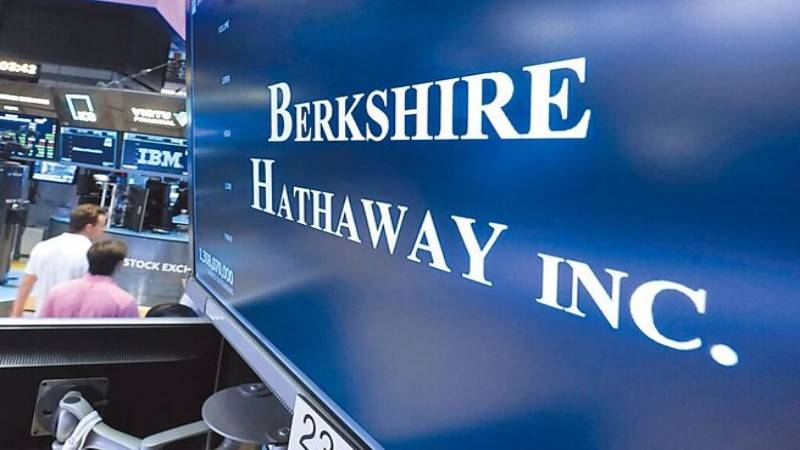
This is the area in which the previous understanding requires the most significant update. Berkshire Hathaway did establish a new position of approximately five million UNH shares during the second quarter of 2025, with a market value of about US$1.57 billion. When the position was disclosed in August 2025, the news temporarily drove a notable increase in the share price. The investment rationale was consistent with a conventional value-investing approach: a high-quality market leader had been excessively sold during a period of fear, its industry position remained intact, and its valuation had fallen into a comparatively low range.
However, the situation had changed materially by 2026. According to Berkshire’s 13F filing, the company completely exited its UNH position during the first quarter of 2026. Public reports indicated that the shares were acquired at an average cost of approximately US$271 and sold at around US$394, generating a return of about 45% over nine months. Several media organisations suggested that the investment was more likely to have been managed by Berkshire investment manager Todd Combs than by Warren Buffett personally.
Warren Buffett was Berkshire Hathaway’s long-serving leader and became renowned for his value-investing approach. He stepped down as chief executive at the end of 2025, and Greg Abel succeeded him in January 2026. Todd Combs is one of Berkshire’s investment managers and also serves as chief executive of its subsidiary Geico. He generally manages portfolios of a comparatively smaller size.
Morningstar analyst Julie Utterback’s assessment of the disposal provides useful context.
This appears more likely to be an internal portfolio adjustment at Berkshire than a signal about the fundamentals of the managed healthcare industry.
In other words, the purchase and subsequent disposal together form a complete value-investing case: buying an industry leader near a panic-driven low and realising profits after its valuation recovered. The transaction supported the original view that the shares had been excessively sold, while also demonstrating that investors should not interpret short-term changes in institutional holdings as an automatic endorsement or rejection of a company’s long-term fundamentals.
(Source: The Street, Warren Buffett's Berkshire sells rebounding healthcare stock, published: 2026-05-18)
Why Was the Valuation Considered Excessively Depressed?
During the severe decline in 2025, UNH’s forward price-to-earnings ratio fell to approximately 16 to 18 times, materially below its historical range of 22 to 25 times over the preceding years. From a value investor’s perspective, when the underlying business model remains intact and demand continues to be relatively inelastic, a valuation depressed by short-term cost pressures can create a conventional entry opportunity. This was the principal basis supporting Berkshire’s decision to establish the position at the time.
How Did UNH’s Fundamentals Change in 2026?
Data from 2026 provided further evidence of an earnings recovery. According to the company, first-quarter revenue reached US$111.7 billion, representing year-on-year growth of approximately 2%; adjusted earnings per share were US$7.23, materially above market expectations; and the medical care ratio declined to 83.9%, approximately 90 basis points lower than in the corresponding period of the previous year. The company subsequently raised its full-year adjusted earnings-per-share guidance from at least US$17.75 to at least US$18.25, while maintaining its full-year revenue guidance of no less than US$439 billion.
At the operational level, the new management team implemented several adjustments, including reducing membership in certain areas, selling Optum’s related UK operations, increasing investment in artificial intelligence and improving operational transparency. In share-price terms, UNH was trading above approximately US$420 by mid-July 2026, representing a substantial recovery from its 2025 low. The next event being closely monitored by the market is the company’s second-quarter results, scheduled for release before the market opens on 16 July 2026. Whether the medical care ratio can remain below 84% will be a key test of the sustainability of the recovery.
(Source: CNBC, UnitedHealth Group (UNH) earnings Q1 2026, published: 2026-04-21)
Which Forward-Looking Risks Should Investors Monitor?
Policy variables: Changes to Medicare and Medicaid reimbursement rates directly affect the insurance division’s profit potential.
Regulatory and judicial risks: The Department of Justice investigation relating to Medicare remains unresolved and continues to create uncertainty.
Cost trends: A renewed increase in healthcare utilisation could place fresh pressure on underwriting profit.
Execution of the transformation: Investors need to monitor whether adjustments to Optum Health’s value-based care strategy can achieve the targeted profit margins.
Where Does the Economic Moat of a Market Leader Such as UnitedHealth Come From?
Warren Buffett has long emphasised investing only in companies with substantial economic moats. UNH’s moat is primarily derived from two dimensions: scale and ecosystem reach. It holds the leading share of the US health insurance market, while Optum has extensive healthcare data resources and a broad healthcare services network. Its healthcare information platforms would be difficult to replicate rapidly. Although strict industry regulation raises compliance costs, it also increases barriers to entry and objectively reinforces the position of established market leaders.
This scale-based moat means that very few competitors can challenge UnitedHealth directly at a comparable level. For long-term investors, the resilience of the moat and the degree of confidence in the earnings recovery jointly determine the company’s portfolio value. For shorter-term investors, however, volatility arising from policy changes, regulatory developments and market sentiment remains a factor that requires careful consideration.
UNH Frequently Asked Questions
Does Berkshire Still Hold UNH Shares?
No. According to Berkshire Hathaway’s 13F filing, the company completely exited its UNH position during the first quarter of 2026. The position was established in the second quarter of 2025 and held for less than one year, generating a return of approximately 45%. The investment is widely believed to have been managed by Todd Combs.
Was the Purchase and Disposal Personally Decided by Buffett?
Several media reports indicated that the UNH investment was more likely to have been managed by Berkshire investment manager Todd Combs than by Warren Buffett personally. Buffett stepped down as chief executive at the end of 2025 and was succeeded by Greg Abel.
What Is UNH’s Current Valuation?
Based on UNH’s share price and earnings guidance during the first half of 2026, its forward price-to-earnings ratio was approximately 18 to 19 times. This remained below its historical range of 22 to 25 times over the preceding years, indicating that the shares were still undergoing a valuation recovery.
Why Is the Medical Care Ratio So Important to UNH?
The medical care ratio measures the proportion of premium revenue used to pay medical claims and is a key determinant of underwriting profit within the insurance division. The ratio increased sharply in 2025 and reduced profitability. Its decline to 83.9% in the first quarter of 2026 was therefore regarded as an important sign of an earnings recovery.
What Is the Next Important Date for UNH Investors?
The company is scheduled to release its second-quarter results before the market opens on 16 July 2026. The market will focus on whether the medical care ratio can remain below 84%, which would help determine whether the earnings recovery is sustainable.