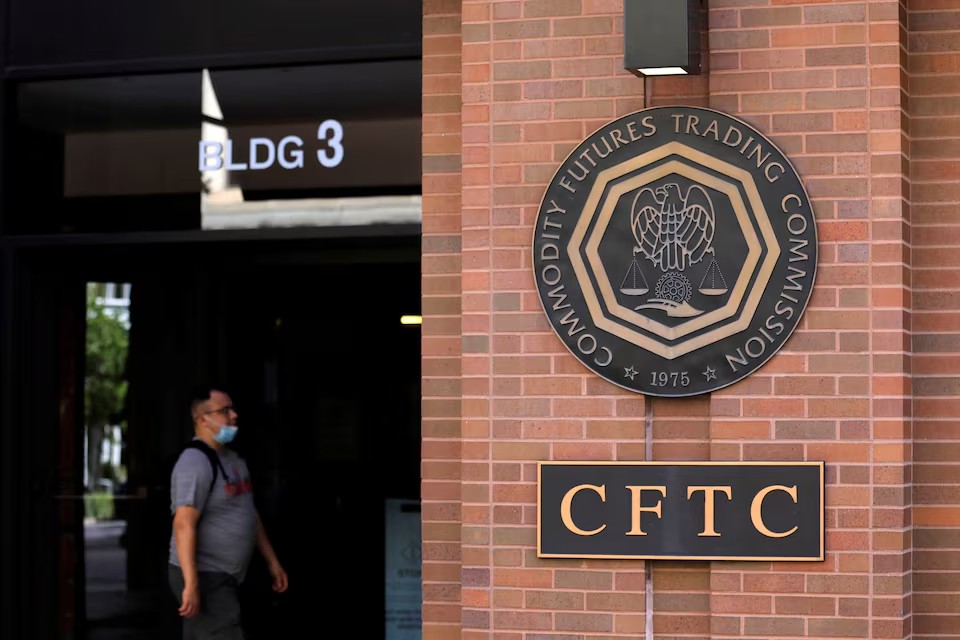
The CFTC has stayed CME’s self-certified 24/7 crude oil futures contract, citing ongoing public consultation, known compliance risks and the need to review whether round-the-clock trading meets statutory core principles.
CFTC Stays Self-Certified 24/7 Crude Oil Futures Contract on 9 July 2026
On 9 July 2026, Washington, D.C. — theCFTCwill exercise its regulatory authority to stay the listing of a contract. The contract would have enabled theCMEto launch 24-hour, seven-days-a-week (24/7) trading in crude oil futures as early as 10 July 2026.
On 8 July 2026, while the public comment period was still ongoing and despite known risks as to whether round-the-clock crude oil futures trading complies with theCommodity Exchange Actand relevant Commission regulations, CME nevertheless sought to self-certify the relevant contract under federal regulation Part 40.2. The Commission will exercise its authority under 17 C.F.R. § 40.2(c) to stay the effectiveness of the contract.
Regulatory Background: Public Consultation and Known Compliance Risks
Request for Comment on 22 June 2026
On 22 June 2026, the Commission issued Press Release No. 9259-26 seeking public comment on two developments in the energy derivatives market: first, the extension of trading hours for standard futures contracts, including crude oil futures, to 24/7 trading; and second, the possible listing of perpetual contracts referencing physically delivered or storable energy commodities, such as crude oil. The request for comment was published in the Federal Register on 25 June 2026, with public comments due by 27 July 2026.
Chairman Michael S. Selig stated when the request for comment was released that, as registered entities extend trading hours and introduce new contract designs, building a clear and data-driven record would help the Commission understand the market impact of these developments and, while supporting responsible innovation, preserve the anti-manipulation and anti-disruption protections relied upon by market participants and the public.
Staff Advisory Issued on 29 May 2026
Before this, on 29 May 2026, the CFTC’s Division of Clearing and Risk, Division of Market Oversight and Market Participants Division jointly issued Staff Advisory No. 26-16, setting out regulatory expectations for designated contract markets, derivatives clearing organisations and futures commission merchants seeking to expand trading and/or clearing operations to 24/7. The advisory emphasised that Commission staff would conduct detailed reviews of such plans and recommended that entities seeking to proceed with 24/7 operations engage with staff in advance and submit any necessary rule changes under Part 40.
(Sources: CFTC, Press Release 9259-26 “CFTC Seeks Public Comment on 24/7 Trading”, published on 2026-06-22; CFTC, Staff Letter 26-16, published on 2026-05-29.)
Two Routes for Contract Listing: 40.2 and 40.3
CFTC regulations provide exchanges with two routes for listing new contracts:
Self-certification under 17 C.F.R. Part 40.2: after internally determining that a new contract complies with federal law and CFTC rules, an exchange submits a certification and can generally begin trading on the next trading day, unless the Commission issues a stay under Rule 40.2(c);
Commission review and approval under 17 C.F.R. Part 40.3: an exchange voluntarily submits product filings for Commission review, with the Commission having up to 45 calendar days for review; if the product raises novel or complex issues, the review period may be extended by a further 45 days, for a maximum of 90 days in total.
In this case, CME submitted filings under both provisions. The Commission will conduct a full review of the product filing under the authority of Rule 40.3. By staying the submission under Rule 40.2, the Commission will prohibit CME from listing the contracts before determining that they comply with theCommodity Exchange Actand Commission regulations.
According to market reports, the contract CME intended to launch was a 10-barrel West Texas Intermediate (WTI) crude oil futures contract, with the trading code TCL and an original target listing date of 30 August 2026. Under the self-certification route, trading could have begun as early as 10 July 2026.
CFTC 24/7 Crude Oil Futures Regulatory Timeline
| Timeline | Regulatory/Market Action | Relevant Party | Key Details |
|---|---|---|---|
| 2026-05-29 | Staff advisory issued | CFTC | Staff Advisory No. 26-16 clarified regulatory expectations for 24/7 trading, clearing and intermediary operations |
| 2026-06-22 | Request for comment issued | CFTC | Public comment sought on 24/7 trading of standard futures and energy perpetual contracts, with comments due by 2026-07-27 |
| 2026-07-08 | Self-certification submitted | CME | Self-certification filing submitted for a 24/7 crude oil futures contract during the public comment period |
| 2026-07-09 | Stay order issued | CFTC | Effectiveness of the self-certification stayed under 17 C.F.R. § 40.2(c), while Rule 40.3 review proceeds in parallel |
Chairman’s Statement and Regulatory Position
In his statement on 9 July 2026, Selig emphasised that the CFTC is reviewing whether 24/7 trading in futures contracts across asset classes complies with statutory Core Principles, and that it will not take a “one-size-fits-all” approach to round-the-clock trading.
“The CFTC is reviewing whether round-the-clock trading in futures contracts across asset classes complies with our statutory Core Principles. As I have emphasised many times, we will not take a one-size-fits-all approach to round-the-clock trading. CME’s disregard for the Commission’s efforts to conduct a reasoned analysis of key issues is wholly inappropriate, and the Commission must act to stay its certification. The Commission encourages exchanges to work with Commission staff to address potential legal issues before seeking to list novel contracts.”
The issues highlighted by the Commission in its request for comment include the impact of 24/7 trading on price reliability and market integrity, clearing and settlement arrangements, customer protection, and effects on the underlying physical energy markets. The request for comment also addresses the applicability of Core Principle 3, which requires contracts not to be readily susceptible to manipulation, and Core Principle 4, which concerns the ability to monitor trading and prevent manipulation and price distortion.
According to public meeting records, between 26 June and 8 July 2026, oil industry executives and commodity trading firms held at least nine meetings with Selig to discuss concerns over 24/7 trading in energy markets. The stay indicates that the CFTC intends for regulators to set the pace for the development of round-the-clock futures trading, rather than allowing exchanges to set the timetable unilaterally through self-certification.
(Sources: CFTC, Press Release 9265-26 “CFTC to Stay Self-Certified Contract on 24/7 Trading for Crude Oil Futures”, published on 2026-07-09; CFTC, Federal Register RFC, published on 2026-06-25, comment deadline: 2026-07-27.)
Questions Related to CFTC 24/7 Crude Oil Futures Trading
What is the difference between CFTC Rule 40.2 self-certification and Rule 40.3 review?
Under 17 C.F.R. Part 40.2, an exchange may self-certify that a new contract complies with federal law and CFTC rules. After certification, the contract can generally be listed for trading on the next trading day, unless the Commission issues a stay under Rule 40.2(c). Under Rule 40.3, an exchange may voluntarily submit a product for Commission review. The Commission has up to 45 calendar days for review, which may be extended by another 45 days for novel or complex products. CME submitted both types of filing in this case, and the CFTC stayed the Rule 40.2 route while proceeding with the Rule 40.3 review.
Why did the CFTC stay CME’s contract listing during the public comment period?
On 22 June 2026, the CFTC sought public comment on the appropriateness of extending standard futures, including crude oil, to 24/7 trading, with the comment period running until 27 July 2026. The Commission considered CME’s 8 July 2026 self-certification to be ill-timed because the policy assessment had not yet been completed and there were known risks as to whether round-the-clock crude oil futures trading complies with the Commodity Exchange Act. Chairman Selig stated that the move disregarded the Commission’s reasoned analysis of key issues.
What are the main regulatory concerns around 24/7 crude oil futures trading?
The concerns identified by the CFTC in its request for comment and staff advisory include manipulation risks arising from reduced liquidity and increased volatility outside regular trading hours, the ability of clearing organisations to collect margin during weekends and holidays, system security safeguards and business continuity arrangements, compliance staffing, and the impact on price formation in the underlying physical energy market. The Commission stated that a 24/7 model may be more appropriate for crypto asset derivatives, but may not necessarily be suitable for other asset classes such as agricultural products.
What procedures must CME complete before the contract can be listed?
The CFTC has stayed the Rule 40.2 self-certification route, meaning CME cannot list the relevant contracts before the Commission determines that they comply with the Commodity Exchange Act and Commission regulations. CME’s Rule 40.3 review application, which was submitted in parallel, will continue to proceed, and the Commission will conduct a full review of the product filing. The Commission also encourages exchanges to communicate with staff and resolve potential legal issues before seeking to list novel contracts.